ASEAN Summit Prioritises Energy Resilience and Regional Stability Amid Middle East Conflict
Philippine President Ferdinand Marcos Jr calls for unity as the bloc seeks to mitigate soaring energy costs and safeguard citizens in the Middle East
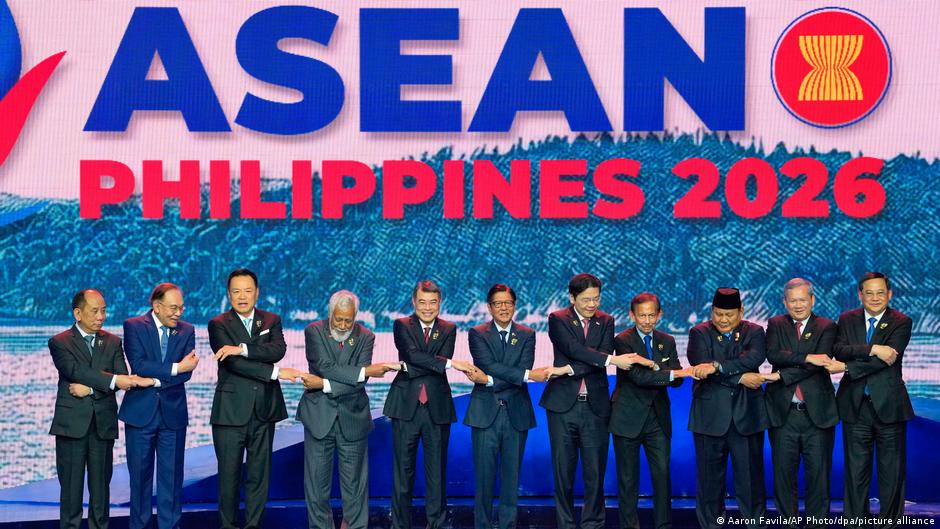
ASEAN leaders have gathered in Cebu, Philippines, for their annual summit with a primary focus on mitigating the economic fallout from the ongoing conflict between the United States, Israel, and Iran. The agenda centres on addressing the disruption to global oil supplies and the resulting surge in energy and food prices, which have disproportionately affected Southeast Asian nations reliant on imports via the Strait of Hormuz. President Ferdinand Marcos Jr, chair of the Association of Southeast Asian Nations, emphasised the need for regional unity and resilience against these market shocks in his opening remarks.
In response to heightened volatility in the Middle East, the summit has seen a push for an ASEAN-wide voluntary oil-sharing pact to ensure energy security. The Philippines, which formally declared a national energy emergency in March due to supply shortages, is actively lobbying for this agreement. A draft joint declaration outlines a broader contingency plan that includes the development of a regional power grid, the diversification of crude oil sources, and an increased adoption of renewables and electric vehicles. The inclusion of civilian nuclear energy in the region's energy mix was also proposed as part of this strategic shift.
Beyond immediate energy concerns, the leaders are coordinating efforts to evacuate over one million Southeast Asian citizens currently living and working in the Middle East. Several nationals from the region have already lost their lives since the war began, prompting urgent discussions on evacuation protocols should hostilities escalate. Concurrently, the summit addressed the broader geopolitical landscape, including territorial disputes in the South China Sea and the ongoing civil war in Myanmar, where ASEAN foreign ministers agreed to hold virtual talks with counterparts to facilitate the restoration of diplomatic relations following the 2021 coup.
Regional stability remains a critical component of the summit's proceedings, with specific attention given to border clashes between Thailand and Cambodia. Following a call by President Marcos Jr, leaders agreed to resume talks between the two neighbours to shore up a fragile ceasefire. This diplomatic push comes as ASEAN and China continue negotiations on a Code of Conduct in the South China Sea, with a separate leaders' statement expected to pledge efforts to conclude these talks. The gathering underscores the bloc's attempt to balance internal cohesion with external pressures.
Preparations for the summit saw several member nations, including Thailand, Vietnam, Indonesia, and Malaysia, implement domestic energy-saving schemes in recent months. These measures ranged from work-from-home arrangements to price caps on essential goods. While ASEAN economic ministers identified practical, concrete response measures on Thursday to guarantee energy and food security, the specific details of these actions remain undisclosed in the full text. The collective aim is to strengthen coordination and reinforce preparedness to safeguard a stable energy supply amidst unpredictable international conditions.
The outcomes of the Cebu gathering are expected to provide a framework for ASEAN to navigate the complex interplay of global conflict and regional security. By prioritising interconnectivity and collective measures, the bloc seeks to insulate its economies from external shocks while maintaining a unified front on issues ranging from maritime disputes to humanitarian evacuations. The summit serves as a critical test of the association's ability to translate high-level declarations into actionable policy that addresses the immediate needs of its member states.