Artist’s device translates housing costs into physical exertion
Brooklyn-based technologist Justin Blinder’s offline system converts government rent burden data into pedal resistance, offering a tangible demonstration of affordability disparities across New York City.
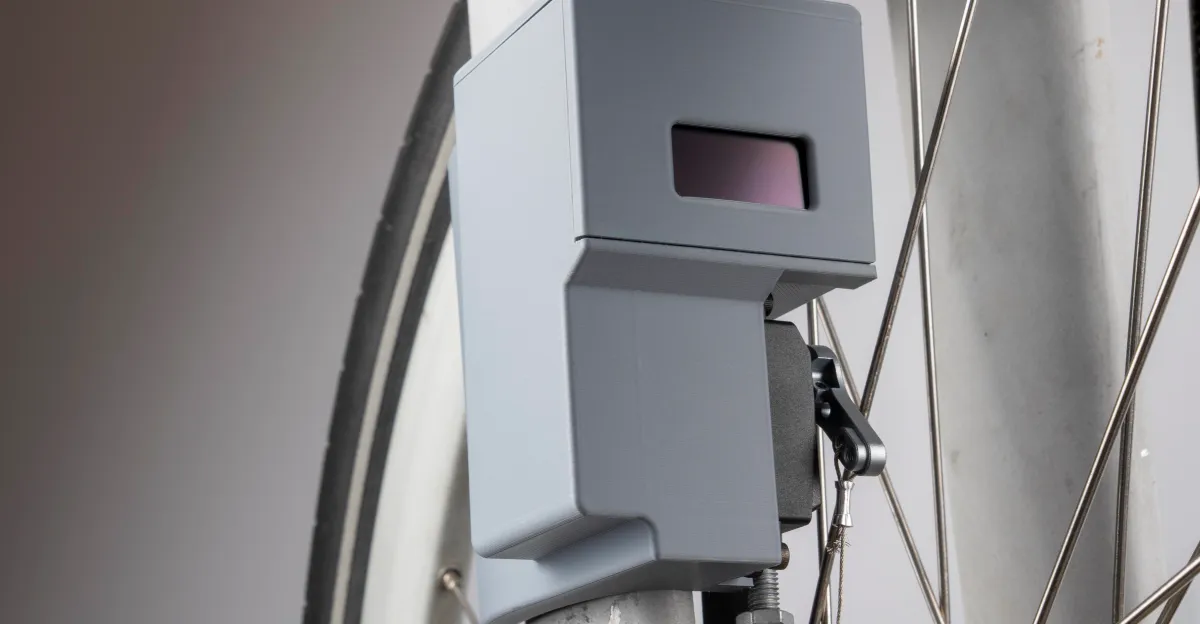
Brooklyn-based artist and technologist Justin Blinder has developed a device that physically manifests the burden of housing affordability through increased bicycle pedalling resistance. The project, titled Ground Truth, utilises data from the US government’s American Community Survey to translate rent statistics into a direct physical experience for riders navigating New York City.
The system operates as an offline mechanism attached to the front fork of a Citi Bike. It employs an ESP32-S3 microcontroller, a GPS module, and a high-torque servo motor to apply variable tension to the bike’s front drum-brake lever. This external approach was selected after Blinder abandoned earlier concepts involving penetration of the bike’s closed electronic systems due to legal concerns. The device does not log or transmit rider location data, with all datasets stored locally on an SD card.
Blinder conceived the idea in 2020 while working for food delivery apps, observing stark economic divides between adjacent neighbourhoods. He noted that higher elevation often correlates with greater desirability and cost due to better views and lower flood exposure. These observations led him to explore the relationship between physical effort and the economic realities of the areas he traversed, culminating in a project that percolated for several years following his layoff.
The device assigns a specific brake tension value to each census block group based on two metrics from the American Community Survey’s Rent Burden dataset: the median share of income spent on rent and the percentage of households spending at least half their income on housing. Consequently, riders experience easier pedalling in areas with public housing, such as those managed by the New York City Housing Authority, while facing increased resistance in zones with high rent burdens.
Test rides revealed complexities in the affordability narrative, particularly regarding luxury towers legally required to include affordable apartments. Blinder stated that the project aims to challenge preconceptions about cost-of-living prices by converting abstract economic data into a tangible, street-level reality. Future iterations may incorporate social interactivity and additional socioeconomic datasets, though the long-term viability of organising group rides remains uncertain.