Armenia’s Election Integrity Under Siege by Coordinated Disinformation Campaigns
As Armenia prepares for June 7 parliamentary elections, a tenfold increase in online misinformation has emerged, involving domestic political actors, foreign interests, and sophisticated AI tools that blur the lines between fact and fabrication.
Armenia is confronting a significant escalation in digital disinformation ahead of its parliamentary elections on June 7, with the Media Diversity Institute reporting a tenfold increase in online falsehoods since the start of May. Artur Papyan, the institute’s director, identified a complex ecosystem of manipulation involving AI-generated videos, fabricated social media accounts, and coordinated efforts from both domestic political factions and foreign entities, including Russia. This surge coincides with major diplomatic developments, such as the EU-Armenia summit held in early May, suggesting a strategic timing aimed at influencing public sentiment during a critical period.
Investigations by the fact-checking outlet Civilnet have traced a pro-government disinformation network known as MediaNews to Taron Chakhoyan, a senior aide to Prime Minister Nikol Pashinyan. The network, which boasts nearly 100,000 followers on Facebook, utilised fake accounts featuring AI-generated images or stolen photos to promote the ruling party’s narrative. Chakhoyan was identified through contact details used during the website’s registration, although he has denied any involvement. This linkage highlights the extent to which state-adjacent actors are leveraging digital tools to shape the electoral landscape.
Foreign interference appears to be a central component of the campaign, with a leak from the Russian digital marketing firm Social Design Agency revealing coordinated Kremlin efforts to destabilise Armenia’s political environment. One prominent narrative, falsely claiming that Pashinyan purchased a luxury mansion in Marseille, garnered over 10.6 million views on social media platforms despite being debunked by fact-checkers. The scale of this reach underscores the effectiveness of these campaigns in bypassing traditional verification mechanisms and exploiting public curiosity.
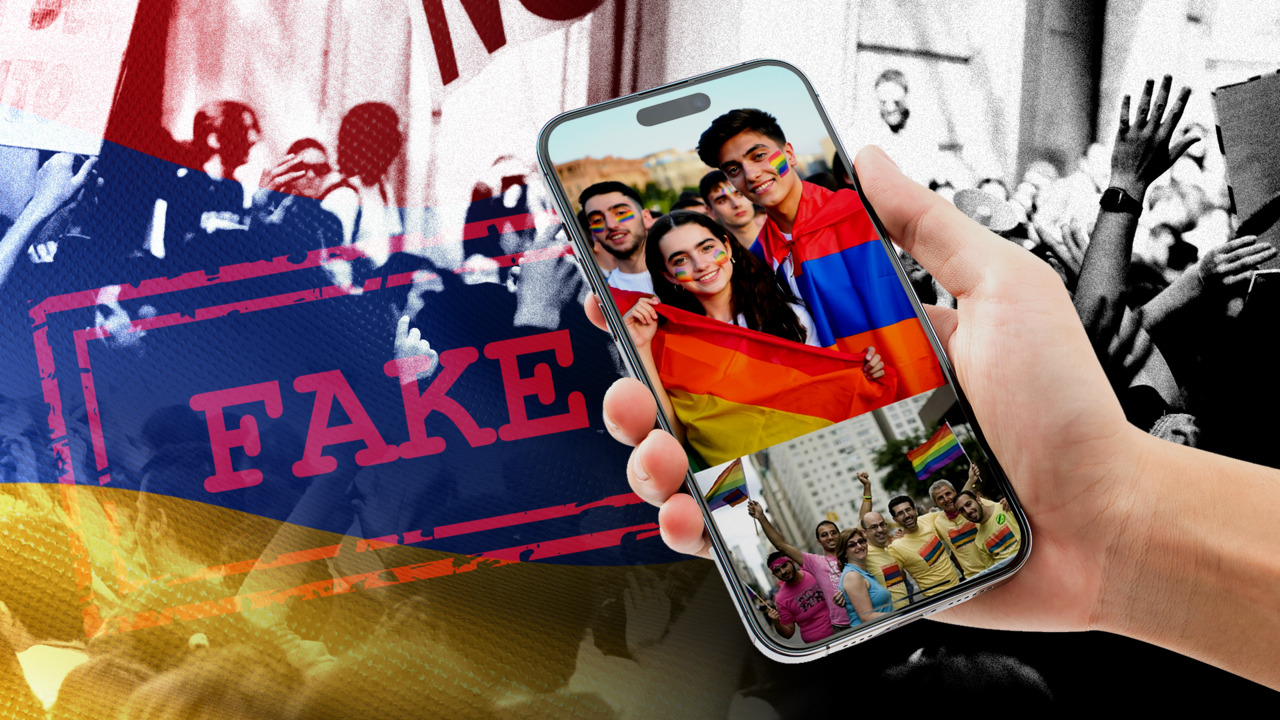
The disinformation landscape is not limited to pro-government actors; opposition parties are also accused of employing AI-generated content against one another. Civilnet’s Ani Grigoryan noted the proliferation of AI-generated vox pop interviews on TikTok, designed to target rival factions. Additionally, narratives have been crafted to weaponise historical and cultural vulnerabilities, including a fabricated campaign involving a fake “Armenian Queer Union” that sought to exploit homophobia by falsely linking the government to LGBTQ+ events. These efforts aim to frame the current administration as hostile to national values and traditional identity.
Observers warn that the impact of these campaigns extends beyond the immediate electoral outcome, potentially influencing long-term geopolitical stability. Philippe Kalfayan of the International Observatory for Democracy in Armenia highlighted that the ruling party benefits from platform agreements that allow fabricated content, such as videos depicting masked men threatening Pashinyan to stoke fears of war with Azerbaijan, to remain online longer than opposition material. With Pashinyan previously warning that an opposition victory could lead to war and loss of sovereignty, these digital narratives risk exacerbating tensions in a region already sensitive to territorial disputes.