Armenia votes amid Russian economic pressure and political division
Incumbent prime minister seeks third term on platform of European integration, but faces falling domestic support and tangible economic coercion from Moscow.
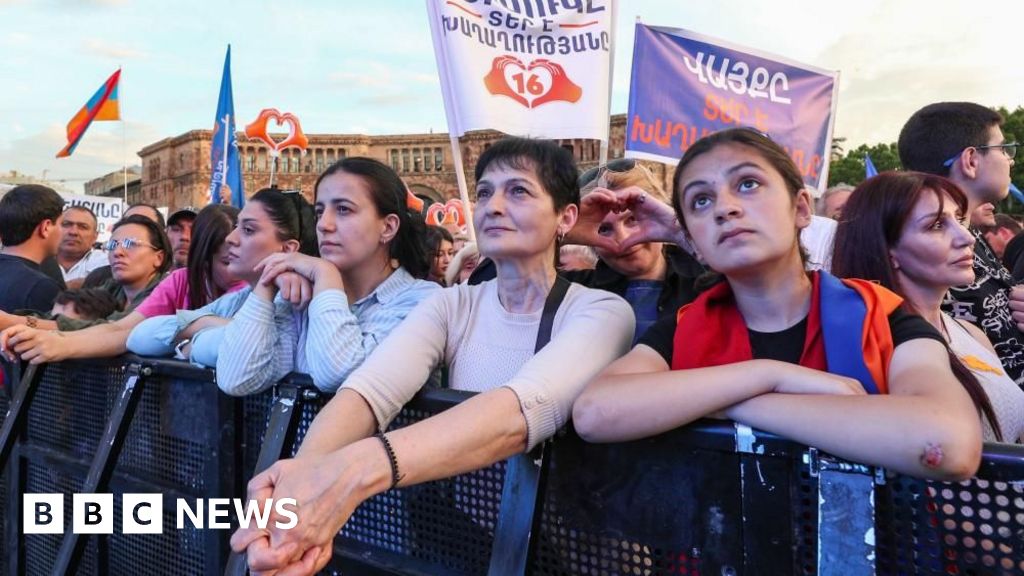
Armenians cast their ballots on June 7 in a parliamentary election that serves as a critical referendum on the country’s geopolitical orientation. The contest centres on whether the South Caucasus nation will continue its trajectory toward the West or revert to its traditional alliance with Russia. Incumbent Prime Minister Nikol Pashinyan is seeking a third term, campaigning on a platform of European integration and a peace agreement with Azerbaijan, despite a significant erosion of his domestic approval ratings.
The election has unfolded against a backdrop of intensified economic pressure from Moscow. In the two weeks preceding the vote, Russia banned exports of key Armenian goods, including flowers, mineral water, cognac, and fresh produce. Vladimir Putin recently highlighted the economic risks of distancing from the Kremlin, noting that the crisis in Ukraine began with efforts to move toward EU accession. Russia remains Armenia’s largest trading partner, accounting for 36 per cent of foreign trade in 2025, and supplies gas at $177.50 per 1,000 cubic metres, a fraction of the European market price which exceeds $600.
Pashinyan’s domestic support has fallen from 54 per cent in 2021 to approximately 30 per cent today. Critics blame the prime minister for concessions made during the 2023 loss of Nagorno-Karabakh, where Azerbaijan took control of the enclave home to 100,000 ethnic Armenians. The peace deal remains divisive, with recent polling indicating 44 per cent support and 41 per cent opposition. The opposition, led by former president Robert Kocharyan’s Armenia Alliance and urged on by former president Serzh Sargsyan’s Republican Party, argues that restoring deep military and economic ties with Russia is the only path to national security.
Despite the pressure, Armenia’s military dependence on Russia has diminished, with approximately 95 per cent of military imports now sourced from India, France, China, and other countries. A recent poll by the International Republican Institute shows Pashinyan’s Civil Contract party leading with 32 per cent, while 40 per cent of voters express trust in no political figure. Billionaire Samvel Karapetyan, currently under house arrest on charges of plotting to overthrow the government, is conducting his campaign through his nephew.
The European Union has pledged €50 million in aid to counter what European Commission President Ursula von der Leyen described as Moscow weaponising economic relations for political pressure. Von der Leyen also promised to ease trade restrictions for goods targeted by Russia. Meanwhile, the campaign has been marked by tension, including an incident where Pashinyan used offensive language against activist Artur Osipyan, who was subsequently arrested and began a hunger strike. Opposition figures have accused the prime minister of using administrative levers to create an atmosphere of fear.