Apple Watch Ultra 4 review: Battery gains and health metrics narrow the gap with Series 12
The new Apple Watch Ultra 4 offers extended battery life and a novel Readiness score, but its value proposition is challenged by the cheaper Series 12, which now shares key health tracking features.
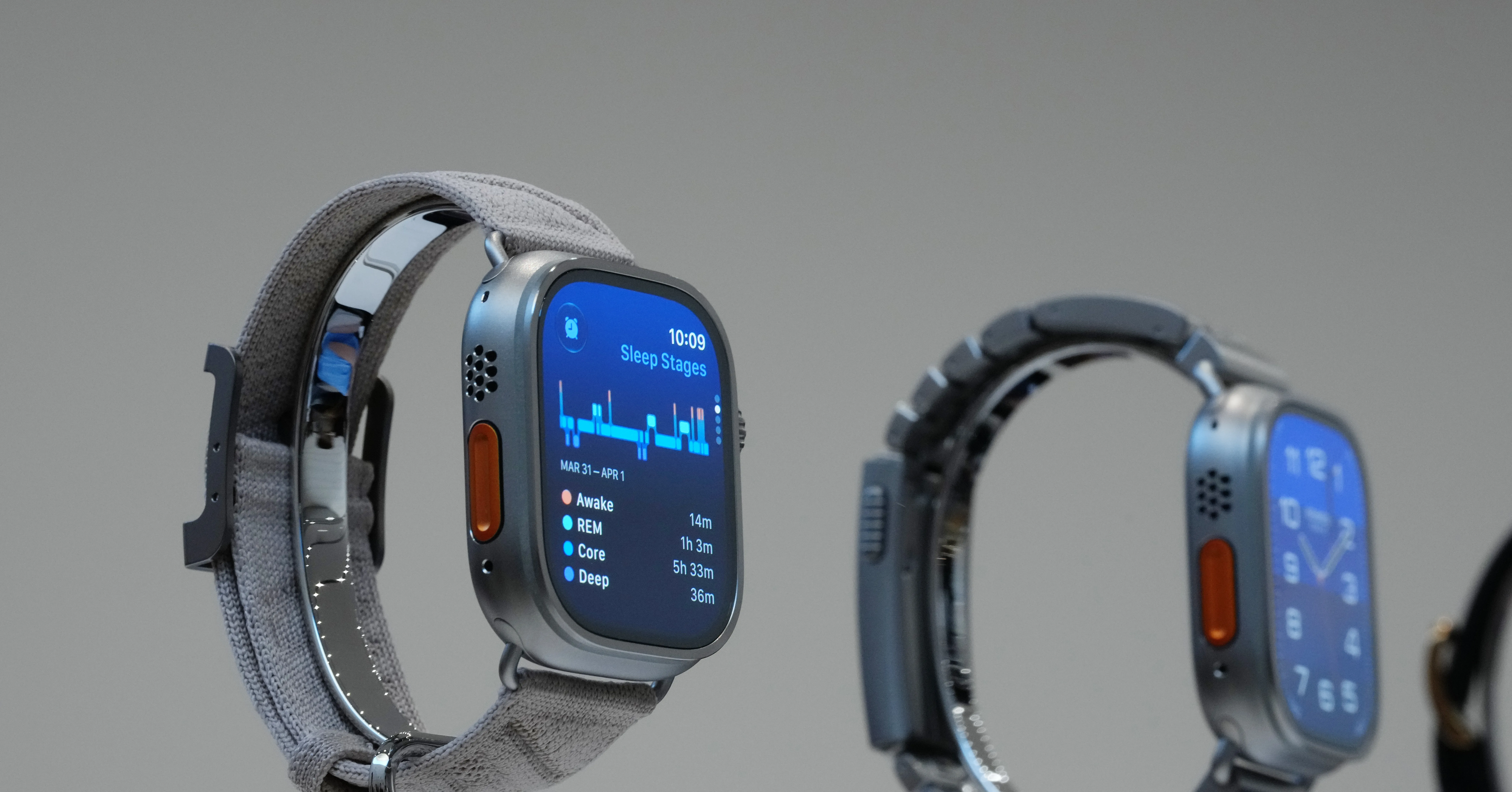
Apple has released the Apple Watch Ultra 4, a device that retains its signature titanium design and $799 price point while introducing significant upgrades to battery life and health monitoring. According to a review by WIRED, the latest iteration of the heavy-duty smartwatch offers up to 50 hours of normal use and 84 hours in Low Power Mode, a substantial increase from the 42 and 72 hours provided by its predecessor. These enhancements are designed to better serve outdoor enthusiasts and endurance athletes who require reliable power sources for multi-day activities.
The Ultra 4 introduces a new Health Sensing System powered by the S11 chip, which tracks heart rate every five seconds and measures heart rate variability (HRV) as frequently as every five minutes. This represents a significant improvement in data granularity, with HRV tracking occurring up to 24 times more often than in previous models. The system distinguishes between Recovery HRV, intended to identify daily stressors, and overall HRV, which provides broader cardiovascular context. Overnight Vitals now compares Recovery HRV against personal baselines, offering users a more comprehensive view of their body’s response to stress and recovery.
A standout feature of the new system is the Readiness score, a metric ranging from 0 to 10 that combines recent activity, sleep data, and vitals to generate daily recommendations such as “Recover” or “Go For It.” The score updates throughout the day as new information is processed, allowing for dynamic adjustments to user behaviour. However, WIRED notes that the long-term utility of this score remains to be seen, as it is a wellness metric that does not account for every factor and should not be used as a definitive directive for exercise safety. Users must wear the watch to bed for at least seven nights before the device can establish a sufficient baseline to produce an initial score.
Despite these advancements, the gap between the Ultra 4 and the cheaper Series 12 has narrowed considerably. The Series 12, priced $400 less, now shares the same Health Sensing System and Readiness score features, reducing the unique value proposition of the Ultra 4 for users whose primary goal is tracking health and daily workouts. The Ultra 4’s distinct advantages now lie primarily in its multi-day battery life, dedicated Action button, and satellite messaging capabilities, features that are more tailored to those who regularly venture outside cellular coverage.
Charging efficiency has also improved, with 15 minutes of charging now providing up to 18 hours of battery life. The device is designed for longer workouts, offering up to 18 hours of standard tracking, 25 hours in Extended mode, and 45 hours in Max Extended mode. While Apple has not introduced new finishes, the Ultra 4 remains available in natural and black titanium. The review highlights that for current Ultra owners, the upgrade may be less compelling, as the new model serves as a reason to appreciate the generation they already possess.
Additional software features, including Audio Intelligence capabilities such as Live Rewind and Siri Recap, are scheduled to arrive later this year. A redesigned Health app with additional longevity insights is also forthcoming, meaning some of the most interesting software changes are not available at launch. For new buyers, the decision between the Ultra 4 and the Series 12 will increasingly depend on aesthetics, fit, and the specific need for the Ultra’s specialised durability and extended battery life.