Apple bets big on local AI with new Mac Studio and Mac Mini
The latest desktop refreshes feature the first 2nm M-series chip and a high-memory M5 Ultra, positioning Apple hardware as a viable alternative to specialised Nvidia GPUs for developers running large language models.
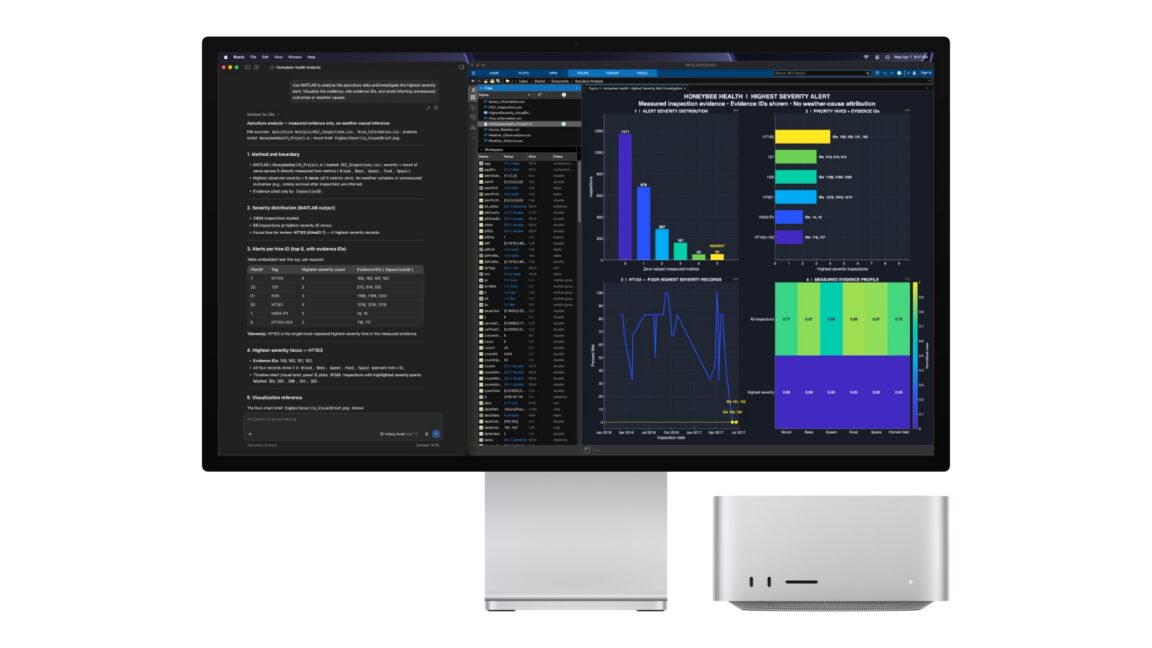
Apple has unveiled updated versions of its Mac Studio and Mac Mini desktops, introducing two new chips designed to capitalise on the growing trend of local artificial intelligence inference. The announcement marks a strategic shift for the company, which is now explicitly targeting developers and researchers who are increasingly moving away from cloud-based models to run large language models on their own hardware.
At the core of the refresh is the M6, the first chip in Apple’s M-series to be manufactured using a 2nm process. The M6 features a 12-core CPU that includes two new "super cores" alongside four performance and six efficiency cores, a configuration Apple claims is up to 40 per cent faster in multi-threaded performance compared to the M4. It also includes a 12-core GPU and supports up to 160GB/s of memory bandwidth, though memory capacity is capped at 32GB.
For high-end workloads, the new Mac Studio offers the M5 Ultra, a chip described as effectively two M6 Max processors combined on a single system-on-a-chip. The M5 Ultra features 36 CPU cores and 80 GPU cores, with unified memory bandwidth reaching 1.2TB/s. Most significantly, it supports up to 512GB of unified memory, a specification that allows users to run massive AI models locally without the high token costs associated with cloud services.
The devices leverage Thunderbolt 5 and the open-source MLX framework to allow users to daisy-chain multiple Macs for distributed AI workloads. This capability provides a competitive alternative to specialised hardware built around Nvidia GPUs, a trend that accelerated after macOS 26.2 enabled low-latency communication between Thunderbolt 5 hosts last December.
Beyond the AI-focused specifications, both devices include Apple’s N1 chip for Wi-Fi 7 and Bluetooth 6, with storage speeds up to 15GB/s. The Mac Mini ships with 2.5Gb Ethernet as standard, with an optional upgrade to 10Gb. The machines will run macOS 27 Golden Gate, suggesting the annual operating system update may arrive for other Mac users around the same time.
Pricing for the new lineup starts at US$899 for the Mac Mini with the M6 chip, while M5 Pro configurations begin at US$1,699. The Mac Studio with the M5 Max starts at US$2,499, and the M5 Ultra configurations are priced from US$5,499. Preorders opened immediately, with general availability scheduled for 22 September 2026. However, the top-tier 512GB memory configuration for the Mac Studio will not ship until late October 2026.