APEC ministers urge supply chain cooperation amid Middle East tensions
The Asia-Pacific Economic Cooperation forum convened on 23 May 2026 to discuss international cooperation for resilient supply chains, with ongoing geopolitical instability in the Middle East shaping the agenda.
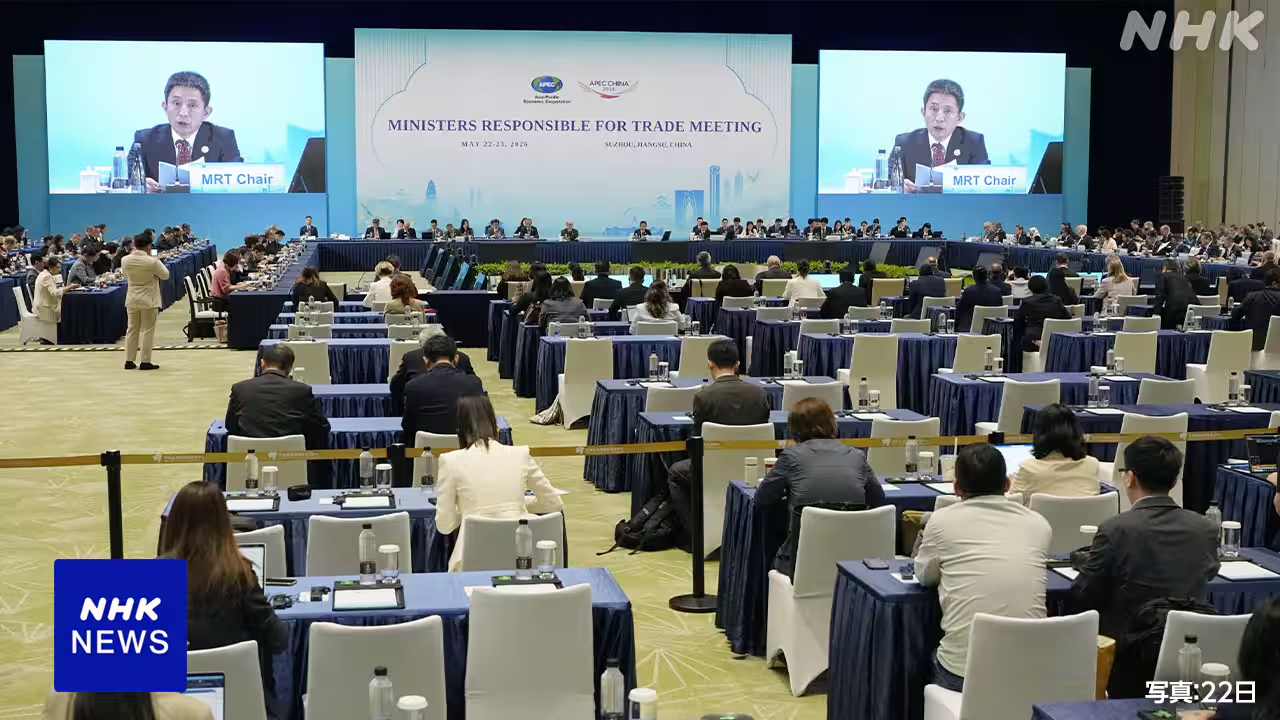
Trade ministers from across the Asia-Pacific region gathered in China on 23 May 2026 for the APEC Trade Ministers' Meeting, focusing on the necessity of international cooperation to safeguard supply chains for critical goods. The discussions were heavily influenced by the ongoing tensions in the Middle East, which have raised concerns about the stability of energy supplies and other essential resources.
The primary objective of the meeting was to address the vulnerabilities exposed by recent geopolitical disruptions. Ministers emphasised the need for member economies to work together to maintain resilient supply chains, particularly for energy and other vital commodities. The context of the talks was shaped by the persistent instability in the Middle East, a region that plays a pivotal role in global energy markets.
APEC, the Asia-Pacific Economic Cooperation forum comprising 21 member economies, has increasingly prioritised supply chain resilience in recent years. This shift reflects a broader policy trend aimed at mitigating the impacts of external shocks, such as pandemics and geopolitical conflicts. Energy security remains a recurring and critical topic within the organisation, given the region's significant reliance on imported energy resources.
The specific focus on energy supply chains underscores the strategic importance of ensuring uninterrupted access to resources. With tensions in the Middle East continuing to impact global markets, APEC members are seeking mechanisms to enhance cooperation and reduce dependency on volatile supply routes. The meeting highlighted the interconnected nature of regional economies and the shared interest in maintaining stability.
While the discussions centred on the need for cooperation, the source material does not detail specific outcomes, joint statements, or concrete measures agreed upon by the ministers. It remains unclear whether specific countries made binding commitments or if the dialogue remained at a general level of policy coordination. The exact nature of the ongoing tensions in the Middle East was also not specified, though their influence on the agenda was evident.
The meeting took place against a backdrop of broader global trade and security challenges. As member economies navigate these complexities, the emphasis on resilient supply chains reflects a pragmatic approach to managing risks in an increasingly uncertain geopolitical landscape. The outcomes of these discussions will likely inform future policy directions within the APEC framework.
The focus on energy security is particularly relevant given the region's economic structure. Many APEC members depend on imported energy, making them susceptible to price fluctuations and supply disruptions. By prioritising cooperation on supply chain resilience, the forum aims to build a more robust economic environment capable of withstanding external pressures.
As the meeting concluded, the emphasis remained on the collective responsibility of member economies to address these challenges. The discussions served as a reminder of the importance of multilateral engagement in managing global trade and security issues. The role of APEC in facilitating such dialogue continues to be vital for regional stability.