Ancient microbes harnessed scarce molybdenum billions of years ago, study finds
NASA-funded scientists at the University of Wisconsin-Madison reveal that early Earth life adapted to utilise trace metals through localised systems like hydrothermal vents
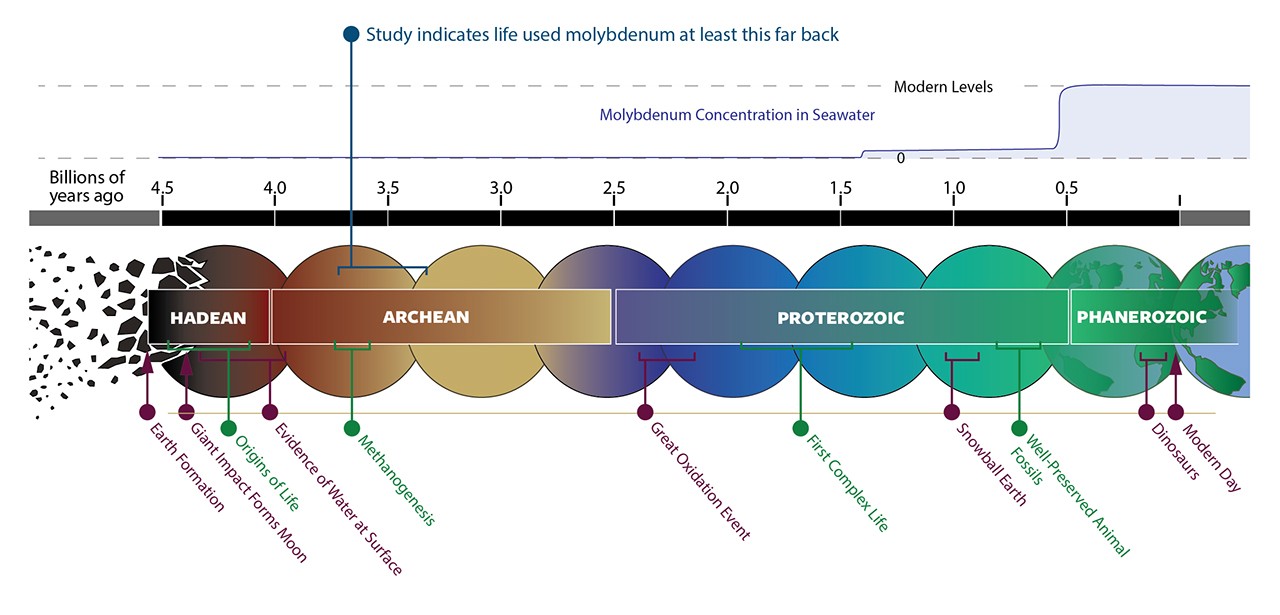
NASA-funded researchers have published a study in Nature Communications indicating that life on Earth over 3 billion years ago utilised the metal molybdenum despite its extreme scarcity in the ancient environment. The findings challenge previous theories suggesting life first used tungsten before evolving to use molybdenum once it became more available. Molecular dating places molybdenum utilisation between 3.7 and 3.1 billion years ago, predating the Great Oxidation Event.
The study suggests early microbes accessed the metal through localised systems such as hydrothermal vents, highlighting that life can adapt to utilise scarce elements based on their catalytic advantages. Researchers argue that molybdenum was a preferred choice for early life due to its catalytic advantages across a broad range of substrates and redox conditions, rather than being avoided due to scarcity.
Geological evidence indicates that only trace amounts of molybdenum were present in Earth's oceans billions of years ago, with levels increasing around 2.45 billion years ago during the Great Oxidation Event. This timeline confirms that the metal was not widely available in the general ocean water when early life began to utilise it.
The research team, led by Betül Kaçar at the University of Wisconsin-Madison, reconstructed the history of metal use along the branches of the tree of life to reach these conclusions. Previous work from the MUSE ICAR identified niches deep below the oceans where early life may have found supplies of scarce metals, supporting the idea that localised systems provided the necessary resources.
Molybdenum is a component of essential enzymes that drive major biological reactions, including those in the carbon, nitrogen, and sulfur cycles. Without molybdenum, those important reactions could still happen in nature, but they would be too slow to sustain life, making the metal's catalytic role critical even when supply was limited.
The findings suggest that life detection strategies for exoplanets must be metal-aware and redox-aware, considering that different abiotic inventories could lead to different biological element choices. This research underscores that searching for life in the universe requires looking beyond modern Earth conditions to understand the breadth of possibilities for habitable worlds.