Analyst questions US leverage over Iran amid Trump-Xi summit
Commentary follows Beijing talks between Donald Trump and Xi Jinping, where few concrete agreements were reached on contentious regional issues.
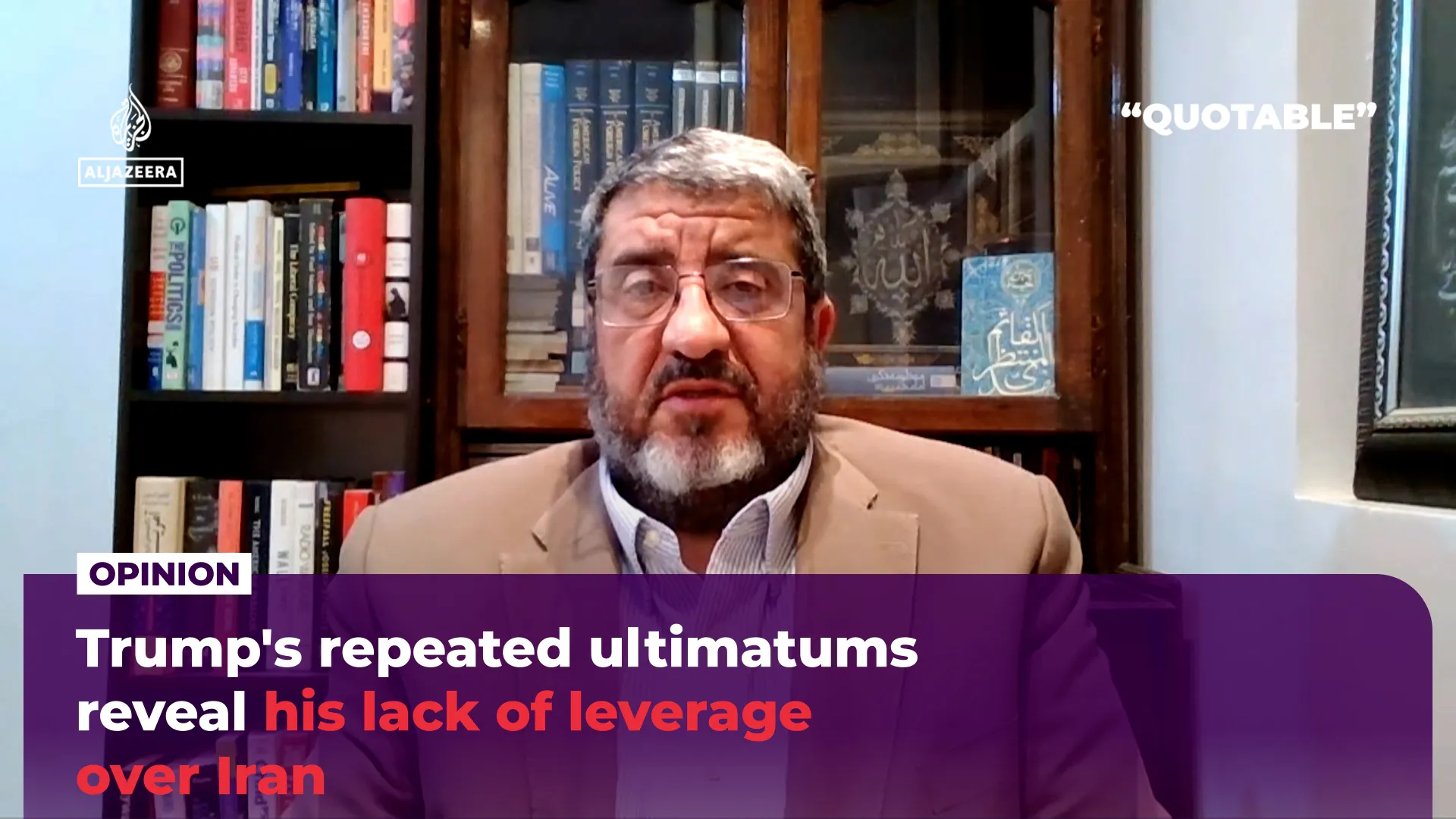
US President Donald Trump’s repeated threats of renewed full-scale war against Iran are indicative of strategic weakness and a lack of leverage, according to analyst Foad Izadi. The assessment reframes the administration’s diplomatic posturing not as a display of strength, but as a signal of limited options in navigating complex geopolitical tensions.
This commentary emerges in the wake of a two-day summit in Beijing between President Trump and Chinese President Xi Jinping. The meeting, which marks the first visit by an American president to China since 2017, focused heavily on trade, artificial intelligence, and security concerns regarding the Strait of Hormuz. Despite the high-profile nature of the engagement, the summit yielded few concrete agreements on contentious issues, including the ongoing conflict involving Iran.
The diplomatic efforts in Beijing followed earlier talks held in South Korea in October, suggesting a continued but perhaps strained dialogue between the two powers. The agenda also included prominent US business leaders, with Elon Musk, Tim Cook, and Jensen Huang in attendance, highlighting the intersection of technology policy and international relations.
Economic indicators surrounding the summit underscored the shifting global power dynamics. US stock markets rose on Thursday, with the Dow Jones Industrial Average gaining 0.8 per cent, the S&P 500 rising 0.3 per cent, and the Nasdaq Composite climbing 0.2 per cent. Nvidia shares surged more than 2 per cent following news that the US approved H200 chip sales to Chinese firms, a move that reflects ongoing economic interdependence despite political friction.
Izadi’s analysis suggests that the administration’s reliance on ultimatums may be a response to these broader structural constraints. With the Beijing summit failing to produce significant breakthroughs on Iran-related matters, the repeated rhetorical escalation appears to mask a deficit in tangible diplomatic leverage. The outcome of the talks leaves the question of US strategy in the region unresolved, with economic gains in the technology sector standing in contrast to the lack of progress on security fronts.