Analysis: Political violence and gun culture normalised in US
Three converging dynamics identified as drivers of a shift where violence serves as a rhetorical tool to delegitimise dissent
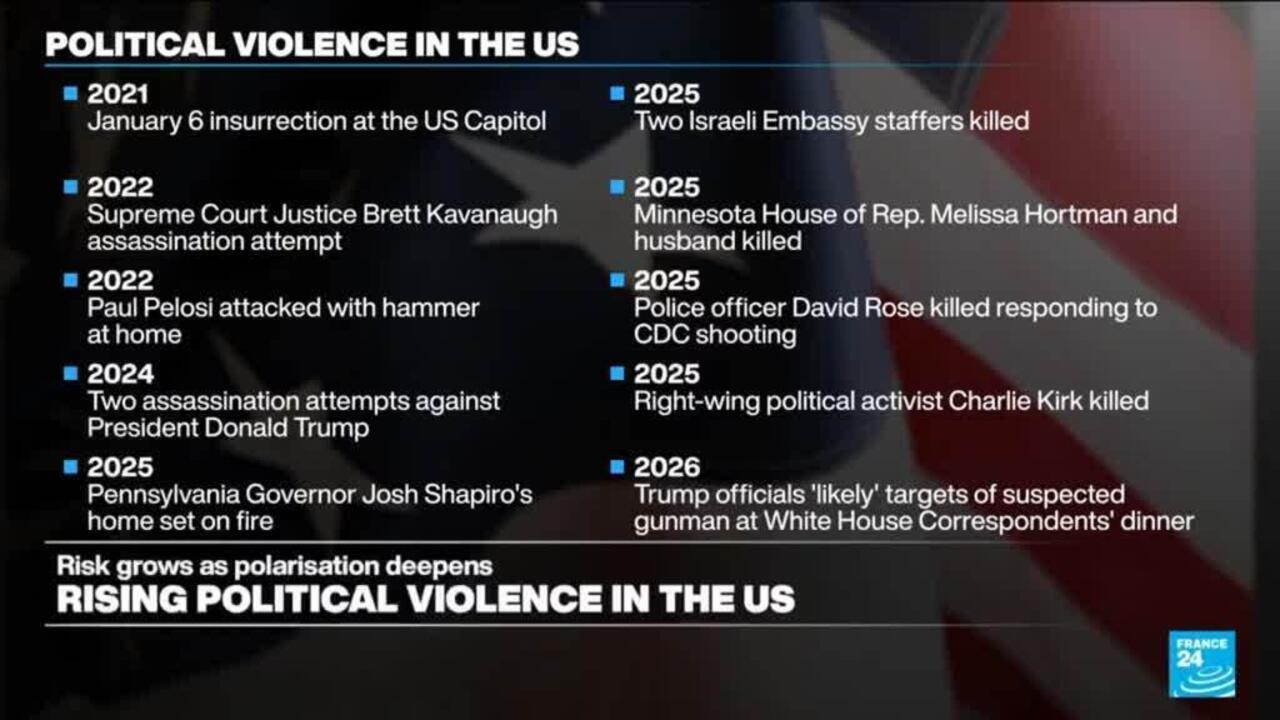
Eric Lisann, a Franco-American lawyer and former US Federal Prosecutor, argues that political violence in the United States has become normalised and embedded in the fabric of political life. In an analysis published by France 24, Lisann contends that this phenomenon stems from the convergence of three specific dynamics that have reshaped the socio-legal landscape of the nation.
The first factor identified is the normalisation of mass violence itself. Lisann suggests that the recurrence of such acts has moved beyond isolated incidents to become a recurring feature of the political environment. This shift is compounded by the structural ease of access to firearms, which he describes as a critical element enabling the politicisation of violence.
A second dynamic driving this escalation is the intensification of violent political rhetoric. Lisann specifically points to the period following Donald Trump's 2015 campaign launch as a pivotal moment. He argues that the tone of political discourse shifted during this era, creating an environment where language itself became more aggressive and aligned with the threat of physical confrontation.
According to the former prosecutor, these forces have combined to allow violence to function as a rhetorical tool. In this new landscape, acts of aggression are used not merely to cause harm but to delegitimise dissent and reshape public discourse. This evolution means that violence is now viewed as an embedded component of political strategy rather than an aberration.
Lisann emphasises that assassination attempts and gun violence cannot be understood in isolation from these broader trends. The analysis highlights how the intersection of accessible weaponry, normalised mass violence, and escalated rhetoric has created a system where the threat of force is intrinsic to the political process.
The interview, conducted by Nadia Massih, underscores the depth of this institutional shift. From a legal perspective, the normalisation of these dynamics suggests a fundamental change in how political life operates within the United States, where the boundary between speech and physical action has become increasingly blurred.