Alleged Israeli Plot to Install Ahmadinejad Highlights Iran Information War
Analysts say narratives serve to generate mistrust within Iran or justify tighter security measures, regardless of their factual accuracy.
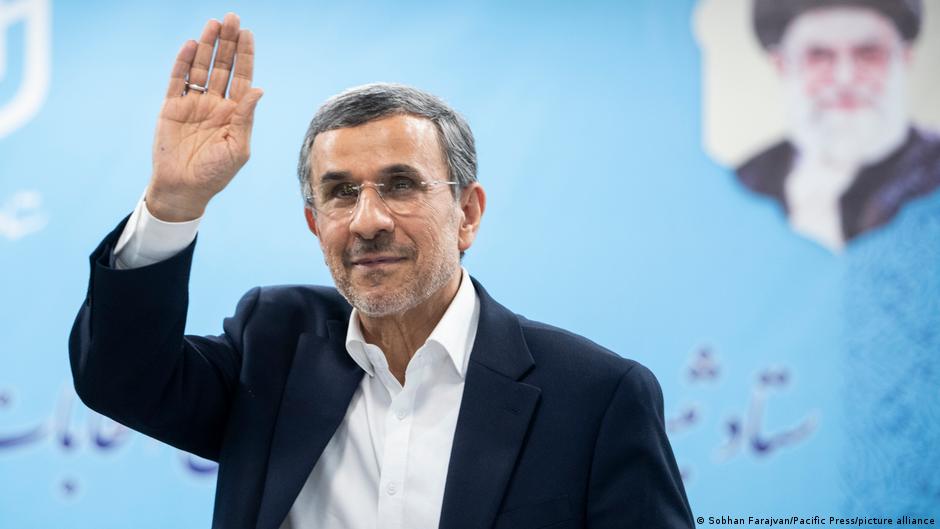
Reports published by The New York Times and Haaretz allege that Israeli officials explored installing former Iranian President Mahmoud Ahmadinejad as a figurehead in a post-Islamic Republic scenario. The reports claim Ahmadinejad was moved to a safe house after his compound was hit by an Israeli air strike on 28 February 2026, and that David Barnea, former chief of Israel's Mossad intelligence service, oversaw secret contacts in Hungary. Ahmadinejad's office has rejected the claims as "absurd" and "completely false."
The allegations indicate that the alleged Israeli effort intensified during the current war and involved infiltration plans inside Iran, contacts with minority groups, and discussion of a broader destabilization strategy. Babak Dorbeiki, a London-based political analyst and former official at Iran's Strategic Research Center, stated there is no public and independent evidence to conclusively confirm or reject the details, noting that Ahmadinejad has been pushed away from core institutions since roughly 2010.
Dorbeiki argued that while Ahmadinejad retains some social base and political ambition, he lacks real power within the formal structure. The former president has been marginalised from the Office of the Supreme Leader, the Islamic Revolutionary Guard Corps (IRGC), and the Guardian Council, and has faced repeated disqualifications from recent presidential elections. Dorbeiki suggested the reports should not be viewed as an attempt to promote Ahmadinejad as a future ruler, but rather as a narrative that may serve intelligence purposes by signalling reach and generating mistrust.
Vahid Heroabadi, a former Shiite cleric and critic of the Islamic Republic, argued that Ahmadinejad lacks the connection to the IRGC required to act as a decisive political player in any transition scenario. Heroabadi, who was once close to Ahmadinejad's administration, stated that outside powers typically seek figures with mobilizational capacity and that Ahmadinejad is not a credible bridge to the Iranian public or to a security-backed transition.
Analysts note the reports highlight the information war surrounding Iran, with narratives potentially serving to generate mistrust within Iran or justify tighter security measures, regardless of their factual accuracy. The debate underscores how the struggle over Iran has become a struggle over narratives and perception, where even implausible stories can be useful if they unsettle enough people or signal access to outside actors.