Algeria and Germany pledge deepened energy ties amid regional instability
A joint statement from Berlin outlines plans for expanded natural gas flows and a southern hydrogen corridor, even as Algeria faces domestic political constraints and regional isolation.
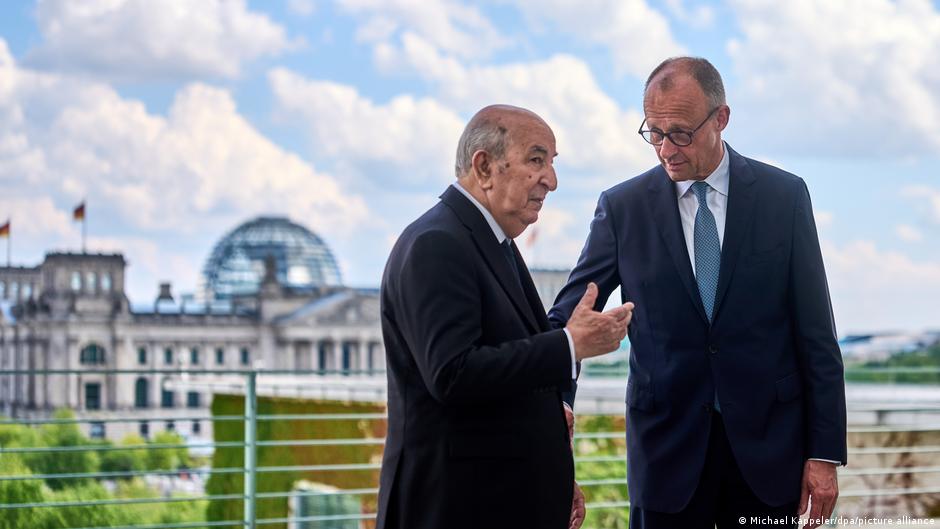
Algerian President Abdelmadjid Tebboune has concluded a two-day visit to Berlin, marking his first official trip to Germany since his election in 2019. The visit culminated in a joint statement with German Chancellor Friedrich Merz, in which both leaders emphasised the quality of bilateral cooperation and pledged to deepen long-term energy ties. The agreement focuses on expanding natural gas supplies and establishing a southern hydrogen corridor from North Africa to Germany.
Cerstin Gammelin, spokesperson for German President Frank-Walter Steinmeier, confirmed via X that the long-term objective is to institutionalise this hydrogen infrastructure. Algeria, which holds Africa’s second-largest proven natural gas reserves after Nigeria and is the continent’s largest producer, delivered its first direct shipment of liquefied natural gas to Germany’s Wilhelmshaven floating LNG import terminal on 2 July.
Analysts suggest that global instability, including tensions in Iran and potential disruptions to oil exports via the Strait of Hormuz, has reinforced Algeria’s strategic importance to European energy security. Alice Gower of Azure Strategy noted that while Algeria cannot replace Gulf supplies, its pipeline gas reaches southern Europe without passing through Gulf shipping lanes, offering European governments a vital avenue for supply diversification.
A direct pipeline to Germany is currently under consideration to eliminate the costs associated with liquefaction and shipping, mirroring existing infrastructure with Italy and Spain. Beyond energy, experts highlight Algeria’s value in counterterrorism and migration management. Algiers maintains a distinctive diplomatic position, holding relations with both Iran and the United States, as well as the Gulf states, China, and Russia, while acting as a bridge between North Africa and the Sahel.
However, Algiers faces significant headwinds. The country is increasingly isolated over the Western Sahara dispute, particularly after the United States recognised Morocco’s sovereignty in 2020, a move followed by Spain, France, and several African nations. Tebboune has sought to repair ties with Mali and Niger to address Sahel instability and supports a political solution for Libya, yet domestic challenges persist.
The Bertelsmann Transformation Index 2026 and Freedom House’s 2026 report indicate that Algeria has reverted to pre-Arab Spring conditions and remains classified as "Not Free." With youth unemployment estimated at 29–30 per cent and civic space contracting, observers warn that Algeria’s expanding geopolitical value may allow the government to pursue its domestic agenda with reduced external pressure.