Albania’s EU accession prospects tested as thousands rally against Kushner resort
The largest demonstration to date against the $5.8 billion Zvernec development has intensified scrutiny on Tirana’s compliance with European Union standards and domestic transparency.
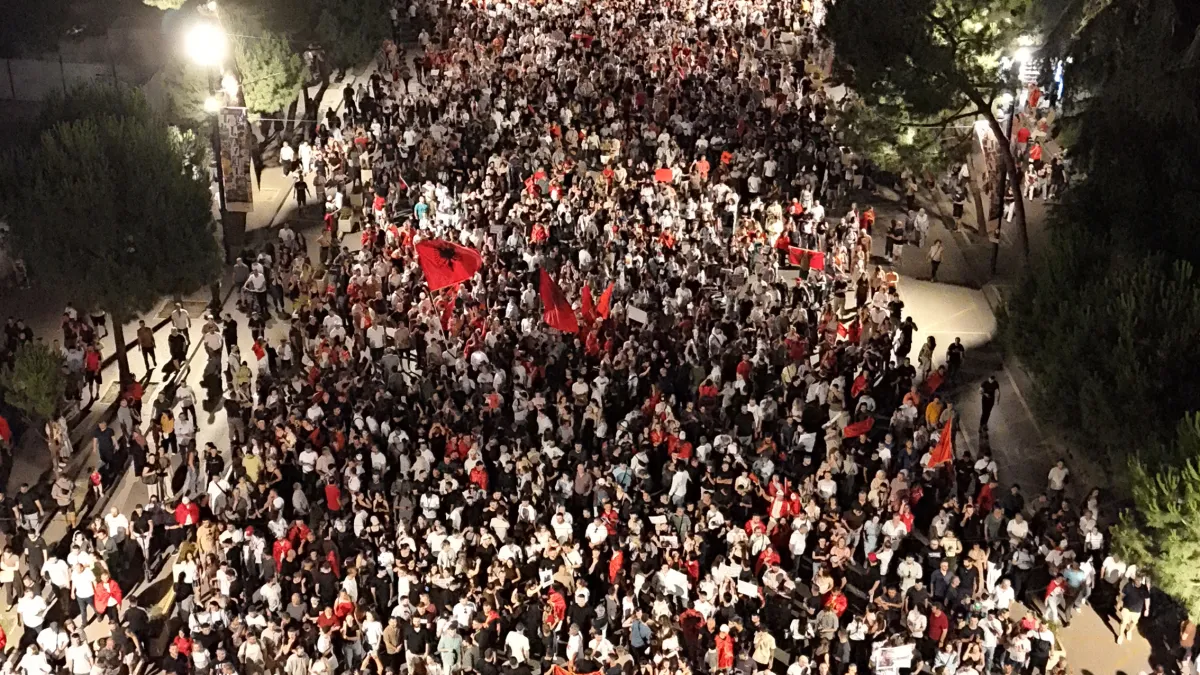
Thousands of protesters converged on Tirana on Wednesday for the largest demonstration to date against a luxury resort development in Zvernec, backed by Jared Kushner. The crowd, which stretched half a mile down one of the capital’s main boulevards, gathered outside Prime Minister Edi Rama’s office chanting “Albania is not for sale” and holding signs demanding a “New Albania.” The protest, dubbed the “Flamingo Revolution,” centres on ecological concerns regarding a protected wetland and allegations of a lack of transparency in the project’s planning.
The proposed development, estimated to cost 5 billion euros ($5.8 billion), has drawn significant opposition due to its location near a protected wetland that serves as a migratory stop for flamingos and hosts seals and sea turtle nesting sites. Critics have raised concerns about the opacity surrounding the plans designed by foreign investors. The project is described as the brainchild of Jared Kushner and his wife, Ivanka Trump, who reportedly fell in love with Albania while visiting on a yacht a few years ago.
Prime Minister Edi Rama has sought to downplay the ecological concerns, insisting that an environmental impact assessment would be completed and that the project would proceed responsibly. “We are very proud of what we have done for the wildlife in Albania,” Rama said, adding that the European Commission should have no reason to doubt the government’s firm will to protect nature. Despite these assurances, public mistrust persists, with protesters citing 35 years of similar issues and calling for an end to the dominance of the two main political parties.
The European Union has warned that alignment with European environmental law is a condition for Albania’s potential accession, which could occur by 2030. EU spokesman Guillaume Mercier stated that Albania should refrain from actions undermining the fulfilment of closing benchmarks and expected the authorities to act without delay. The warning underscores the geopolitical stakes of the development, as Tirana navigates its path toward European integration while managing domestic dissent.
The protests represent the latest test for Rama, who has been in power since 2013 and faces blame for not eradicating widespread corruption or improving basic services. Rama has pointed to the creation of a special prosecution office, which has opened several high-profile investigations, as evidence of his efforts. However, clashes earlier this year over alleged corruption involving Deputy Prime Minister Belinda Balluku, who was subsequently fired, have left deep-seated mistrust among the public. Protesters like Fabio Bracaj expressed a desire to finish the “saga of the Albanian government” and start a new era.
The development ignited further outrage last month when developers erected a fence around part of the Zvernec site, which was later removed following public outcry. Rama has stated that the project will go ahead regardless of the protests. The demonstration highlights the tension between economic ambitions driven by high-profile international investors and the demands for environmental protection and democratic accountability in Albania.