AI’s leading companies carry a $25 trillion valuation as regulation debate intensifies
Al Jazeera’s review of companies with direct exposure to AI highlights the scale of the industry’s hardware, infrastructure, software and model developers.
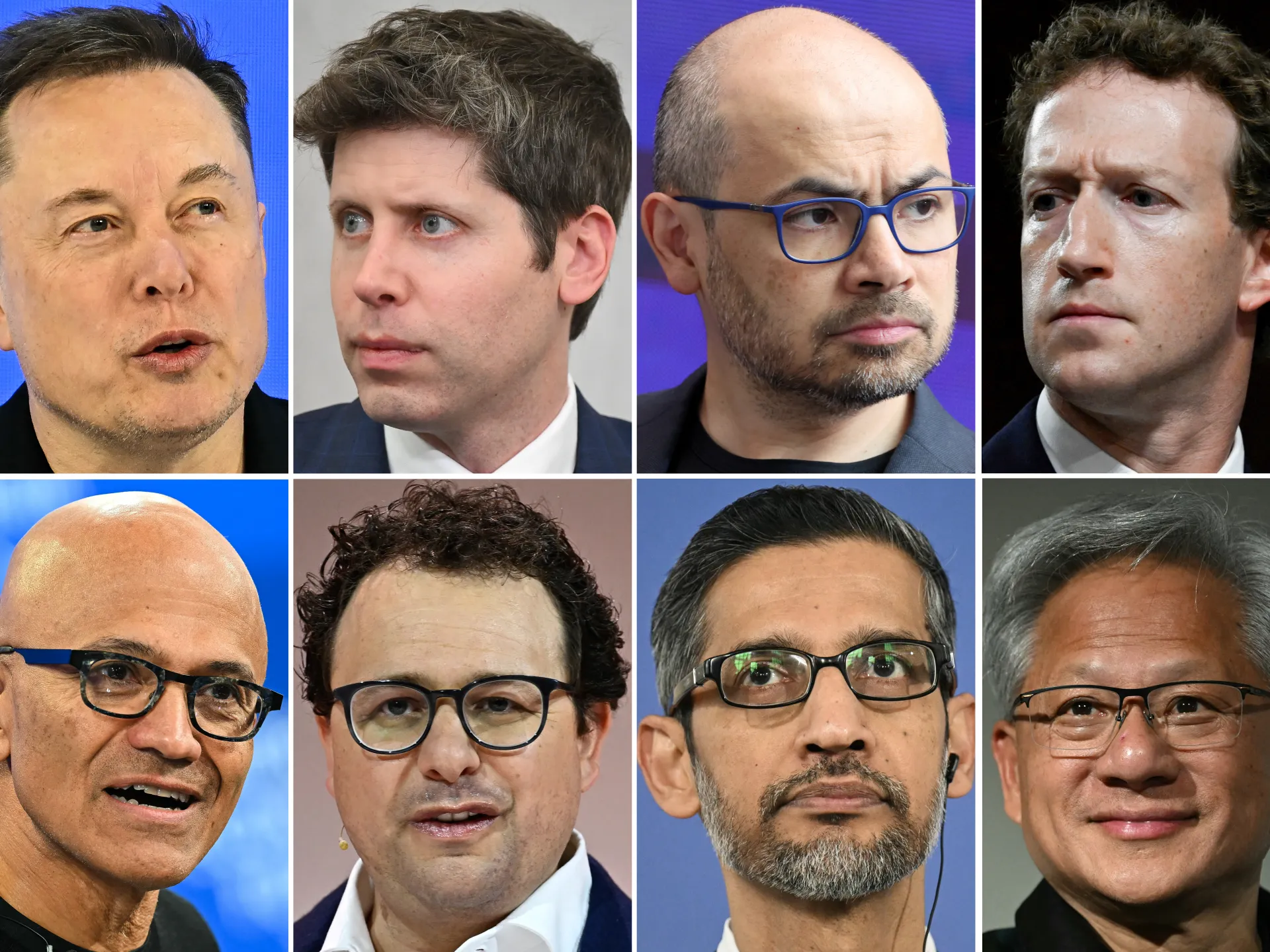
The 10 largest public companies with direct exposure to artificial intelligence have a combined market capitalisation of at least $25 trillion, according to an Al Jazeera review. The figure spans chipmakers, cloud infrastructure providers and companies selling AI-driven software and services.
Nvidia is the largest public company in the group, with a market capitalisation of roughly $5.1 trillion as of mid-September 2026. The company designs graphics processing units and AI accelerators used by hyperscalers and AI companies to power major AI models.
Apple was valued at $4.86 trillion and Taiwan Semiconductor Manufacturing Company at $1.9 trillion over the same period. Apple’s inclusion reflects its investment in on-device AI features, while TSMC manufactures advanced chips designed by companies including Nvidia, Broadcom and AMD.
The private-company market is also attracting valuations approaching those of major listed firms. Anthropic was valued at about $965 billion in May 2026, while OpenAI was valued at about $852 billion. xAI was valued at about $250 billion when it merged with SpaceX in February.
Al Jazeera reported that Anthropic and OpenAI filed for initial public offerings in June. Anthropic was reportedly targeting a listing as early as October, while OpenAI was reportedly leaning towards 2027. The timing and plans were not confirmed in the supplied material.
The valuations come amid a dispute over how governments should regulate increasingly powerful AI systems. Anthropic chief executive Dario Amodei has called for slower development and greater regulation, while US President Donald Trump has rejected those concerns and pointed to the US government’s regulatory power over AI companies.