Airbound raises $37 million to challenge trucking with ultra-light drones
The Indian startup has secured a Series A led by Greenoaks to develop vertical-flight aircraft that weigh less than their payload, aiming for cost parity with ground transport.
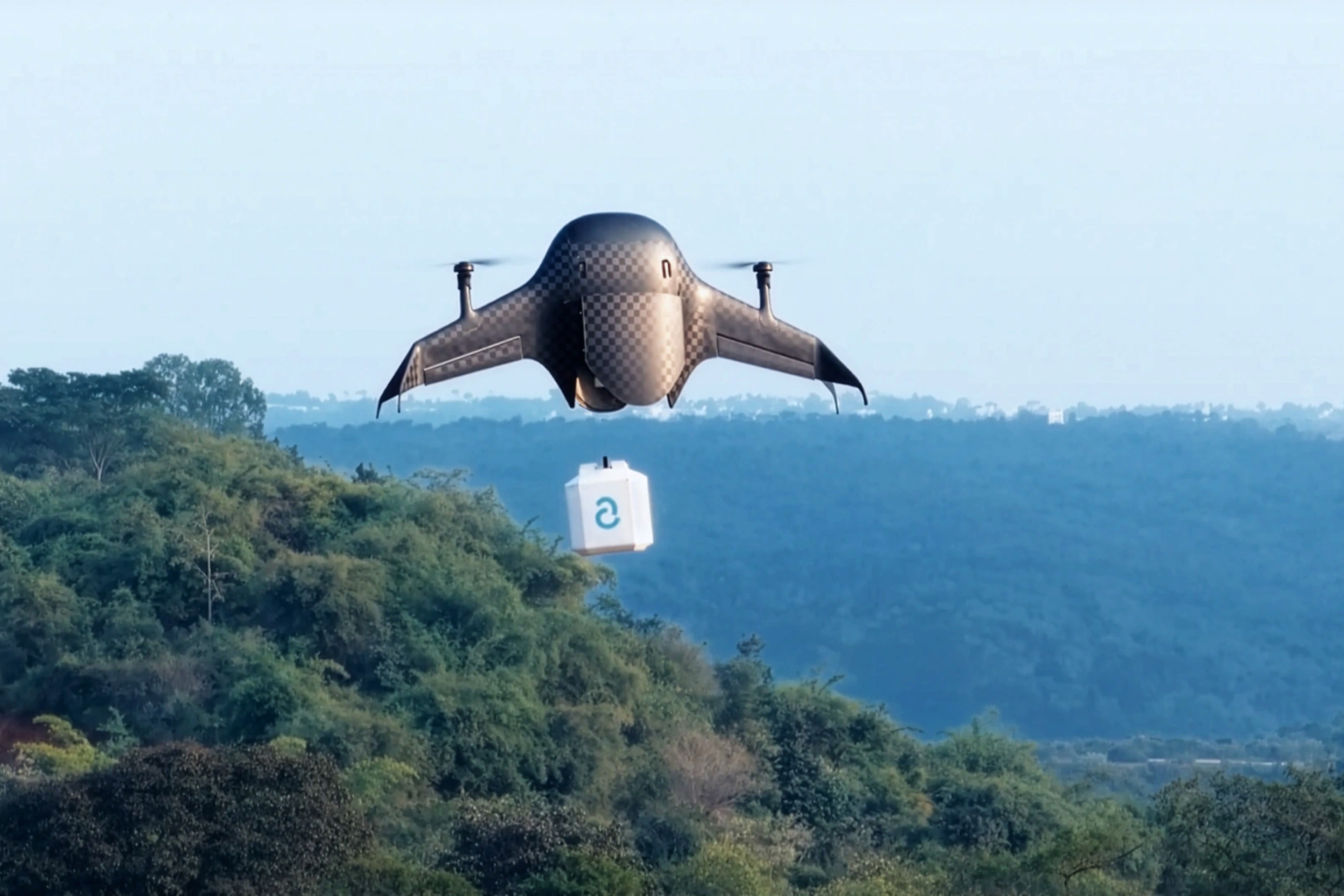
Airbound, an Indian startup developing autonomous drones for cargo delivery, has raised $37 million in a Series A funding round. The investment was led by Greenoaks, with participation from DoorDash, Lachy Groom, Lightspeed, and Humba Ventures. This new capital brings the three-year-old company’s total funding to nearly $50 million, following an $8.65 million seed round completed less than a year ago.
The startup’s core strategy is to make drone delivery as cost-effective as trucking by designing ultra-lightweight vertical-flight drones that weigh less than their payload. Founder and CEO Naman Pushp noted that conventional aircraft consume significant energy carrying their own weight, which makes flight expensive for smaller loads. Airbound’s current TRT drone weighs approximately 3.3 pounds and carries a 2.2-pound payload, while its next-generation model is expected to weigh about 6.6 pounds and carry up to 11 pounds.
To date, Airbound has completed more than 13,000 autonomous flights in Bengaluru and Guntur. A key operational partnership is with the Indian hospital network Narayana Health, where drones transport diagnostic samples between facilities. The startup is expanding this collaboration to include Narayana’s new Banashankari hospital in Bengaluru, which will rely on Airbound’s drones for diagnostic samples and blood bank connections rather than maintaining on-site facilities.
Airbound has also signed an agreement with the Andhra Pradesh state government to build a drone delivery network targeting 10,000 flights per day for retail, e-commerce, and healthcare. Pushp estimates that achieving this target will require between 250 and 1,000 aircraft, though he expects the number to be closer to 250. The agreement is not a government contract or subsidy; instead, the state government is working with the startup on the regulatory framework needed to enable the network.
The company designs and manufactures its aircraft in a 43,000-square-foot facility in Bengaluru, employing more than 150 staff. Despite this operational scale, Airbound remains broadly pre-revenue. Pushp identified regulation, particularly securing approvals for beyond visual line of sight operations, as the primary bottleneck for scaling commercial revenue. He described Airbound’s long-term goal as becoming the aircraft provider for various logistics networks, akin to the role Boeing plays for airlines, rather than simply becoming the largest delivery operator itself.