Acting President Rodriguez Travels to The Hague for ICJ Proceedings on Essequibo Dispute
Venezuela's acting president has arrived in the Netherlands to defend national territory claims before the International Court of Justice, navigating complex legal precedents and geopolitical pressures.
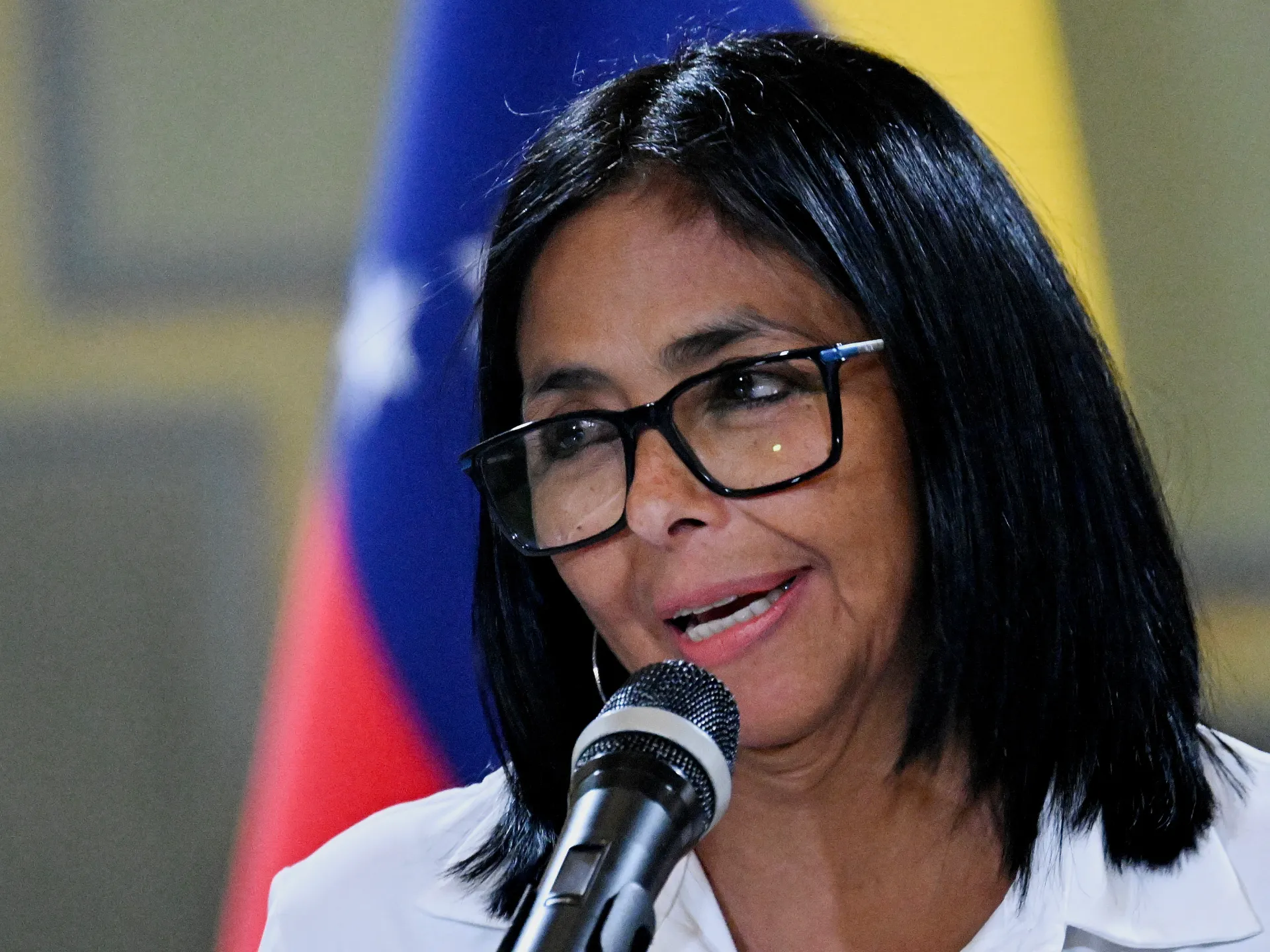
Acting President Delcy Rodriguez has departed Venezuela to attend proceedings at the International Court of Justice in The Hague, marking her first international travel since the abduction of President Nicolas Maduro in January. This movement represents a notable shift in diplomatic activity for the interim leadership, as she assumes the role of Venezuela's primary representative in a high-stakes legal battle concerning the Essequibo region.
The core of the dispute before the UN's top civil court concerns the validity of the 1899 colonial border versus a 1966 document signed prior to Guyana's independence. Venezuela maintains that the territory currently administered by Guyana rightfully belongs to Caracas, a claim that has been revitalised by the discovery of significant offshore oil deposits in the region by ExxonMobil. These reserves have elevated the economic stakes, granting Guyana the largest per capita crude oil reserves in the world, thereby intensifying the strategic importance of the legal arguments being presented.
Rodriguez, who announced her mission via a televised speech stating it had fallen to her to defend the homeland, is the first official to leave the country since Maduro was captured and flown to the United States. Although she was previously subject to US sanctions, these were lifted upon her assumption of the acting presidency. Despite this change in status, officials attending ICJ proceedings are typically granted special legal protections, allowing her to engage in these international forums without the immediate constraints that previously defined her tenure.
The legal proceedings focus on whether the 1899 border established under British colonial rule should remain valid or if it should be redrawn according to the 1966 document. This distinction is critical as the Essequibo region accounts for two-thirds of Guyana's current territory. The case effectively challenges the historical delineation of the border, with the outcome potentially altering the geopolitical map of the Caribbean and the distribution of resources within the region.
While in The Hague, Rodriguez has balanced her representation of Venezuela with broader diplomatic considerations. She has remained compliant with certain US demands, including halting oil deliveries to Cuba and opening the state-owned oil industry to foreign companies, while simultaneously seeking to maintain a careful equilibrium with Venezuela's internal security apparatus and military. This dual approach highlights the intricate nature of her governance as she navigates both international legal obligations and domestic political realities.
Although Rodriguez was invited to the United States by the Trump administration, she has not yet undertaken that journey, instead visiting nearby Caribbean islands such as Grenada and Barbados. Her presence in The Hague underscores the immediate priority of the territorial dispute, even as the broader question of her future diplomatic engagements with the US remains unresolved. The ICJ hearings continue to assess the arguments surrounding the border's legitimacy, a decision that could define the region's future resource management and sovereignty.