Xreal Unveils Budget Smart Glasses Sub-brand xbx Amidst Wearable Tech Competition
The new xbx sub-brand launches with devices that rely on external processing, aiming to balance wearability with performance in a market dominated by Meta and Google.
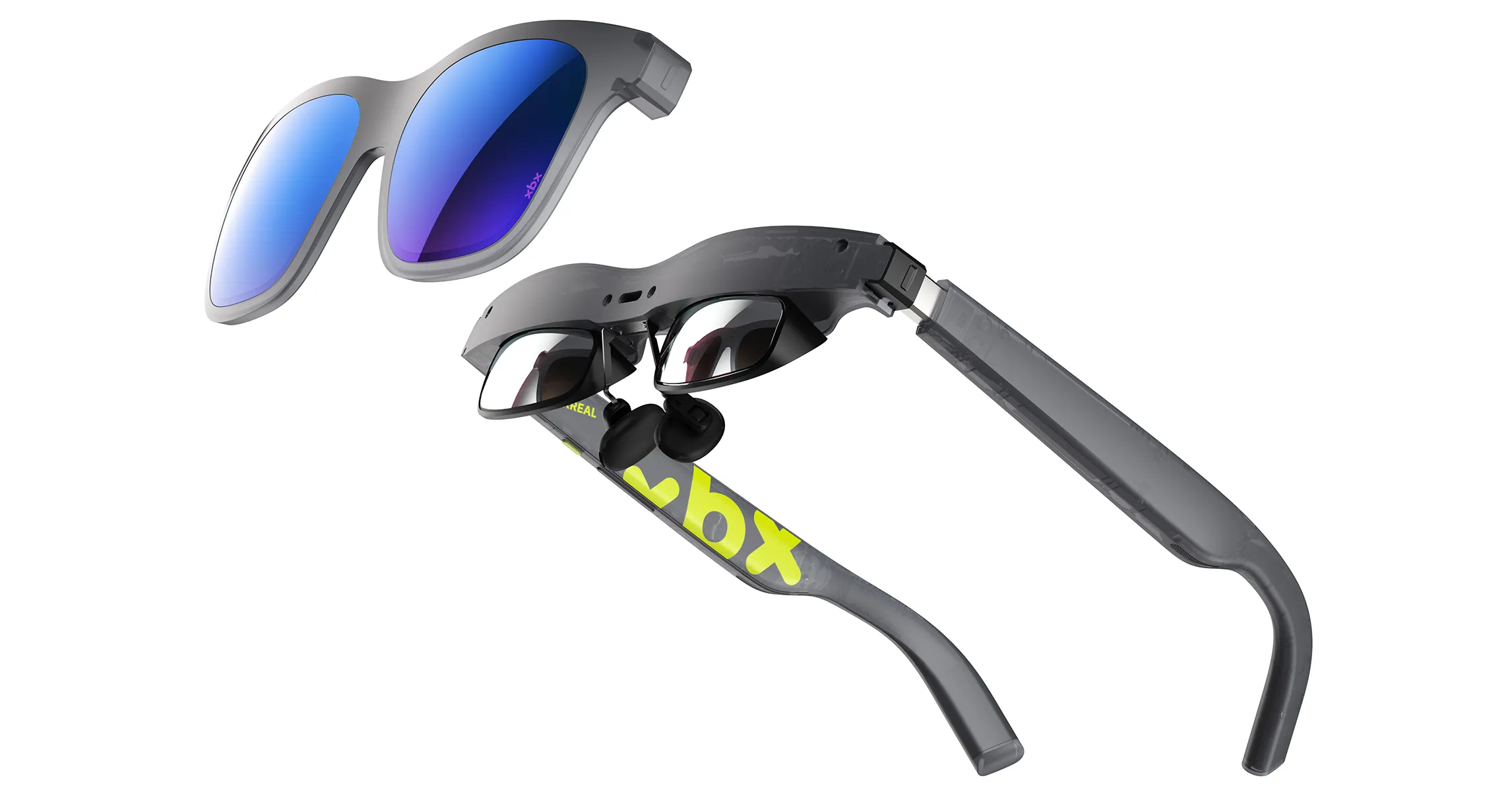
Xreal has introduced a new sub-brand, xbx (X By Xreal), marking a strategic pivot to make its display-centric smart glasses more accessible to a broader consumer base. The launch centres on the a01 smart glasses, priced at $299, which are designed to be significantly lighter and more affordable than the company’s previous high-end offerings. This move positions Xreal to compete more aggressively in the wearable technology sector, where competitors such as Meta and Google are increasingly integrating advanced features into compact form factors.
The a01 glasses weigh approximately 62 grams and feature interchangeable frames, addressing one of the historical challenges in the face computer market: wearability. Unlike more powerful mixed reality headsets that often suffer from bulk, the a01 relies on connected devices such as phones, laptops, or gaming handhelds for power and video processing. Consequently, the glasses do not require an internal battery, allowing for a slimmer profile that users can wear for extended periods, whether for gaming or media consumption.
Technical specifications for the a01 include a perceived brightness of 1600 nits and HDR10 support, ensuring high-quality video projection directly to the wearer. The devices also feature an anti-shake mode to stabilise the image and are compatible with Xreal’s Beam Pro, an Android-based accessory that enables three degrees of freedom tracking and access to the Google Play Store. These features allow the glasses to function as a portable display solution without the need for standalone processing power.
The branding for the new sub-brand, xbx, utilises a bright yellow-green font that has drawn comparisons to Microsoft’s Xbox console. Xreal has stated that the naming convention is distinct enough to avoid legal issues with the American tech giant. The first pair of glasses, the a01, currently features branding elements that echo this aesthetic, though the company emphasises that the product is focused on display performance rather than gaming ecosystem integration.
Xreal’s strategy reflects a broader industry shift towards balancing performance with comfort. While competitors like Meta have struggled to keep powerful glasses from becoming too bulky, Xreal is focusing on niche use cases such as watching movies or playing games in a stationary setting. The company is also developing Project Aura in partnership with Google and Qualcomm, an initiative aimed at reducing the bulk of mixed reality headsets like the Apple Vision Pro. The a01 glasses are currently available in China, with a scheduled launch in the US for July.
