Xi tells Trump that US and China are ‘partners not rivals’
Summit agenda expected to cover Hormuz blockade, Taiwan and rare earths as Asia-Pacific equities trade in mixed territory
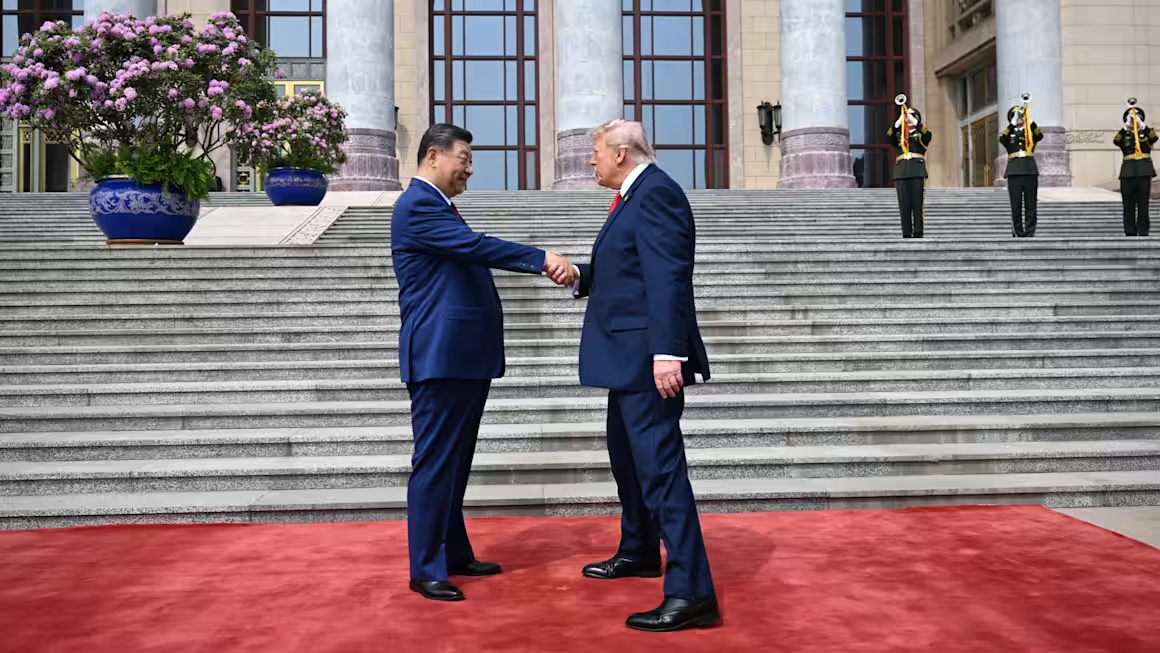
Chinese President Xi Jinping told US President Donald Trump during a summit in Beijing that the United States and China are partners rather than rivals. The discussions are expected to cover the Hormuz blockade, Taiwan, and rare earths.
The summit marks the first visit by a US President to China in nine years, drawing intense global scrutiny as the two leaders convene to address long-standing disputes regarding trade, tariffs, and technology restrictions. The engagement occurs against a backdrop of global economic disruption attributed to the war on Iran, which has caused significant market volatility and inflationary pressures.
Asia-Pacific stock markets reacted with mixed trading on 14 May 2026, reflecting investor scrutiny of the potential for market-stabilising agreements. Investors are closely monitoring the proceedings for signs of progress on high-stakes geopolitical issues, including the Hormuz blockade and Taiwan, as well as commercial interests such as rare earths.
China is expected to seek regular access to high-technology chips from the US, a key component of the technology discussions anticipated during the talks. The agenda also includes Iran-related issues, specifically the Hormuz blockade, highlighting the intersection of diplomatic engagement and global supply chain stability.
The high-stakes nature of the summit has prompted careful observation from financial markets, with the mixed trading in Asia-Pacific equities underscoring the uncertainty surrounding the outcome. While the discussions are likely to include these specific topics, the source material indicates these are anticipated agenda items rather than confirmed outcomes or finalised agreements.
The event draws attention not only for its diplomatic significance but also for its potential impact on global capital flows. With the last US presidential visit occurring nine years ago, the current engagement represents a critical juncture for bilateral relations and the broader economic environment, which remains sensitive to geopolitical tensions and trade policy shifts.