Xcimer Energy Activates World’s Largest Privately Owned Laser in Fusion Push
The 38-metre krypton-fluoride laser generates over one kilojoule of energy, serving as a prototype for a technology that aims to replicate the National Ignition Facility’s success with greater efficiency.
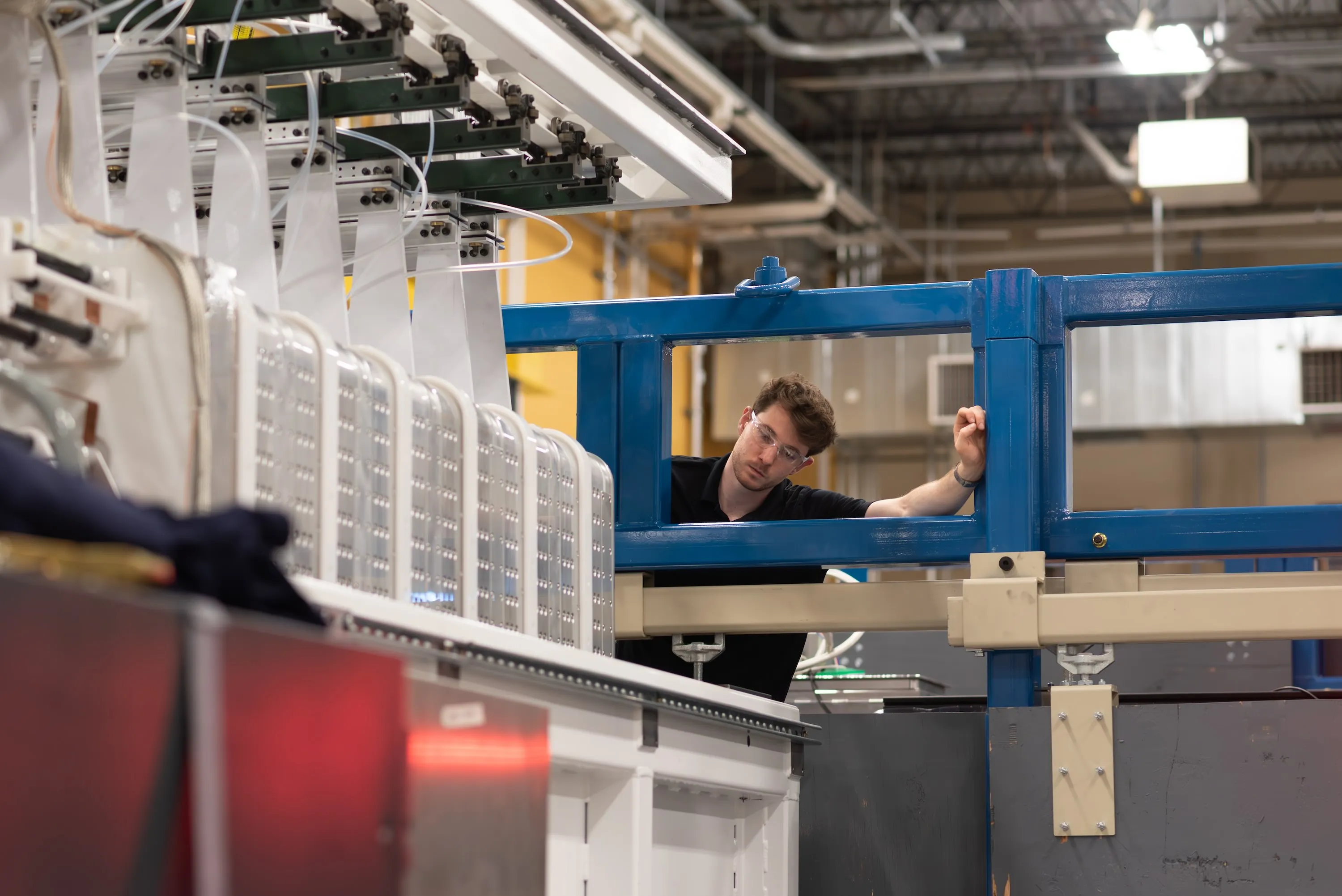
Fusion startup Xcimer Energy has officially activated its Phoenix laser system, describing the facility as the largest privately owned laser in the world. The krypton-fluoride laser, which stands 38 metres long, generates over one kilojoule of energy at full strength. This activation marks a critical engineering milestone for the company as it advances its roadmap toward commercial fusion power generation.
Xcimer’s technological approach draws direct inspiration from the National Ignition Facility (NIF), which demonstrated in December 2022 that a controlled fusion reaction could release more power than was required to ignite it. The NIF process utilised 192 laser beams striking a gold target to produce X-rays, which then compressed a fuel pellet until atomic fusion occurred. Xcimer aims to replicate this concept but with a focus on more powerful and less complex laser systems to improve the economic profitability of fusion energy.
The Phoenix system employs excimer amplification, a method similar to those used in semiconductor manufacturing but scaled up for significantly higher power applications. Xcimer’s broader strategy involves feeding energy from two lasers through a compression system to deliver pulses to a fuel target in nanoseconds. The company posits that faster compression of the fuel increases the likelihood of generating usable fusion reactions.
Despite the significance of the Phoenix activation, the system’s current output remains a fraction of the energy required for a viable commercial power plant. Xcimer estimates that a commercial facility will need to exceed 12 megajoules of energy, whereas the Phoenix laser currently produces just over one kilojoule. The company has clarified that the Phoenix system is a developmental step toward an eventual power plant rather than a functioning commercial energy source.
Looking ahead, Xcimer Energy has outlined a timeline that includes completing a prototype of its fusion technology by 2028. Following this phase, the company plans to construct a commercial-scale power plant in the mid-2030s. These projections remain subject to the company’s internal development schedules and have not yet been independently verified.
