World Cup 2026 opener sees historic spike in red cards as Mexico defeat South Africa
Three dismissals in the opening fixture at Estadio Azteca mark a stark departure from the disciplinary trends of the 2018 and 2022 tournaments, raising questions about officiating standards under FIFA’s new leadership.
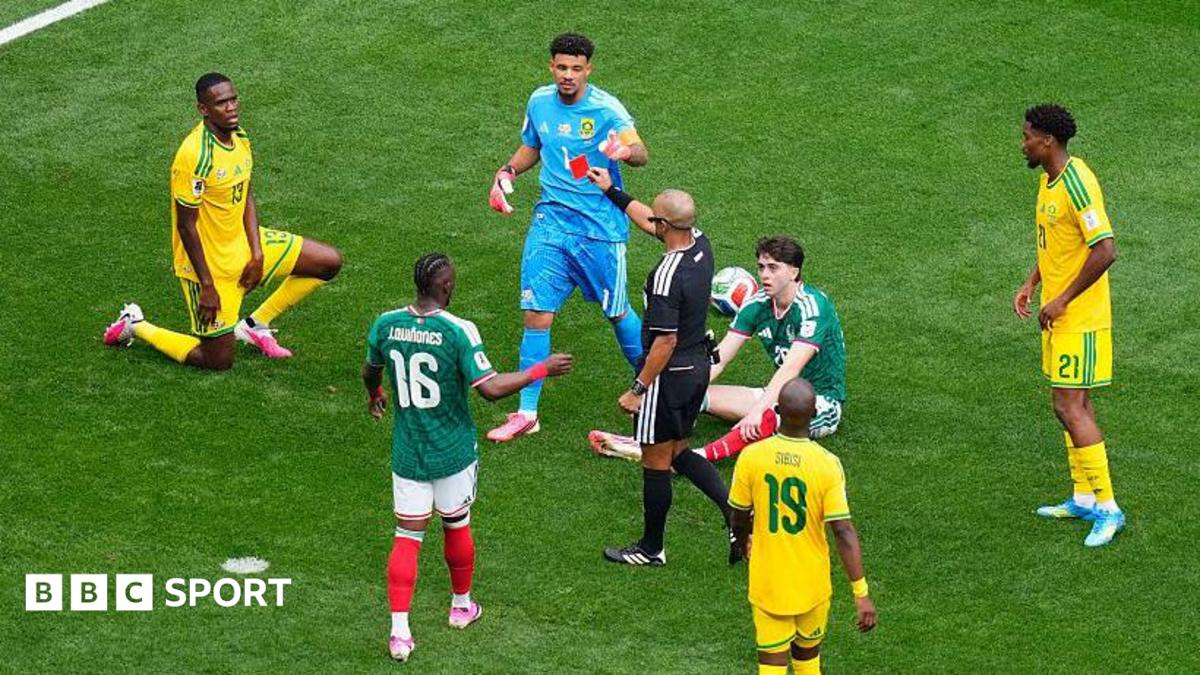
The 2026 FIFA World Cup commenced on Thursday, 11 June 2026, with co-hosts Mexico securing a 2-0 victory over South Africa at the Estadio Azteca in Mexico City. The match, which featured goals from Julian Quinones in the ninth minute and Raul Jimenez in the 67th minute, was defined by an unprecedented disciplinary record that has immediately drawn scrutiny regarding the tournament’s officiating philosophy.
Three players were shown red cards during the fixture, a figure that nearly matches the total of four dismissals recorded across all matches in both the 2018 and 2022 World Cups. South Africa’s Sphephelo Sithole was sent off in the 49th minute for denying a clear goalscoring opportunity to Mexico’s Brian Gutierrez. South Africa’s Themba Zwane was dismissed in the 84th minute following a tussle with Roberto Alvarado, a decision upheld after a Video Assistant Referee (VAR) review. Mexico’s Cesar Montes also received a red card in stoppage time for a rash tackle on Khuliso Mudau.
Referee Wilton Sampaio, assisted by Colombia’s Nicolas Gallo as VAR, officiated the match under the stewardship of FIFA head of referees Pierluigi Collina. Collina, appointed in 2017, has previously emphasised that decisions should serve as justice for both teams, often leading to stricter interpretations of player behaviour and the relaxation of laws regarding denying goalscoring opportunities when a penalty is awarded.
The dismissal of Zwane for violent conduct was particularly scrutinised, with replays showing an open-hand contact that some observers deemed harsh. However, under Collina’s guidance, such actions may be viewed as part of a broader effort to curb poor player behaviour, including confrontations and protests. The third red card, issued to Montes, was deemed supportable by VAR standards as the tackle prevented a likely clear goalscoring opportunity for Mudau.
While the spike in dismissals has sparked debate, it remains unclear whether this represents a systemic shift or a statistical anomaly. Collina’s pre-tournament briefings focused on timewasting and general conduct rather than a hardline stance on red cards. As the tournament progresses, the officiating approach will likely be tested against the backdrop of an expanded 48-team field and the unique pressures of a trilateral hosting arrangement.