WIRED Tests 2026 RGB TVs: LG Takes Top Spot as Mini-LED Tech Matures
A comprehensive review by WIRED highlights the LG Micro RGB Evo as the leading model, while the Hisense UR9 emerges as a strong budget contender in the growing market for red, green, and blue backlight televisions.
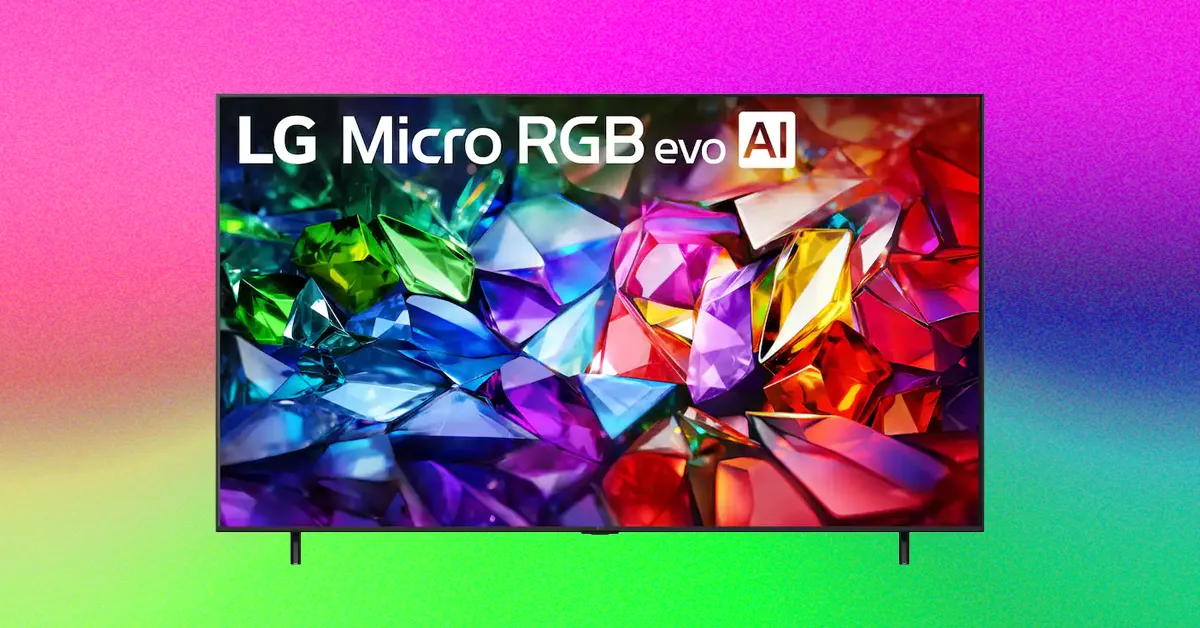
A recent review by WIRED has tested five new television models released in 2026 that utilise RGB backlight technology, marking a significant shift in the mid-range display market. The technology replaces standard white LEDs with distinct red, green, and blue modules to produce colours directly at the source, aiming to deliver improved contrast, brightness, and colour purity. While the review concludes that this development is an evolution of LCD technology rather than a direct replacement for OLED, the results indicate that manufacturers are narrowing the gap in performance while maintaining lower production costs.
The LG Micro RGB Evo was identified as the top pick in the review, praised for its extensive customisability and superior picture quality. Priced at $4,500 for the 75-inch model, the set allows users to tweak white balance, saturation, and screen clarity with precision. The review noted that while default settings could render some content too dark, manual adjustments unlocked vivid visuals that outperformed competitors. Additional features include an optional $5 per month LG Gallery+ artwork subscription, positioning the TV as a potential digital art display, although the review noted it lacked the texture and realism of Samsung’s dedicated art TVs.
In the budget segment, the Hisense UR9 RGB Mini-LED emerged as a strong value proposition. At $1,999 for the 65-inch model, it offered picture quality that competed closely with the more expensive LG set, particularly in gaming scenarios. The Hisense model features a unique side-mounted DisplayPort USB-C connection, enabling high-refresh-rate gaming at 180Hz or 330Hz VRR for low-latency performance. However, the review suggested that its picture quality settings were less impactful than those on the LG, making it a compelling but slightly less refined option for enthusiasts.
For large-screen enthusiasts, the TCL RM9L RGB-Mini LED was recommended despite its premium pricing. Available only in sizes of 85 inches and larger, with the 85-inch model costing $6,000, the TV was lauded for its colour accuracy and immersive viewing experience. The review highlighted that the massive screen size revealed minor blotching issues during specific tests, which were resolved by switching to Vivid picture mode. While praised for its gaming capabilities and movie performance, the high cost was cited as a barrier, especially when compared to OLED alternatives at similar sizes.
The remaining models received mixed feedback regarding value and specific feature sets. The Samsung Micro RGB R95H, priced at $3,200, was highlighted for its AI soccer mode, which enhances picture clarity and reduces crowd noise during sports broadcasts, making it a top choice for football fans. Conversely, the Sony Bravia 7 II, priced at $2,299, offers a "lossless" 4K streaming experience via the Sony Pictures Core app but was described as having washed-out picture quality in some benchmarks. The review noted that while Sony uses the term "True RGB," the underlying technology remains similar to the "mini RGB" and "micro RGB" variants used by other manufacturers, with performance varying significantly across brands.
