WIRED Review: Valve’s 2026 Steam Machine Falls Short of Console Rivals
Despite a sleek design and robust connectivity, performance testing reveals inconsistent frame rates and a heavy reliance on upscaling technologies, undermining its value proposition against Sony, Microsoft, and Nintendo.
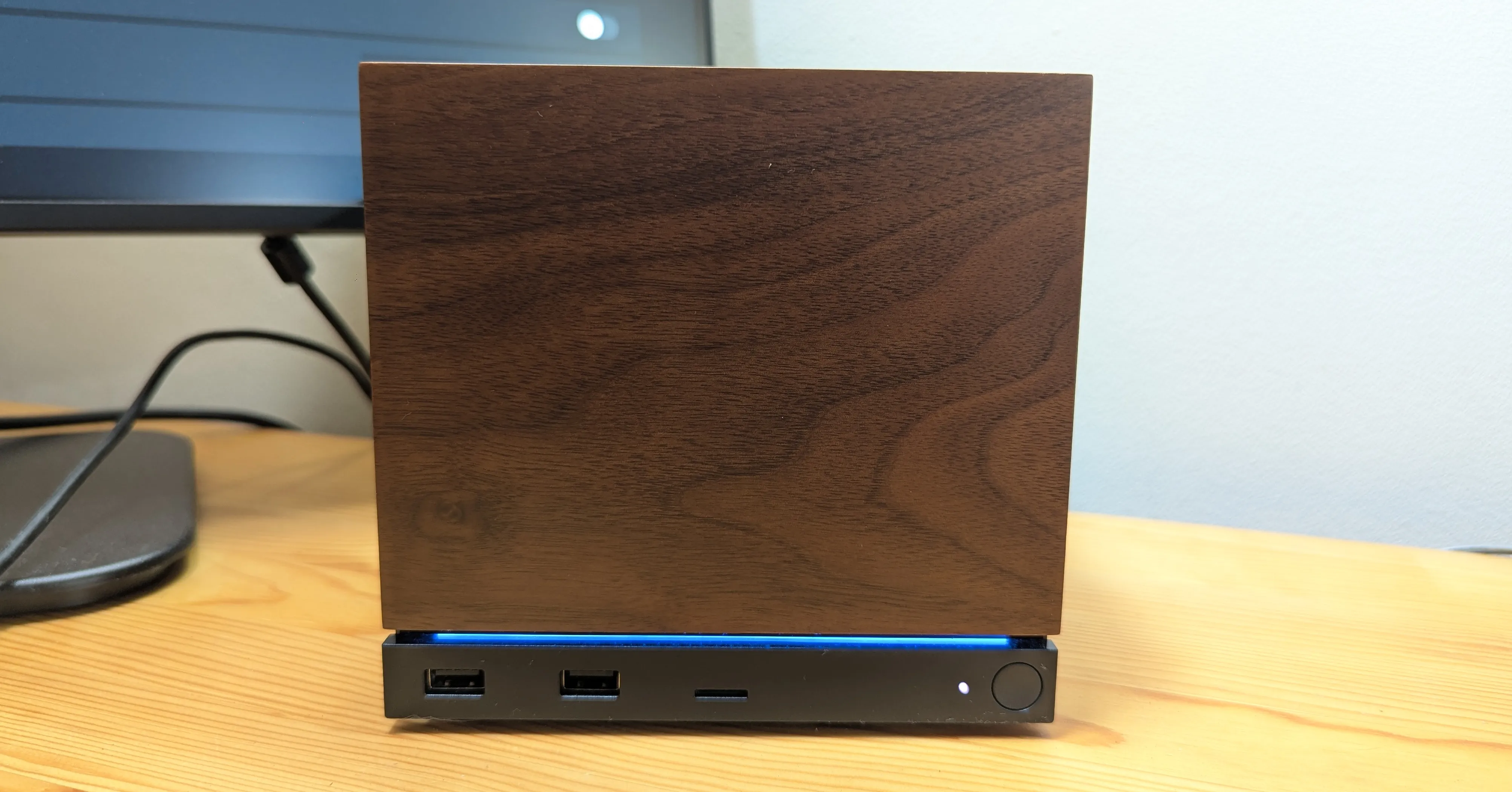
WIRED has published a comprehensive review of Valve’s 2026 Steam Machine, characterising the device as a "compromised console" that fails to match the performance standards set by major rivals Sony, Microsoft, and Nintendo. While the hardware features a sleek, GameCube-sized design and runs on Linux-based SteamOS, its underlying components are comparable to a PlayStation 5 from six years prior. The review concludes that the machine offers a poor value proposition for dedicated console gamers, despite remaining a viable option for indie titles and living room PC gaming.
The device utilises a semi-custom AMD Zen 4 CPU with six cores and 12 threads, clocking up to 4.8 GHz, paired with an AMD RDNA3 GPU featuring 28 compute units. Memory configuration includes 16 GB of DDR5 RAM and 8 GB of GDDR6 VRAM, with storage options limited to 512 GB or 2 TB. Although the hardware technically outpaces the older Zen 2 architecture found in the base PlayStation 5, the overall graphical output and memory bandwidth place it significantly behind current-generation dedicated consoles.
Performance testing revealed significant struggles with AAA titles, particularly when targeting 4K displays. Games such as Marvel’s Spider-Man Remastered, Crimson Desert, Lego Batman: Legends of the Dark Knight, and Granblue Fantasy Relink: Endless Ragnarok exhibited inconsistent frame rates. Achieving playable performance often required heavy reliance on AMD’s FidelityFX Super Resolution (FSR) upscaling technologies, which frequently resulted in image quality compromises or frame drops during intensive sequences.
The review notes that the machine is "almost wholly incapable of delivering a true 4K, high-frame-rate experience" without extensive manual configuration. On a 55-inch 4K OLED TV, users were forced to navigate complex display settings to maintain stability, with some titles dropping to 20 to 25 fps even on lower settings. While the device performed adequately on 1080p monitors, the requirement for such compromises undermines its appeal as a plug-and-play living room solution.
Physical design elements include replaceable faceplates, an internal power supply, and connectivity options such as Wi-Fi 6E, Bluetooth 5.3, and HDMI 2.0. However, the Steam Controller is not included in the base price and must be purchased separately, adding to the overall cost. The device boots into SteamOS in Big Picture mode by default, with an optional KDE Plasma desktop mode available for general computing tasks, offering a clean Linux experience that is surprisingly accessible to newcomers.
Ultimately, the review suggests that the Steam Machine feels like a rushed release, hampered by component costs and hardware limitations. While it provides a superior method for accessing the Steam library in the living room compared to docking the Steam Deck, it is immediately outclassed by the PS5, Xbox Series X, and Nintendo Switch 2 in the AAA gaming sector. For users willing to accept sub-4K output or focus on less demanding games, it remains a functional, if disappointing, option.
