WIIRed Review: Coway Airmega P50 Pedestal Fan Prioritises Quiet Operation Over Smart Features
A recent assessment by WIIRed highlights the P50’s whisper-quiet brushless motor and adjustable height, while noting its airflow lags behind key competitors and its voice control system demands exact phrasing.
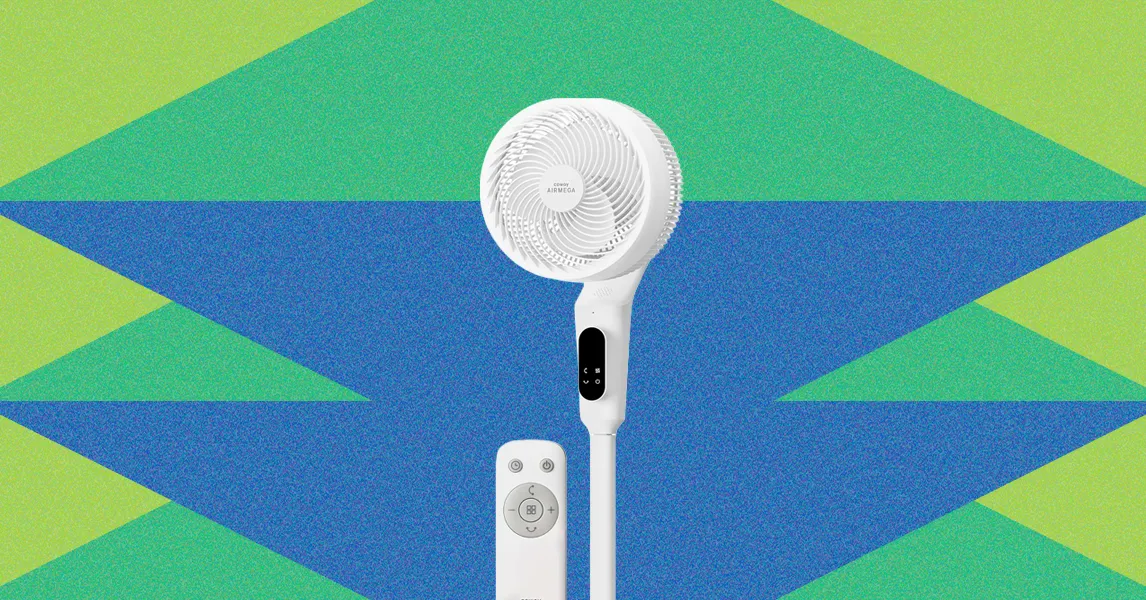
WIIRed has published a review of the Coway Airmega P50 pedestal fan, marking the company’s entry into the standalone fan market with a device that deliberately omits Wi-Fi and smartphone app connectivity. The review, conducted by a tester who has evaluated approximately 45 fans over the past two years, positions the P50 as a counterpoint to the industry’s push toward fully connected smart home ecosystems. Instead of digital integration, the unit relies on a physical remote and a built-in voice assistant, a design philosophy that aligns with Coway’s existing reputation for producing app-free air purifiers.
The P50 is distinguished by its brushless motor and “eagle vane” blade design, which the reviewer notes achieves a noise level of just 26 decibels on low speed, making it the quietest fan tested to date. The unit features an adjustable height ranging from 23 inches to 41 inches, achieved by adding or removing segments, though this process requires disassembly. Despite the weight of just under 14 pounds, the fan’s proportions are described as stable and not top-heavy, reducing the risk of tipping common in pedestal designs. The head grate is also designed to pop off for easy cleaning of internal components.
However, the review identifies significant limitations in the P50’s performance relative to competitors. The fan spins out 866 feet per minute of airflow at its highest setting, which trails behind the Dreo PolyFan 508, a similarly sized unit that delivers 1,040 feet per minute. The reviewer suggests that while the airflow is sufficient for general use, it is not impressive for larger spaces requiring high-volume air movement. The device operates without the Wi-Fi connectivity found in rivals like Dreo and Emerson, which typically offer app-based controls.
The built-in voice assistant, a marquee feature of the P50, received criticism for its rigid operation. The system requires specific wake words, such as “Hi, Airmega” or “Hello, Airmega,” followed by exact phrasing for commands, with a 15-foot recognition range. The reviewer noted that deviating from the prescribed syntax results in the fan ignoring the command, leading to a preference for the included remote control. The remote itself lacks included AAA batteries and a magnetic docking spot, posing a risk of misplacement.
Despite the voice control frustrations, the reviewer concluded that the P50 remains an excellent fan due to its stability, adjustability, and quiet operation. The unit offers four modes: Smart, Turbo, Natural Wind, and Sleep, with oscillation capabilities of 90 degrees vertically and 120 degrees horizontally. It carries a one-year warranty, which is standard for the category, though shorter than the five-year warranty offered by competitor Vornado. The review suggests a viable market for app-free, voice-controlled fans, particularly for users seeking simplicity or those operating in areas without Wi-Fi.
