WIIR Review: GoRuck GR1 Backpack Praised for Durability and Versatility
The US-made backpack, constructed from 1000D Cordura, offers significant organisational flexibility and military-grade resilience, though it carries a notable weight and cost.
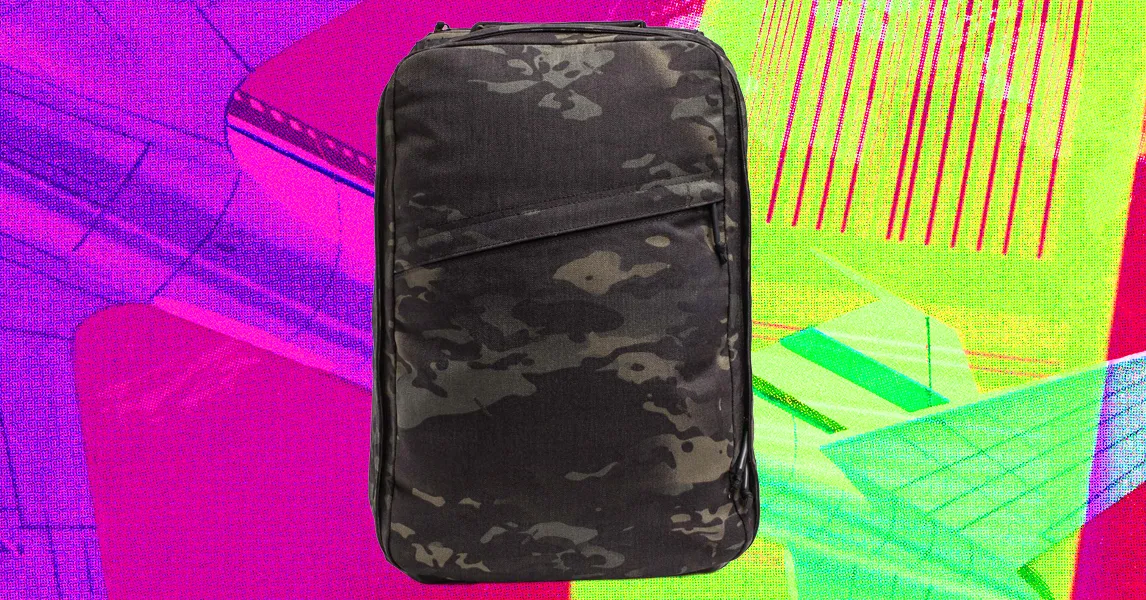
WIRED reviewer Scott Gilbertson has published a comprehensive assessment of the GoRuck GR1 backpack, describing it as a highly durable, multi-purpose bag suitable for travel, rucking, gym use, and as a camera or laptop carrier. The 26-litre model, constructed from ultra-durable, water-resistant 1000D Cordura and weighing 3.1 pounds, is highlighted for its capacity to hold a week's worth of travel items and fit under airplane seats. Gilbertson, who dislikes running, sought a cardio solution involving walking with weight, a practice known as rucking. Rucking, originally a military term, has gained popularity among civilians via TikTok and Silicon Valley circles as a low-barrier cardio alternative to running. GoRuck is co-founded by an ex–Special Forces member, influencing the brand's military aesthetic and durability focus.
Gilbertson reports using the bag for three years with no visible wear, noting it holds enough for a weeklong trip and fits under an airplane seat. The bag features four internal pockets (excluding the laptop sleeve), full-length side zippers for camera access, and internal MOLLE webbing. The standard GR1 costs a significant amount (implied high price point), while the Heritage version (waxed canvas, no back MOLLE) is priced at $525 but is currently out of stock. The reviewer notes that while the GR1 is versatile, they still prefer specific bags for hiking (Mystery Ranch Coulee 30) and water sports (Fjällräven High Coast).
The review details the bag's transformation from a dedicated rucking tool to a primary travel companion. Gilbertson loaded the pack for a weeklong family trip, finding it sufficient for his needs and noting it avoids the overhead bin issue due to its under-seat fit. He also utilised the full-length side zippers for camera access and the internal space for gym gear, including a jiujitsu gi. The pack’s organisational structure includes two external pockets and two internal pockets on the back flap, alongside a large main compartment that accommodates items such as rain gear, lunch, and a travel tripod.
Internal MOLLE webbing allows for the secure placement of camera lenses, while external webbing has been used for a water bottle holder. Gilbertson acknowledges the bag's weight as a feature rather than a bug, given its rucking function, but expresses a minor preference against the external MOLLE webbing on the back of the standard model. The Heritage version, made of waxed canvas and priced at $525, removes this back webbing but is currently unavailable. The reviewer suggests that for trips exceeding two weeks, the larger 34-litre GR2 model, priced at $385, might offer more appropriate space.
Despite its versatility, Gilbertson maintains that the GR1 is not a total replacement for specialised equipment. He continues to use a Mystery Ranch Coulee 30 for hiking and a Fjällräven High Coast for bikepacking and water sports, arguing that pre-loading specific packs for specific activities is more efficient than forcing a single bag to handle every scenario. Nevertheless, he concludes that if limited to one bag for life, the 26-litre GR1 would be his choice, citing its practical utility and durability as justifying its high cost.
