Waymo publishes open-source 'Reference Driver' to benchmark autonomous vehicle safety
The Reference Driver, developed with Delft University of Technology, aims to establish shared industry standards for AV safety by replicating human cognitive responses to road surprises.
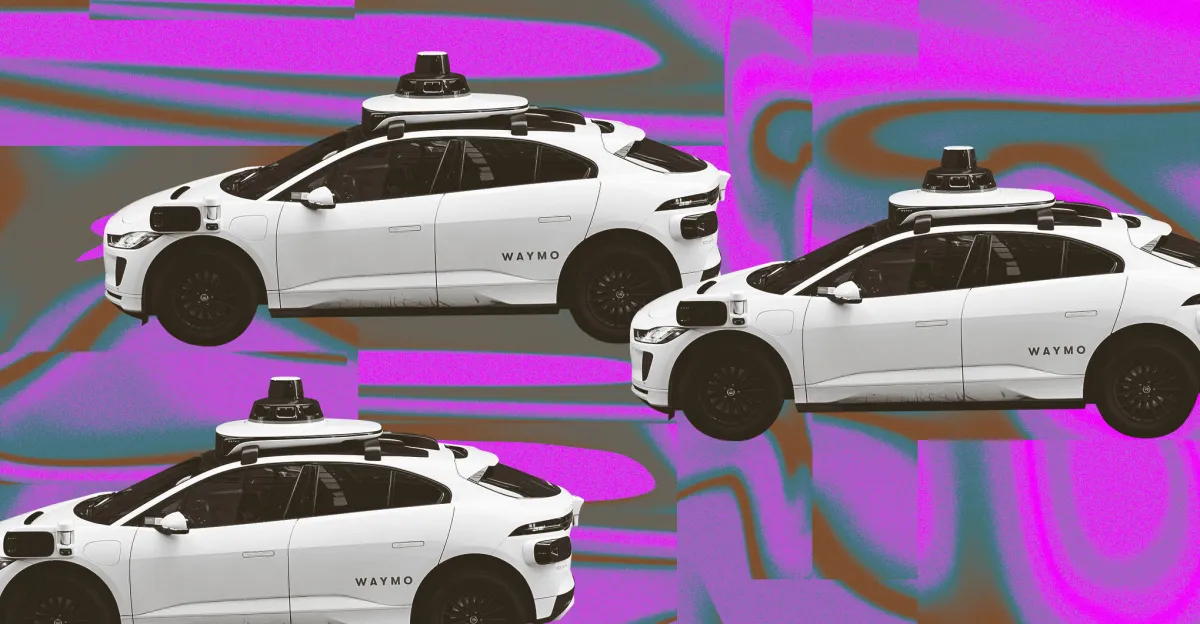
Waymo has published a new computer-based cognitive model, known as the Reference Driver or ReD, in the journal Nature Communications. Developed in collaboration with the Delft University of Technology, the model utilises the neuroscience framework of active inference to simulate how human drivers react to unexpected events on the road. The company is making the model open source, aiming to provide the autonomous vehicle industry with a behavioural benchmark to help systems anticipate risks and avoid conflicts.
The ReD model functions as a virtual behavioural crash test dummy. While traditional safety metrics often focus on structural integrity or last-second reactive maneuvers, ReD is designed to evaluate how well an autonomous vehicle can avoid dangerous situations altogether. By establishing a reference model of a competent human response, Waymo hopes to help the industry move toward a shared, scientifically grounded approach for evaluating collision-avoidance behaviour.
Mauricio Peña, Waymo’s chief safety officer, stated that understanding how a human handles conflict is a critical piece of the puzzle. The model relies on the principle that human brains strive to minimise surprise over time. It layers several cognitive traits to simulate this process, including judging longitudinal threats based on looming, which is how fast an object expands in the field of vision. The model naturally struggles to judge speeds at far distances, mirroring human limitations.
ReD also accounts for a traffic norm filter, which biases predictions toward rule-abiding behaviour until a violation is explicitly observed. It evaluates surprises by triggering a reevaluation of driving plans once a threshold is reached. Additionally, the model introduces a 0.2-second pause when shifting between accelerator and brake pedals, replicating the physical constraints of human drivers using a single foot.
Unlike previous safety models that primarily simulate emergencies, Waymo describes ReD as capable of proactive avoidance. By continuously calculating surprise and minimising free energy, the model can anticipate risks early and adjust driving behaviour before a situation escalates. Arkady Zgonnikov, an assistant professor at Delft University of Technology, described the approach as a holistic representation of human collision response.
Neuroscientist Professor Karl Friston, a champion of the active inference framework, described the ReD model as a technical tour de force. Waymo is collaborating with researchers, regulators, and standards organisations such as the SAE to establish a consensus around these reference models. The goal is to define what constitutes a careful and competent human response, providing a standard against which autonomous systems can be measured.
The publication marks the latest in Waymo’s body of peer-reviewed research, which the company says distinguishes it from other autonomous vehicle operators. By releasing the model publicly, Waymo invites the broader industry to test and utilise the benchmark, potentially accelerating the development of safer autonomous driving technologies through shared scientific standards.
