Waymo deploys Ojai robotaxi amid Chinese manufacturing scrutiny and regulatory delays
The pale-blue, driverless minivans utilise a chassis from Geely’s Zeekr sub-brand, a partnership that has drawn political criticism despite Waymo’s claims of US-based software integration.
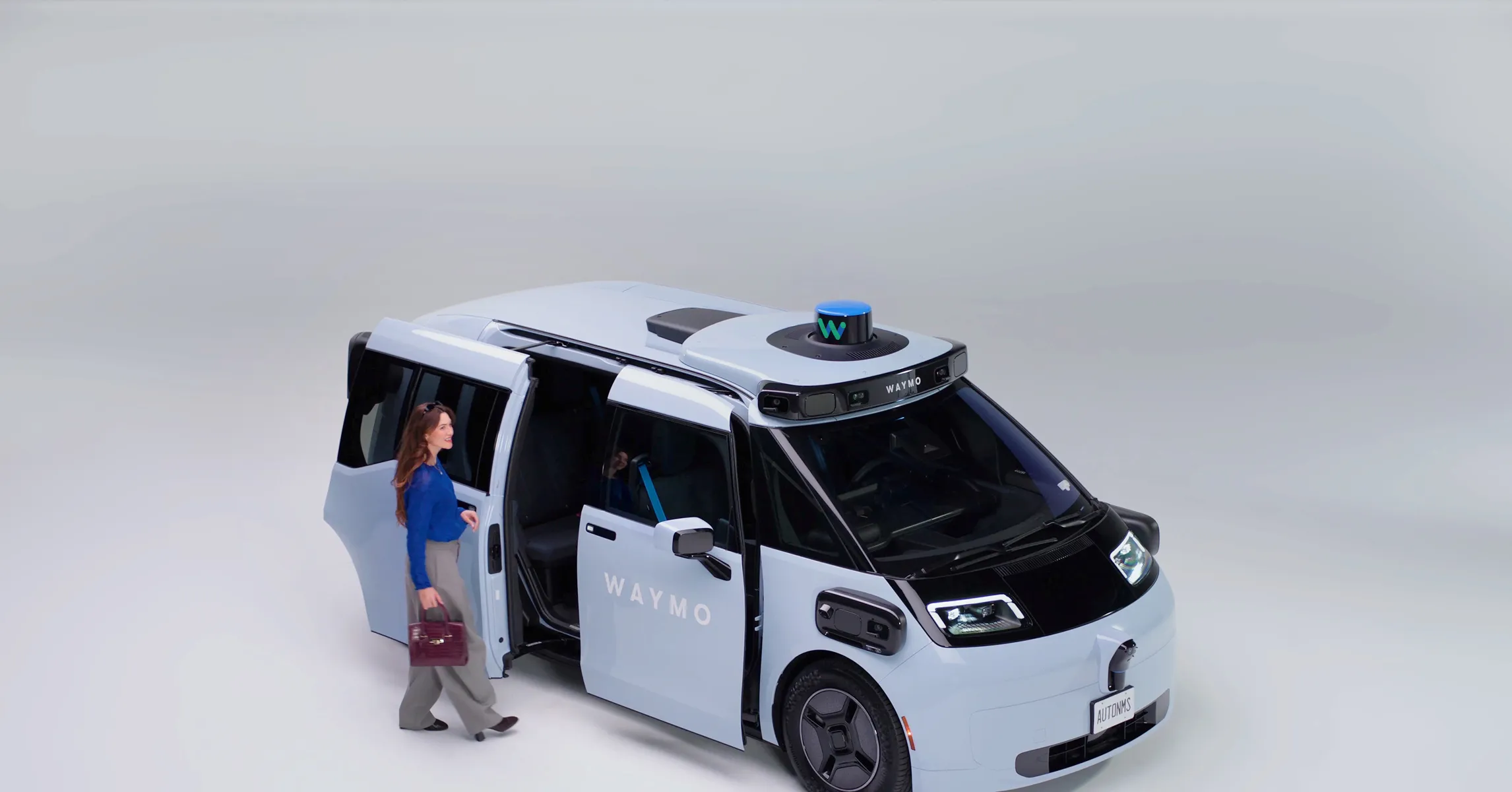
Alphabet-owned Waymo has commenced public deployment of its new Ojai autonomous vehicle across California and Arizona, marking a significant shift in the company’s fleet strategy. The pale-blue, driverless minivans are now available for summoning via the Waymo app, though rides remain free of charge pending regulatory approval to introduce fares. The launch follows a development period that began with the vehicle’s announcement in 2021 and public street testing in 2024.
The Ojai represents a departure from Waymo’s previous reliance on human-designed platforms such as the Chrysler Pacifica hybrid and the Jaguar I-Pace. Built specifically for autonomy, the vehicle features a larger cabin with flat floors, grab bars, and increased legroom, designed to improve accessibility and operational efficiency. The vehicle is equipped with a new sensor suite comprising 13 cameras, six radar systems, and four lidar sensors, integrated with updated AI-driven software intended to support expansion into diverse environments, including those with harsh weather conditions.
A central point of scrutiny surrounding the launch is the vehicle’s manufacturing origin. The Ojai is based on a mobility platform manufactured by Geely’s Zeekr sub-brand, with the vehicle shell built in China. Zeekr, which has sold vehicles internationally since 2023, does not currently operate in the US market. Waymo states that the bare-bones vehicles are shipped to its Arizona facility, where the autonomous driving hardware and software are installed on US soil.
This distinction is critical given the regulatory landscape. In January, the US government finalised rules barring Chinese- and Russian-connected vehicle technology from US roads starting in 2027, citing national security concerns and competition from Chinese manufacturers. Waymo asserts that because Zeekr only provides the base vehicle without telematics or connected software, the Ojai is exempt from these restrictions. Despite this, the partnership has attracted political criticism, including comments from a US senator during a congressional hearing in February.
Operational challenges have also recently impacted Waymo’s broader network. The company suspended service in six US cities last week due to issues with vehicle reactions to flooding and paused its highway driving program over concerns regarding construction zones. In California, the introduction of fares is contingent on approval from the California Public Utilities Commission (CPUC). The regulator has requested responses regarding the handling of unaccompanied minors and major disruptions, such as the late 2025 San Francisco power outage. A decision on the Ojai and proposed expansions into the East Bay and Southern California is expected by June 27.
Waymo continues to operate in 11 US markets with plans to expand into at least 20 new regions, including London and Tokyo. The company also intends to integrate Hyundai Ioniq 5 models into its fleet under a partnership dating back to 2024, while retaining the Jaguar I-Pace for the foreseeable future. The current free-ride period is described by Waymo as a mechanism to gather rider feedback and refine the experience before commercial operations begin.
