Washington AI Network gala underscores regulatory uncertainty ahead of 2026 midterms
The Washington AI Network’s recent black-tie event highlighted the complex political landscape for artificial intelligence regulation, where partisan loyalty and midterm uncertainty complicate traditional lobbying strategies.
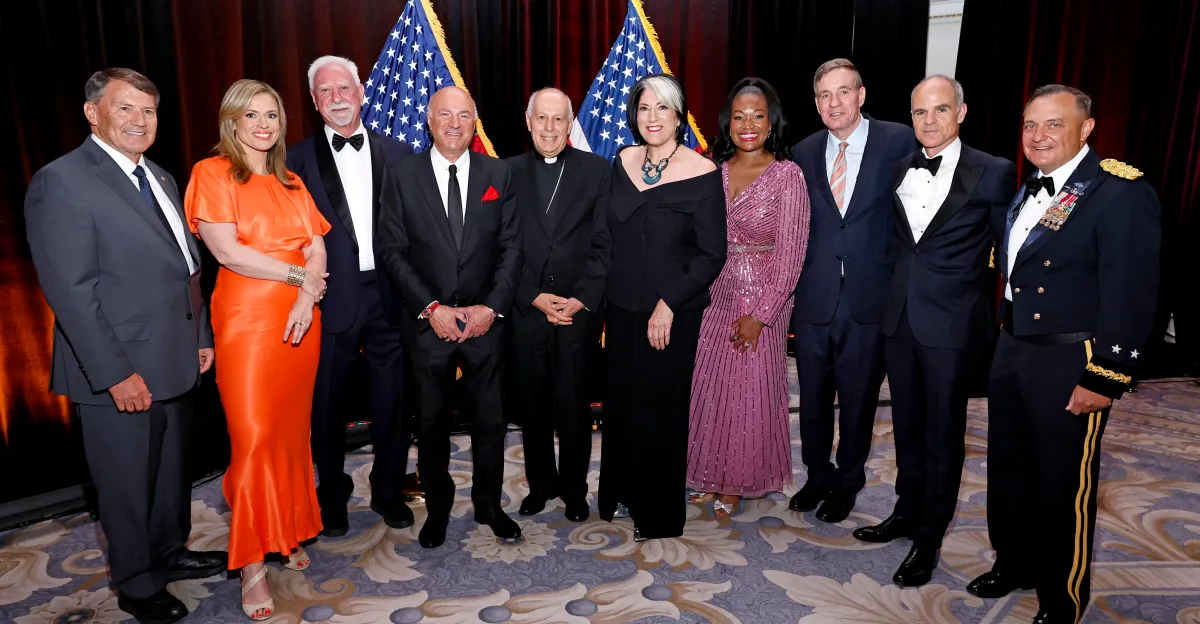
The Washington AI Network hosted a black-tie gala at the Waldorf Astoria in Washington, DC, bringing together AI lobbyists, tech industry representatives, and senior administration officials. The event, attended by CMS Administrator Mehmet Oz and Department of Energy Under Secretary Darío Gil, underscored the challenging political environment for AI regulation under President Donald Trump, where industry lobbying is complicated by partisan loyalty concerns and uncertainty surrounding the upcoming November midterms.
The gathering also featured Vatican representative Archbishop Gabriele Caccia, who made a surprise debut to deliver remarks on safeguarding the human condition. However, his address was reportedly drowned out by networking chatter and the sounds of the salad course, illustrating the event’s focus on industry networking over doctrinal discussion. Pope Leo XIV’s recent encyclical, Magnifica Humanitas, was discussed among attendees, though it carries no legal force and cannot impose regulations.
Traditional bipartisan lobbying efforts are increasingly difficult in the current political climate. Corporate lobbyists typically seek to cultivate relationships across the aisle, but the Trump administration’s emphasis on partisan loyalty means that past support for Democrats can be viewed as disloyalty. This dynamic was highlighted by the delay in billionaire Jared Isaacman’s nomination for NASA administrator, which was stalled for several months after revelations of his past donations to Democratic candidates.
While direct support from the president can secure regulatory wins, the tech industry faces significant uncertainty regarding the balance of power in Congress. With the 2026 midterms approaching, companies are navigating an unpredictable landscape where shifts in the House or Senate could alter committee controls and legislative priorities. This volatility creates an infinite series of unknowns for tech firms attempting to plan their regulatory strategies.
Analysts note that AI industry political spending is increasingly linked to crypto interests, with both sectors advocating for deregulation and reduced consumer protections. Molly White’s new project, Tech Influence Watch, is tracking this spending for the 2026 midterms, noting that the donors and strategists driving AI super PACs are often the same individuals involved in crypto politics. This alignment suggests a coordinated effort to slash consumer protections and allow tech companies to capture greater profits, a stance that may become a key issue for voters in the upcoming elections.
