Wall Street retreats as bond yields hit one-year high on inflation fears
Global equities fell as sticky inflation data and Middle East tensions drove U.S. Treasury yields to their highest levels in 12 months, overshadowing recent technology stock gains.
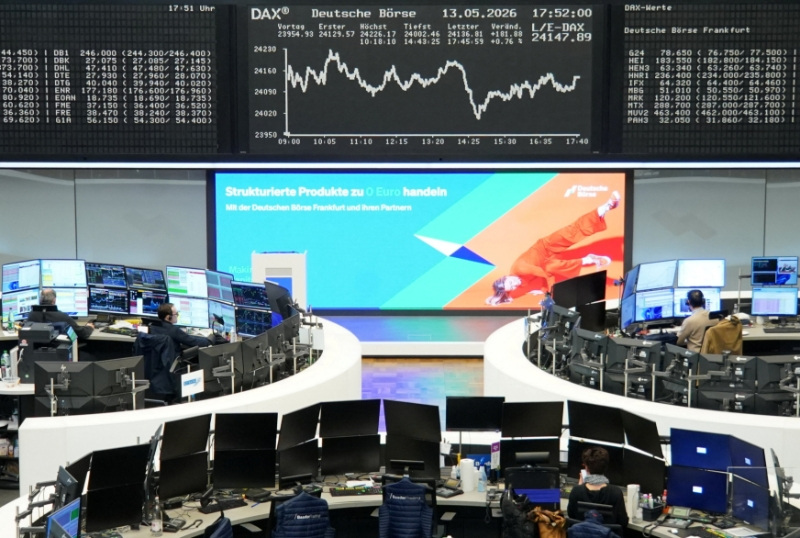
Global equity markets declined on Friday as rising bond yields and persistent inflation concerns overshadowed recent gains in technology stocks. The S&P 500, Nasdaq Composite, and Dow Jones Industrial Average all posted losses, reversing the momentum from previous sessions where artificial intelligence-related shares had driven indices to closing records.
U.S. Treasury yields climbed to their highest levels in a year, with the benchmark 10-year note yield rising 13.8 basis points to 4.597%. The 30-year bond yield increased to 5.122%, while the 2-year note yield, which closely tracks interest rate expectations, rose to 4.079%. These movements were driven by elevated oil prices and sticky inflation data, which increased market expectations for a Federal Reserve interest rate hike later this year.
The sell-off followed a period of optimism where U.S. stocks had risen on Thursday, supported by a diplomatic summit in Beijing between President Donald Trump and President Xi Jinping, as well as strong earnings reports from major corporations. However, the euphoria faded as traders raised bets that the central bank would hike rates, with the probability of a 25 basis point increase by year-end jumping to roughly 38.8% from less than 14% the previous week.
Oil prices rallied on supply worries stemming from Middle East tensions. U.S. crude settled up 4.2% at $105.42 a barrel, while Brent crude rose to $109.26 per barrel. The increase in energy costs added to inflationary pressures, particularly after two batches of high inflation readings for April were released earlier in the week.
In currencies, the U.S. dollar strengthened against major currencies for a fifth consecutive day, placing it on track for its biggest weekly gain in two months. The dollar index rose 0.33% to 99.28. Meanwhile, gold prices fell to a more than one-week low, with spot gold dropping 2.35% to $4,540.11 an ounce, under pressure from the stronger dollar and higher yields.
The market shift also coincided with a leadership change at the Federal Reserve. Friday marked Jerome Powell's last day as Fed Chair before being replaced by Kevin Warsh, who was nominated by President Trump. Market strategists noted that investors would be testing the incoming chair's stance on monetary policy, with expectations that the market would press Warsh to clarify his position on inflation and rate hikes.