Wall Street retreats as bond yields climb and Iran tensions ease
The Nasdaq, S&P 500, and Dow Jones all closed lower on Tuesday as the 10-year yield breached 4.6 per cent. Investors await the Federal Reserve’s next move and Nvidia’s results amid shifting Middle East dynamics.
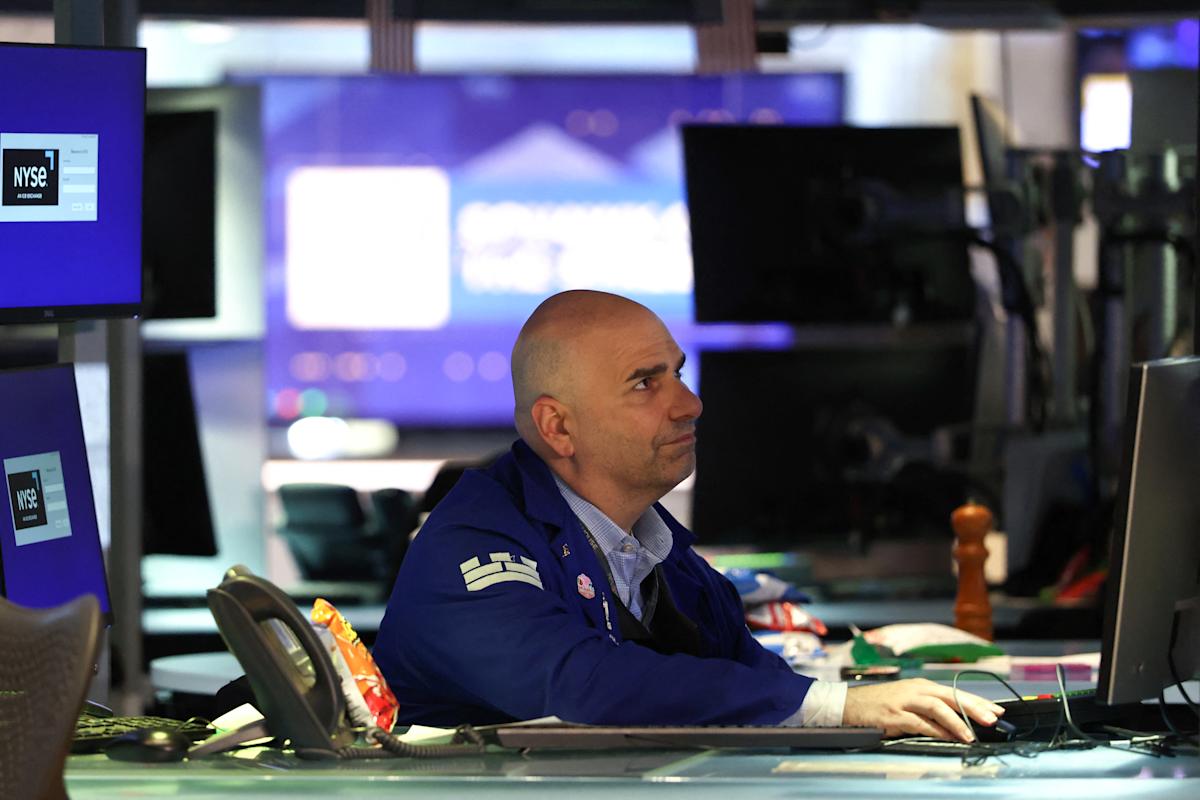
US equity markets declined on Tuesday, with the Nasdaq Composite falling 0.6 per cent, the S&P 500 dropping 0.4 per cent, and the Dow Jones Industrial Average sliding 0.5 per cent. The sell-off was driven by rising Treasury yields, with the benchmark 10-year rate climbing above 4.6 per cent, and persistent inflation concerns. Geopolitical uncertainty regarding the US-Iran conflict and blockades in the Strait of Hormuz weighed on investor sentiment, although oil prices retreated slightly after President Trump announced a halt to a planned military strike on Iran pending negotiations.
The pullback in equities coincided with a moderation in energy costs. Oil prices pulled back, with Brent crude hovering around $110 per barrel and West Texas Intermediate (WTI) trading at $103 per barrel, following the announcement of the strike halt. President Trump stated that "serious negotiations" are underway regarding Iran’s nuclear program and that he halted a military strike scheduled for Tuesday at the request of Gulf allies, including Saudi Arabia, Qatar, and the United Arab Emirates.
Capital markets remain focused on the Federal Reserve’s potential response to inflation, with investors debating whether interest rate hikes are necessary to cool price pressures. This monetary policy uncertainty has placed pressure on growth stocks, particularly in the technology sector. Wall Street is now closely watching the upcoming earnings report from Nvidia, which is viewed as a bellwether for the artificial intelligence trade and a critical indicator of market resilience amid macroeconomic headwinds.
Despite the macroeconomic volatility, major financial institutions report steady capital deployment. JPMorgan and Goldman Sachs executives noted that despite geopolitical and AI uncertainty, capital deployment remains steady and the AI sector is shifting from "hype to real execution." JPMorgan’s Kevin Brunner highlighted that companies are moving from theory to reality in AI build-outs, while Goldman Sachs’ Kunal Shah observed that business activity has not slowed despite the conflict in Iran.
Corporate developments also influenced market sentiment. Blackstone and Google announced a new artificial intelligence computing firm to provide data center capacity and Google Cloud's Tensor Processing Units (TPUs) as a compute-as-a-service offering, with an initial $5 billion equity investment from Blackstone. Meanwhile, Home Depot reaffirmed its 2026 outlook, reporting revenue of $41.8 billion and adjusted earnings of $3.43, beating analyst estimates despite missing same-store sales growth targets.