Virtual OS Museum archives computing history for desktop emulation
The downloadable archive spans from 1948 to 2011, offering users the ability to run legacy systems on modern hardware via emulation.
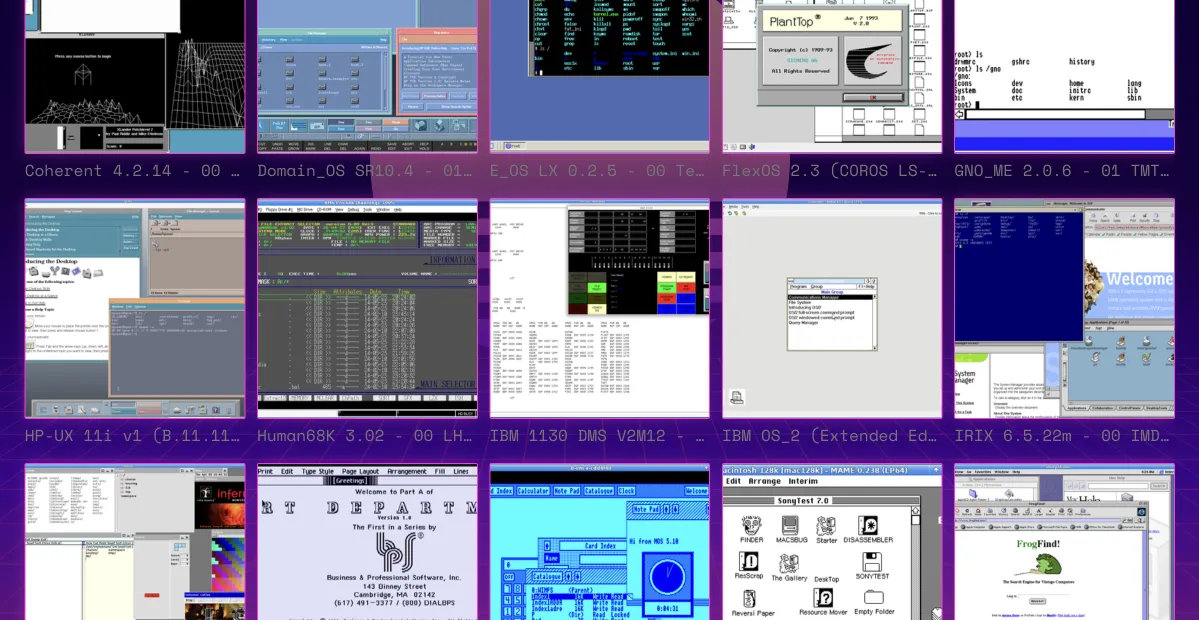
Andrew Warkentin, a developer and operating system historian, has released the Virtual OS Museum, a comprehensive digital archive allowing users to emulate over 600 operating systems on their desktop computers. The collection comprises more than 1,700 distinct installations across over 250 platforms, serving as a significant resource for the preservation of computing history.
The archive covers a timeline spanning from 1948 to 2011. It includes the Manchester Baby, recognised as the first stored computer program, alongside mainstream systems such as DOS variants, Mac OS, and Windows 95. The collection also features early Android builds from 2011 and obscure systems like MOS for the Acorn BBC Master and NitrOS-9 for the Tandy Radio Shack CoCo line.
Warkentin has been compiling this collection since 2003. The project is described as largely the work of a single individual, resulting in a library that captures the evolution of software from mainframes to early mobile operating systems. The inclusion of hobby operating systems provides insight into niche developments that may otherwise be lost to time.
Users can run these systems via emulation on their own machines. However, the images generally contain only the software originally bundled with the operating system, such as basic calculators, file managers, and text editors. Third-party applications are not included, which means users may find it difficult to acquire additional software for specific legacy systems like CTSS.
The download requirements for the archive are substantial. The full version, which includes all images, is 127GB when zipped. For users with limited bandwidth or storage, a Lite edition is available at 14GB, which downloads images on demand rather than providing the entire library upfront.
