Virgin Galactic unveils next-generation spaceship as cash reserves plummet to $338 million
Following the suspension of commercial flights in June 2024, Virgin Galactic revealed new hardware at its Mesa, Arizona facility, but the move coincides with a severe financial crisis that has seen cash reserves drop from $982 million two years ago.
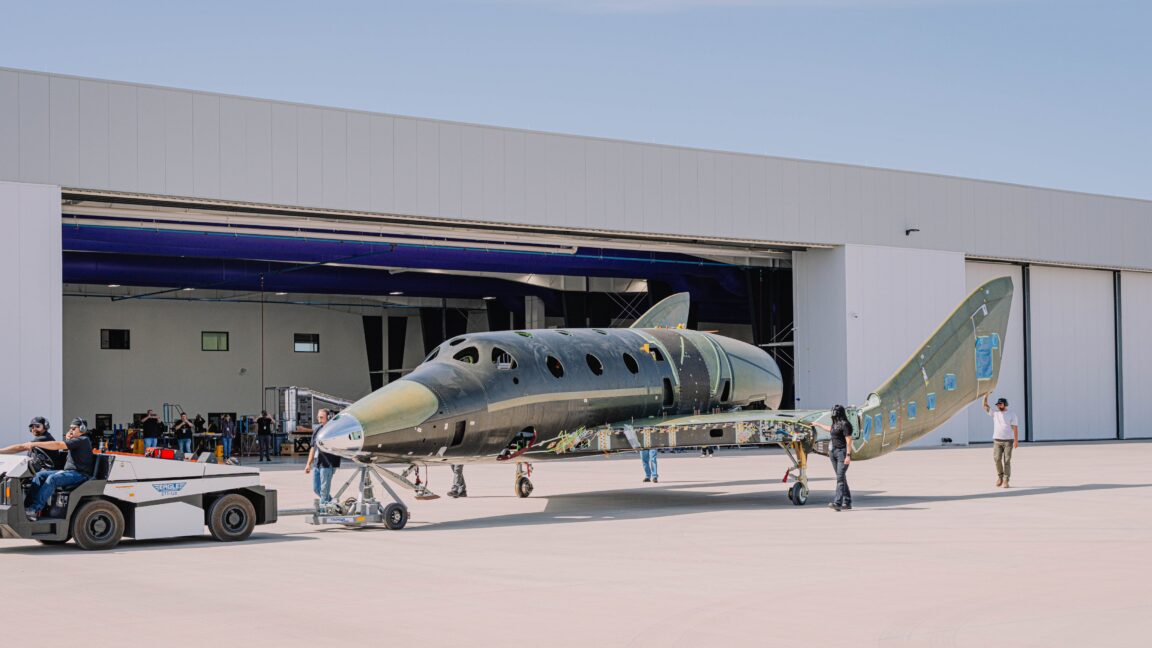
Virgin Galactic has unveiled a next-generation spaceship at its factory in Mesa, Arizona, marking a significant milestone in its quest to replace the aging VSS Unity. The company stated that the new vehicle is expected to enter service between late Q4 2026 and early Q1 2027, with a first spaceflight carrying research payloads targeted for summer 2026.
However, this revelation arrives amidst a severe financial crisis for the publicly traded company. As of the end of March, Virgin Galactic's cash reserves have declined to $338 million, a stark contrast to the $982 million reported two years prior. This sharp reduction in liquidity has occurred while the company has generated very low revenue during its non-flying period since suspending commercial operations in June 2024.
Analysts are now raising serious concerns regarding the firm's ability to fund the prolonged testing phase required for the new spaceship. Historical data suggests that VSS Unity underwent approximately six months of ground tests and two years of glide and flight tests before its inaugural flight in 2018. Even assuming Virgin Galactic can halve this timeline, the first spaceflight could be delayed until late 2027 or early 2028, a period that may exceed the company's current financial runway.
The path to profitability remains fraught with uncertainty, as the company must not only get the new ship flying safely but also build a second one to achieve the necessary flight frequency. To reach break-even status, Virgin Galactic aims to operate the aging Eve carrier aircraft for three spaceflights a week, a target of 125 flights a year that has never been proven feasible given the current financial constraints.
The market's sentiment reflects these deepening doubts, with the company's stock price plummeting from a peak of $1,118 per share to between $2 and $3 per share this year. While Virgin Galactic remains the sole player in suborbital space tourism following Blue Origin's suspension of its New Shepard program in January 2024, the odds of success appear increasingly long as the firm struggles to balance development costs with dwindling reserves.
If Virgin Galactic cannot secure additional funding or accelerate its testing campaign, the suborbital space tourism market, which appeared poised for growth just a few years ago, risks becoming dormant for at least a generation. The company now faces a critical juncture where it must prove it can execute its ambitious plans before its cash position is fully exhausted.
