Verge reviewer details extreme health tracking routine, warns against public adoption
Song’s methodology involves simultaneous testing of multiple glucose monitors, scales, and sleep trackers, but she explicitly advises consumers against replicating such rigorous data collection without a clear purpose.
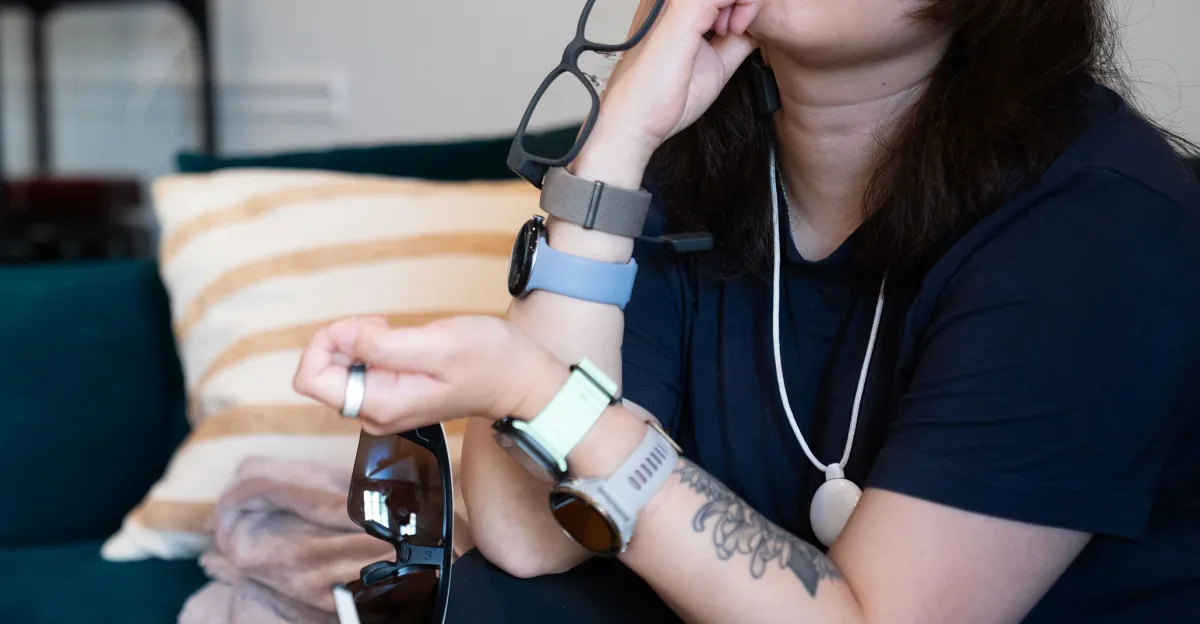
Victoria Song, a senior wearables reviewer at The Verge, has published a detailed account of her intensive daily routine of self-quantification, designed to evaluate the accuracy and performance of health technology. The column, part of The Verge’s Optimizer newsletter, outlines a regimen that involves testing multiple devices simultaneously to assess metrics such as battery life, GPS precision, and metabolic insights.
Song currently utilises a complex array of hardware to build a digital twin of her metabolism through Twin Health. This system incorporates a Dexcom G7 continuous glucose monitor, a Twin Health scale, an Apple Watch Ultra 3, and a Medline blood pressure cuff. Her testing roster also includes screenless trackers like the Garmin Cirqa and Oura Ring, alongside multiple Withings scales, including the recently released BodyScan 2.
The reviewer’s daily workflow begins with syncing all devices and comparing sleep data across various apps, including Apple Health, Oura, and Google Health for the Fitbit Air. She notes that AI-generated insights from these devices are frequently inaccurate, citing examples such as a smart bed suggesting alcohol to treat snoring or apps indicating her body is on the verge of collapse.
During workouts, Song synchronises data collection across all devices to compare metrics such as distance, pace, and heart rate zones. She uses a Polar H10 chest strap as a control to ensure heart rate accuracy remains within a five to 10 beats per minute margin. Post-exercise, she logs meals to track glucose impacts and weighs herself on multiple scales to gauge dehydration and body composition differences.
Despite the technical depth of her testing, Song explicitly warns that such rigorous data collection is not suitable for the general public. She advises against unnecessary tracking without a clear purpose, noting that the routine can lead to data fatigue. To maintain mental health, she takes planned 48-to-72-hour breaks between testing blocks, deliberately breaking data streaks to ensure the practice remains sustainable.
The Optimizer newsletter is currently taking a two-week break and will resume publication on Wednesdays starting 12 August.
