Vatican and Anthropic Forge Unprecedented Alliance in Pope’s AI Encyclical
The Catholic Church’s first encyclical on artificial intelligence marks a strategic pivot from moral observation to direct industry engagement, highlighting shared concerns over dehumanisation and unchecked technological incentives.
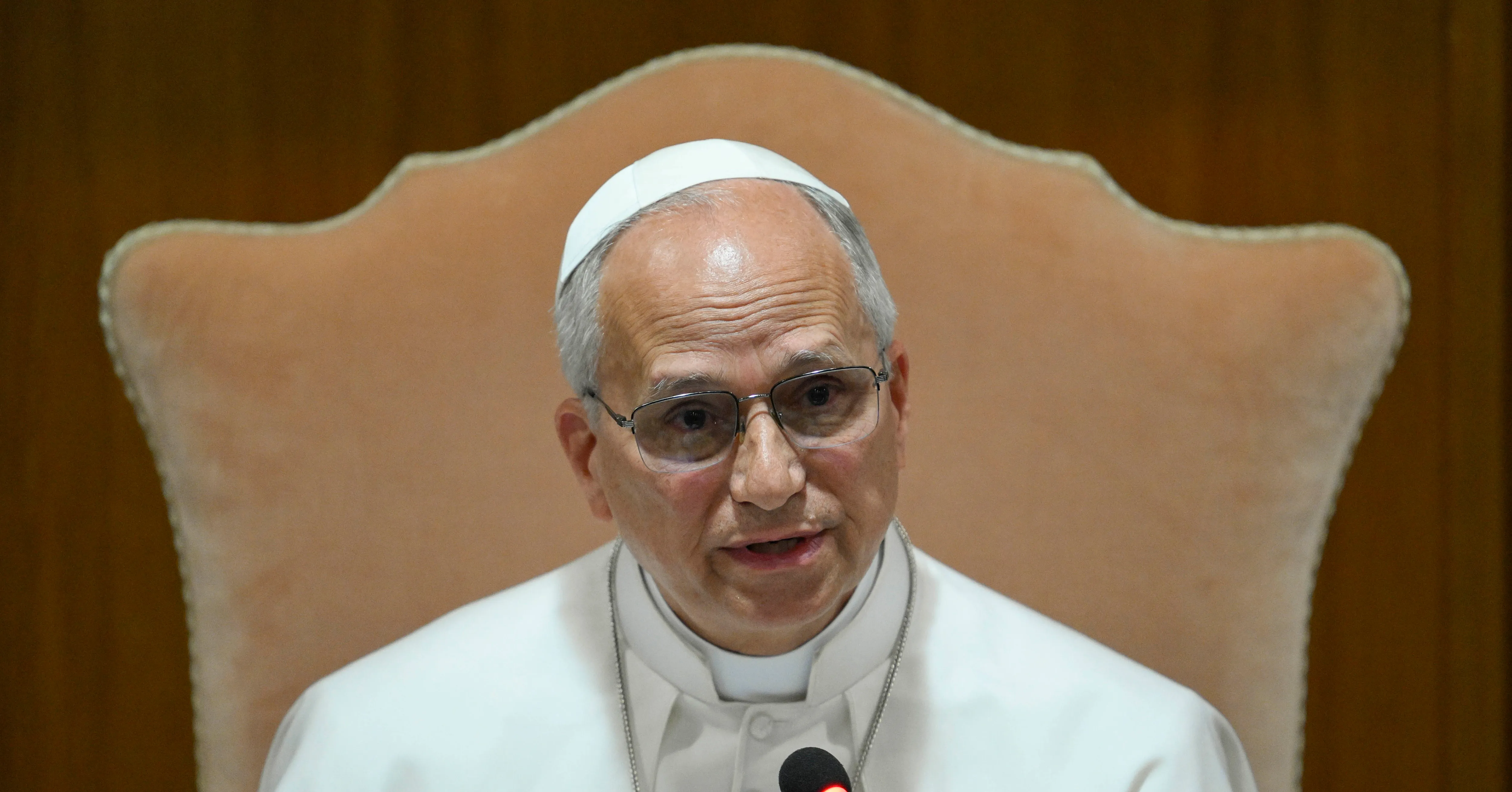
Pope Leo XIV presented his first encyclical on artificial intelligence, titled *Magnifica Humanitas*, at the Vatican on Monday, inviting Christopher Olah, cofounder of Anthropic, to speak at the event. The gathering signals an unprecedented alliance between the Catholic Church and Silicon Valley, moving beyond the Holy See’s historical role as a distant observer of technological change. The encyclical, signed on 25 May 2026, explicitly warns against the concentration of technological power in the hands of a small number of transnational private actors, drawing parallels to the atomic bomb to highlight the risks of unregulated development.
The document argues that AI is not a neutral tool but an invisible infrastructure that shapes social relations and collective imagination. It contends that algorithms inevitably embody a particular worldview, reflecting the values of their creators rather than objective truth. The Pope describes the human being as magnificent but capable of creating new forms of dehumanisation, suggesting that without ethical guardrails, *Magnifica humanitas* could transform into something *terribilis*. The text warns of a "digital Babylon" where society reduces people, relationships, and truth to data, performance, and efficiency.
Anthropic’s presence at the Vatican was the result of a deliberate, long-term effort by the Holy See to engage directly with the AI industry. The Vatican views Anthropic as a key interlocutor due to its focus on AI safety and "Constitutional AI," a method that trains systems using ethical principles rather than solely correcting risky responses. This approach aligns with the encyclical’s emphasis on governance by ethical principles rather than economic or competitive incentives. Christopher Olah, a leading researcher in model interpretability, represents the theoretical and philosophical side of AI research, seeking to make neural networks understandable to humans.
During the presentation, Olah acknowledged that even ethically attentive companies are immersed in economic, geopolitical, and competitive incentives that can conflict with "doing the right thing." His remarks underscored the encyclical’s central point: the problem of artificial intelligence cannot be solved by the technology industry alone. This admission carries significant reputational value for Anthropic, positioning its chatbot, Claude, as a product built on trust and responsibility in an era where AI is central to debates on labour, national security, and surveillance.
The engagement follows the Vatican’s 2020 Rome Call for AI Ethics, an initiative promoted by the Pontifical Academy for Life alongside Microsoft, IBM, and other organisations. However, the rise of ChatGPT, US-China technological rivalry, and the growing power of Big Tech shifted the Vatican’s perspective from bioethics to the broader future of humanity. Unlike nuclear technology, which was state-controlled, AI is being developed primarily within private companies. The encyclical emphasises that technological power now takes on a new face, predominantly private, requiring a shared global framework for governance to prevent a slow process of social automation.
