US wireless bill spike adds fuel to Federal Reserve rate hike
A 5.9 per cent jump in phone service costs, the largest in nearly three decades, contributed to core inflation and helped justify the US central bank’s first rate increase since 2023.

US wireless phone service costs surged by 5.9 per cent in August, marking the largest single-month increase in nearly three decades. The spike, driven by rate hikes from T-Mobile and AT&T, contributed approximately 10 basis points to the rise in core consumer prices. This inflationary pressure helped justify the Federal Reserve’s decision to raise benchmark rates by 25 basis points, its first increase since 2023.
The cost increase was triggered by specific actions from major carriers. In late June, T-Mobile retired over 1,000 older plans, shifting customers to newer offerings with added costs of up to $6 per line per month. Starting in August, AT&T increased rates on some older plans by $10 to $20 and raised a monthly per-line fee by $1. These changes resulted in the steep jump observed in the Consumer Price Index data.
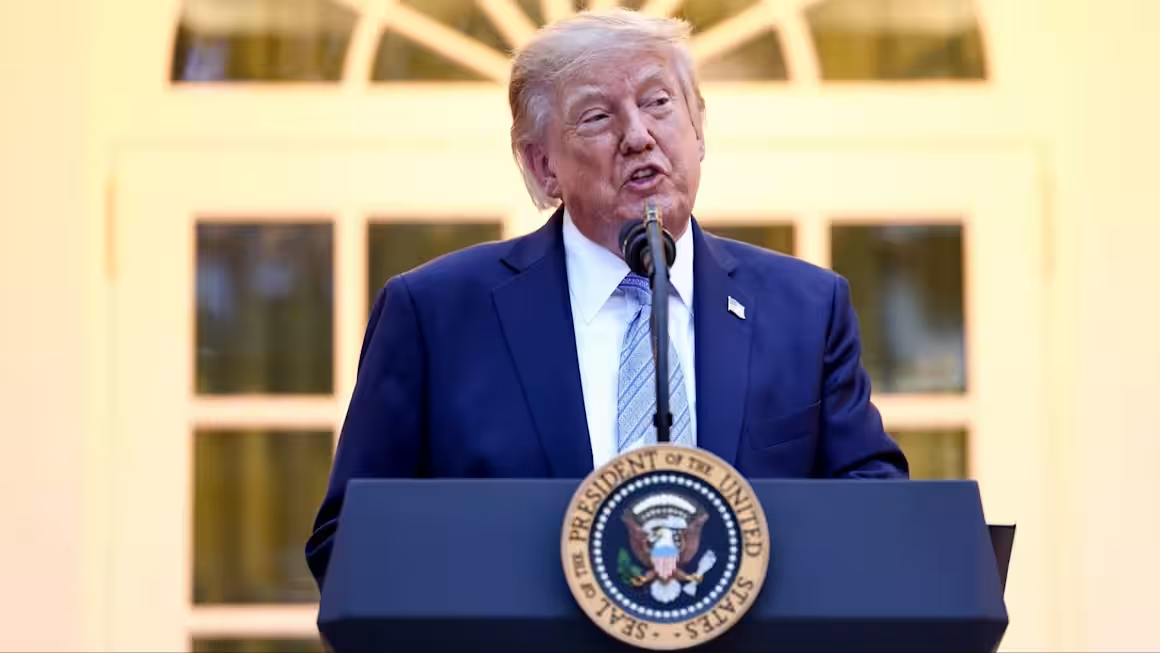
According to Wall Street analysts, the hotter-than-expected jump in this category, which strips out volatile food and energy sectors, cemented expectations for the rate hike. The Federal Reserve’s move came despite political pressure from President Donald Trump, who has publicly demanded an interest rate of 1 per cent or lower and threatened trade actions if rates were not reduced.
Factors driving the broader cost increase include 5G network expansion and rising regulatory costs. Carrier spending on new sites and expanded network capacity exceeded $30 billion last year, according to the CTIA industry trade group. However, industry experts suggest the moves are also consistent with pricing strategies. Lauren Hannula, managing editor of WhistleOut, noted that the Big 3 carriers have emphasised strategies to boost revenue per customer, describing the increases as more of a pricing strategy than a direct offset for infrastructure costs.
Taxes and fees have also played a significant role in rising bills. Last year, taxes, fees, and government surcharges comprised a record 27.6 per cent of the average wireless bill, according to the Tax Foundation. Adam Hoffer, the Tax Foundation’s director of excise tax policy, stated that consumers are often surprised by the extent of these charges when they examine their bills in detail.
Whether phone service prices will continue to rise remains unclear. Bank of America strategists described the August jump as a "one-off" attributable to AT&T’s changes. While long-term phone service prices have generally fallen due to the proliferation of cheaper mobile virtual network operators, rising taxes and fees have eroded some of those savings. Additionally, the cost of phones themselves has grown more expensive as chip demand surges, further impacting consumer budgets.