US Trump administration slashes funding for infectious disease research network
The termination of the National Institutes of Health initiative prevents researchers from deploying to the Democratic Republic of the Congo, hampering diagnostics for the Bundibugyo strain.
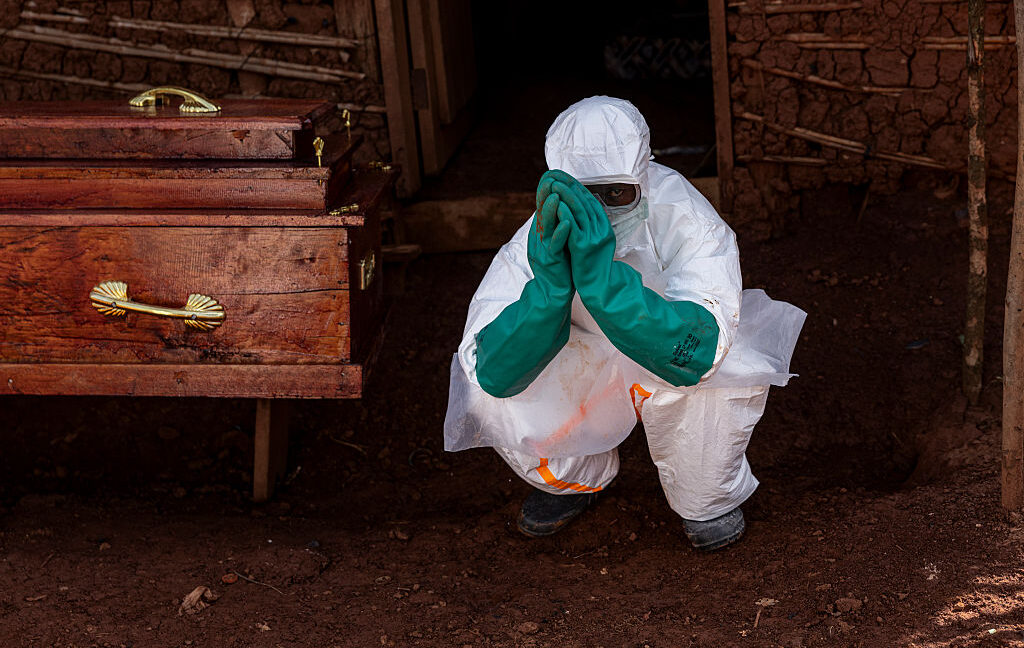
The Trump administration has terminated funding for the Centers for Research in Emerging Infectious Diseases (CREID) Network, a US-based initiative established by the National Institutes of Health in 2020 to monitor and respond to emerging viral outbreaks. The decision, which included a stop-work order issued last June, has prevented researchers from deploying to the Democratic Republic of the Congo to assist with the current Ebola outbreak in Ituri Province. The network, which previously operated ten global sites and received approximately $82 million in funding, was targeted partly due to political pressures and conspiracy theories linking its former partner, the EcoHealth Alliance, to the origins of COVID-19.
Researchers state that the loss of funding hampers diagnostic capabilities and surveillance efforts critical for containing the rapidly spreading Bundibugyo virus strain. The current outbreak is caused by this specific strain, for which existing diagnostic tests are less effective, compounding challenges in a region where international aid cuts have already weakened health infrastructure. The cessation of support has left public health agencies unable to spot early infections, as previous tests were designed for the more common Zaire strain.
Kristian Andersen, an evolutionary virologist at Scripps Research who led one of the CREID centers in West Africa, noted that the network’s research into viruses spilling over from wildlife was deemed “unsafe for Americans and not a good use of taxpayer funding” under the new administration. Andersen, who previously developed diagnostics and conducted genomic sequencing of Ebola genomes, stated that while he remains in contact with colleagues in the DRC, he is unable to offer support with testing or sequencing. “We sit here in San Diego and see this unfold,” he said, contrasting the current inactivity with the network’s previous mobilisation capabilities.
The funding cut appears linked to political pressures surrounding the EcoHealth Alliance, a former US nonprofit that became a flashpoint in conspiracy theories over the origins of COVID-19 due to its ties to the Wuhan Institute of Virology. Under the Trump administration, the Department of Health and Human Services permanently barred EcoHealth Alliance from receiving taxpayer dollars in January 2025. The White House also cited the alliance’s connections to the Wuhan lab as a reason for dissolving the US Agency for International Development, further isolating the research network.
Robert Garry, a professor at Tulane Medical School who led the centre with Andersen, and M. Kariuki Njenga, a virologist at Washington State University who led the Eastern and Central Africa site, emphasised the operational impact of the defunding. Njenga noted that the network had active studies covering the region and would have been part of the current response, drawing on research from other centres. The network’s previous effectiveness was demonstrated during a 2022 Ebola outbreak in Uganda, where rapid detection and contact tracing led to the outbreak being declared over within four months.
The World Health Organization has expressed concern over the speed at which the current outbreak is growing, with at least 1,000 suspected cases and 238 suspected deaths in the DRC. Tedros Adhanom Ghebreyesus, the WHO director-general, stated during an online meeting of the African Union that the epidemic is outpacing current operations. The International Rescue Committee has noted that steep declines in US government funding for international health projects have left surveillance systems and health facilities dangerously exposed, further complicating the response to the crisis.
