US Space Force executes covert responsive satellite exercise in New Zealand
A small satellite launched from Rocket Lab’s Māhia Peninsula spaceport approached a pre-existing True Anomaly spacecraft in low-Earth orbit, marking a significant step in the US military’s strategy to reduce deployment timelines from years to hours.
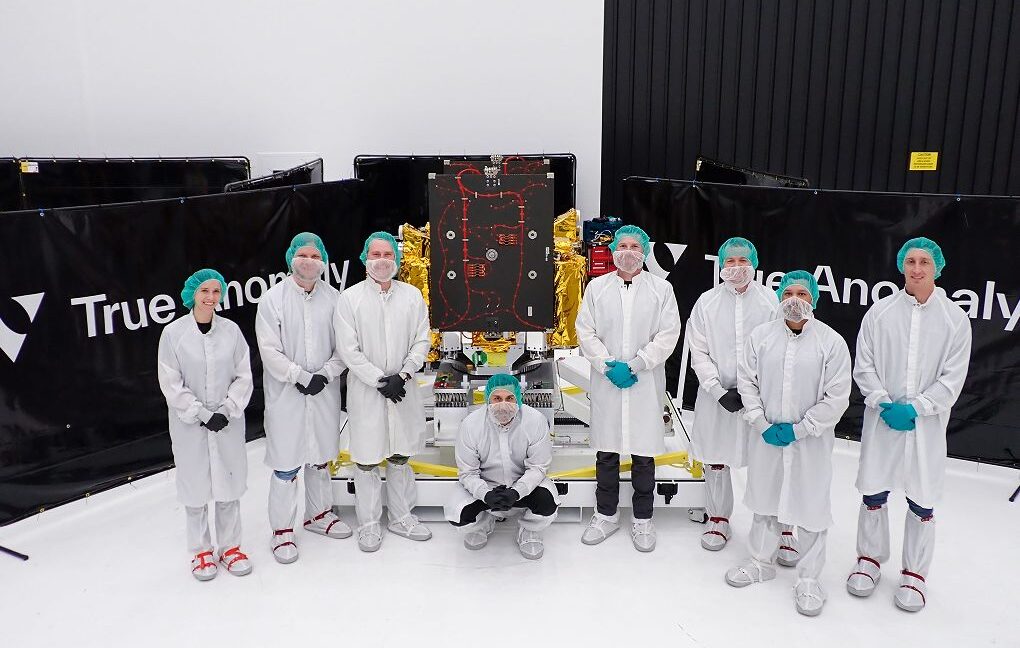
The US Space Force has executed a responsive space exercise, designated Victus Haze, involving the launch of a small satellite from New Zealand by Rocket Lab. The mission aims to demonstrate the ability to rapidly field satellites in low-Earth orbit to inspect or counter potential adversary assets. The launch was conducted with minimal public announcement, relying on safety warnings for aviation and maritime traffic rather than official press releases. The exercise involves coordination with a True Anomaly satellite, Jackal-0004, previously launched by SpaceX, to test proximity operations and threat assessment capabilities. The initiative is part of a broader effort to reduce satellite deployment times from years to hours, with the Victus Haze mission costing approximately $92 million.
The launch occurred on a Friday with minimal public announcement, relying on safety warnings for aviation and maritime traffic rather than official press releases. A new satellite, designated Victus Haze Puma, appeared in the US military’s space object catalog over the weekend, with a launch date of Friday from Rocket Lab’s Māhia Peninsula spaceport in New Zealand. The Puma satellite was cataloged in a polar orbit ranging between 215 miles and 286 miles (347-by-461 km), with an inclination of about 97.5 degrees from the equator. Rocket Lab had postponed a scheduled commercial launch last Tuesday to "conduct additional checkouts," which preceded the covert military launch.
Publicly available orbit data indicates the Victus Haze Puma satellite approached within 60 miles (100 km) of the Jackal-0004 satellite just eight hours after launch. True Anomaly announced last Thursday that its Jackal spacecraft had achieved all "test objectives" and was fully commissioned for its next phase of mission. The launch time was estimated to be approximately 6:20 am EDT (10:20 UTC) on Friday, coinciding with the passage of the Jackal satellite’s orbit over New Zealand. The Victus Haze mission is more complex than the previous Victus Nox mission, involving multiple satellites, rockets, and spaceports.
True Anomaly’s Jackal spacecraft was originally booked to launch on Firefly’s Alpha rocket but launched on SpaceX’s Falcon 9 after a year-long grounding of the Alpha rocket. The Space Force announced plans for the mission in 2024 when it selected Rocket Lab and True Anomaly to build and launch two satellites into low-Earth orbit. At a high level, the idea was to launch a small satellite built by True Anomaly first, posing as a satellite from a potential adversary, like China or Russia. Rocket Lab was supposed to have a satellite on standby to go up and inspect True Anomaly’s spacecraft, ready to launch on short notice once military officials gave the order.
The objective of the Victus Haze mission is to demonstrate how the military and its commercial partners might be able to quickly go up and assess a threat in orbit. Space Force officials have long pursued responsive launch initiatives to cut the time required for fielding new satellites from years to weeks, days, or hours. Victus Haze’s cost was borne by a mix of government funding and private capital, totaling about $92 million. "This demonstration will ultimately prepare the United States Space Force to provide future forces to combatant commands to conduct rapid operations in response to adversary on-orbit aggression," Space Systems Command said in a statement when announcing the Victus Haze mission in 2024.
