US Space Command simulates orbital nuclear detonation in classified wargame
General Stephen Whiting outlines the rationale for testing worst-case scenarios, highlighting Russian anti-satellite advancements and the critical role of commercial technology in modern defence.
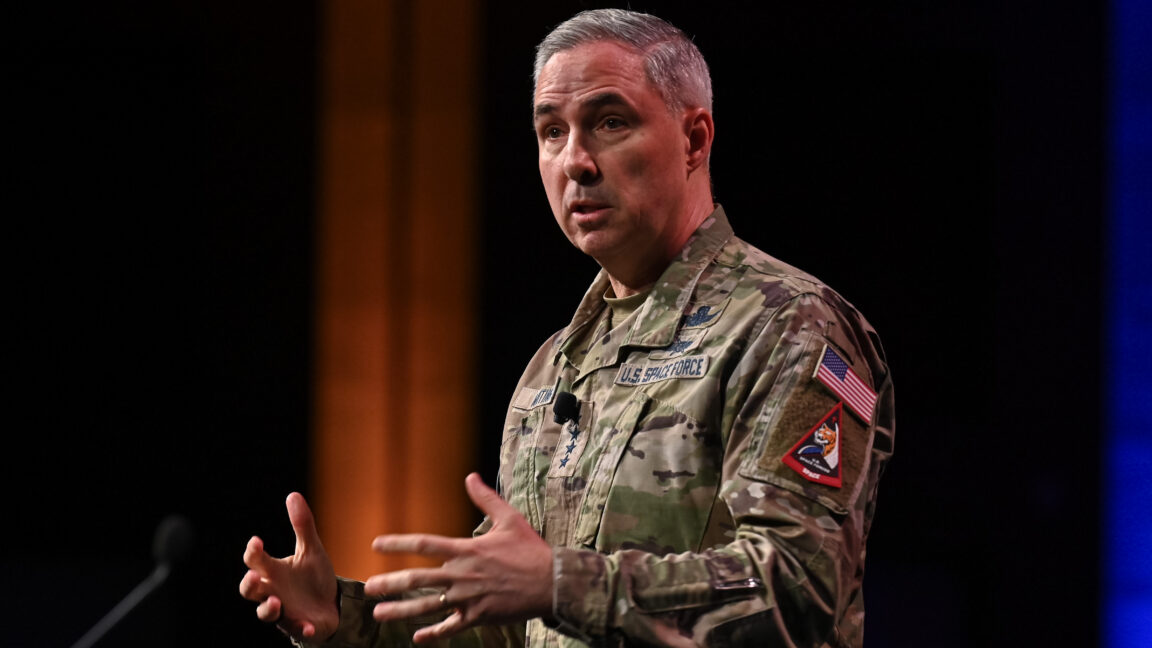
US Space Command has launched a new series of classified wargames titled Apollo Insight, beginning with an exercise that simulated a nuclear weapon detonation in low-Earth orbit. General Stephen Whiting, the senior officer in charge of Space Command, announced the initiative during a discussion hosted by the Mitchell Institute for Aerospace Studies. The inaugural exercise was designed as a notional worst-case scenario to assess the potential impact on commercial and military space infrastructure, despite acknowledging that such an event would violate the Outer Space Treaty.
The simulation involved participation from more than 60 commercial companies and allied nations, including Australia, Canada, New Zealand, and the United Kingdom. Whiting stated that the objective was to gather insights from these entities on how to leverage current and future technologies to mitigate the effects of such a detonation. US officials have previously indicated that a nuclear explosion in low-Earth orbit could render portions of that orbital regime useless for up to a year, potentially disabling thousands of satellites and disrupting critical surveillance and communication networks globally.
While US officials do not believe Russia has yet placed a nuclear weapon in orbit, they have identified significant concerns regarding Moscow’s advancements in conventional anti-satellite capabilities. Whiting noted that the Russian military is now operationalising these weapons, having launched mysterious satellites to shadow US government spy satellites. The wargame also highlighted the growing reliance on commercial space technology in modern conflict, citing the utility of networks like Starlink in the war in Ukraine and the role of commercial firms in detecting satellite communications and GPS jamming.
Space Command plans to conduct three further Apollo Insight tabletop exercises this year. The upcoming sessions will focus on orbital maneuver warfare, proliferated satellite constellations, and missile warning and defence scenarios. Whiting explained that the military is exploring the use of commercial satellites as targets to test its ability to track objects undergoing high delta-V manoeuvres, which could be employed by adversaries to evade detection or prepare attacks on US assets.
The Pentagon has increasingly emphasised the importance of commercial technologies in 21st-century warfare, with the Space Force leading efforts to deepen partnerships with non-traditional prime contractors. Whiting described the US commercial space industry as a massive advantage due to its investment levels and innovation speed. However, he also acknowledged that the Office of the Secretary of War for Space Policy has identified the need for indemnification or other contractual mechanisms to address the risks commercial companies assume when supporting defence operations.