US ranchers call Trump’s beef import tax cut a “betrayal”
President Trump claims unnamed foreign suppliers will offer a 25 per cent discount on beef imports ahead of the midterm elections, drawing sharp criticism from domestic producers.
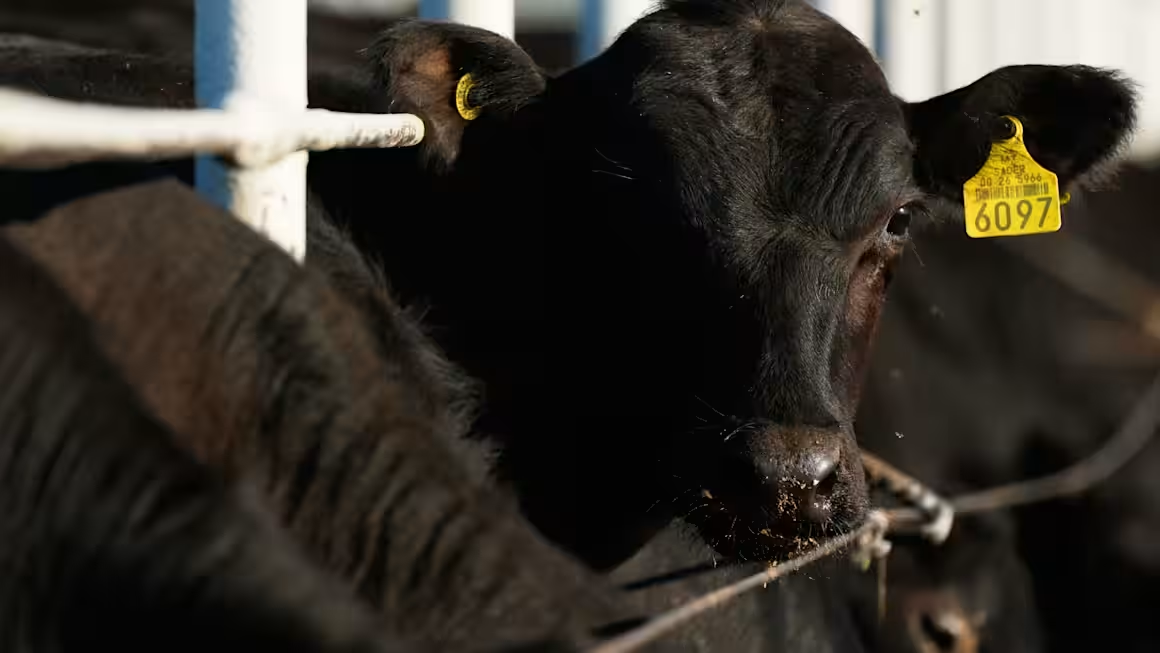
US ranchers have launched a scathing attack on President Donald Trump’s proposal to reduce taxes on beef imports, describing the move as a “betrayal” of the domestic industry. The criticism highlights growing tensions between the administration and agricultural stakeholders as the White House seeks to influence consumer prices through trade policy.
According to reporting by the Financial Times, President Trump asserts that unnamed foreign suppliers will provide a 25 per cent discount on beef imports. This reduction is expected to take effect in the lead-up to the US midterm elections, a timing that suggests a strategic effort to deliver tangible economic benefits to voters before the polls open.
The proposal has been met with scepticism and frustration among US ranchers, who view the tax cut as a direct threat to their market position. By labelling the initiative a “betrayal,” industry figures indicate that they feel overlooked in favour of foreign competitors, despite the administration’s stated goal of lowering costs for consumers.
The specific details of the tax cut proposal remain limited in public discourse, with the primary focus resting on the projected price discount. The absence of named foreign suppliers adds a layer of uncertainty to the deal, leaving domestic producers to speculate on the scale of the incoming competition.
For investors and market observers, the episode underscores the intersection of trade policy and political timing. The reliance on a 25 per cent discount, which has not yet been independently verified, presents a potential risk if the promised savings do not materialise as claimed by the President.
As the midterm elections approach, the beef import debate is likely to remain a focal point for both agricultural policy and broader economic sentiment. The reaction from US ranchers signals that the administration may face continued resistance from key domestic sectors as it navigates its trade strategy.