US President Trump signals intent to address Iran and energy security with Chinese counterpart
The US administration indicates that discussions regarding geopolitical tensions in Iran and crude oil procurement will be central to the upcoming meeting with Beijing.
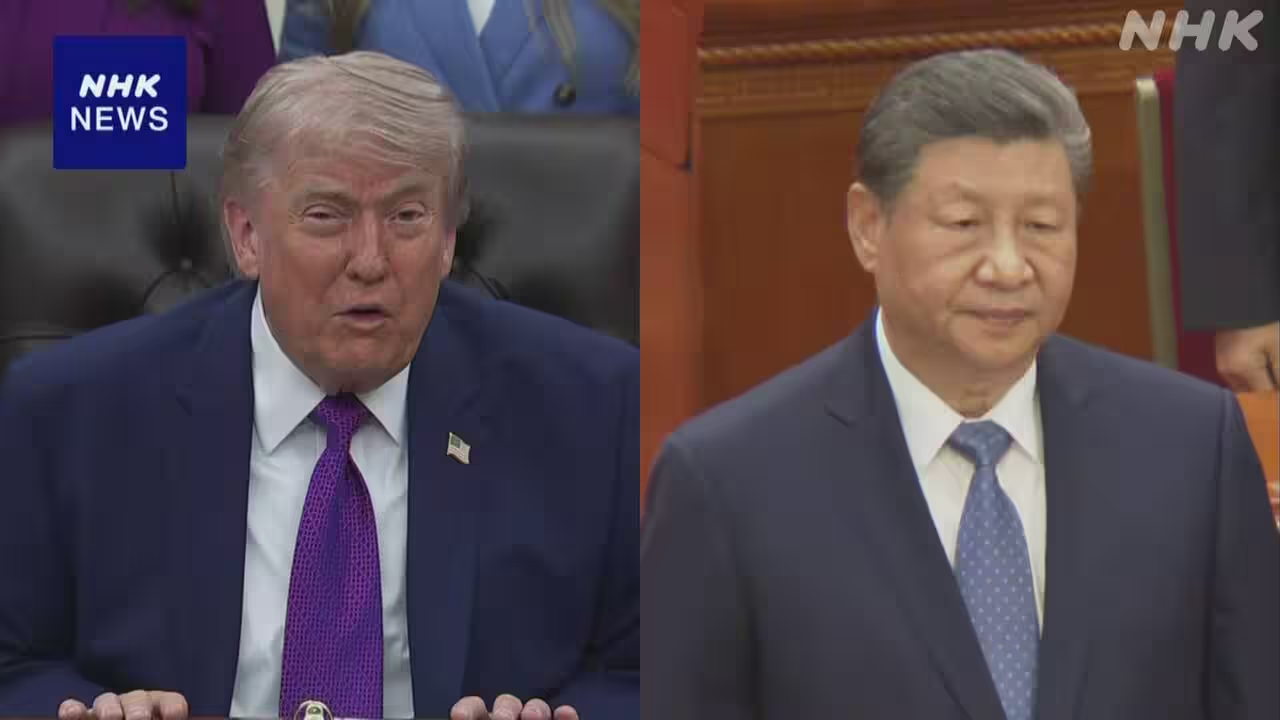
US President Donald Trump has indicated his intention to raise the situation in Iran and energy procurement during his scheduled summit with Chinese President Xi Jinping this week. The White House has framed these topics as critical components of the bilateral dialogue, suggesting that the administration views the stability of regional energy flows as a primary concern for the United States.
In advance of the meeting, President Trump noted that China imports significant volumes of crude oil through the Strait of Hormuz. This observation forms the basis of the US position, highlighting the strategic dependency of the Chinese economy on this specific maritime chokepoint. By drawing attention to this reliance, the US leadership aims to contextualise the broader geopolitical risks associated with instability in the region.
The proposed discussions are set to take place during the current week's summit between the two leaders. While the specific outcomes or concessions remain unverified, the US stance is clear: the administration intends to exchange opinions on the implications of the ongoing situation in Iran for global energy security. The focus remains on the policy mechanics of how such dependencies are managed within the framework of US-China relations.
The choice of topics reflects a shift in diplomatic focus toward institutional security and resource procurement rather than purely performance-based metrics. By foregrounding the Strait of Hormuz, the US administration is signalling that the integrity of global supply chains is a prerequisite for stable international engagement. This approach underscores a governance model where economic vulnerability is treated as a national security issue.
Officials have not yet released details regarding the Chinese response to these observations. However, the mere articulation of these points by President Trump serves as a formal indication of the US priorities for the remainder of the week. The summit is expected to serve as the primary venue for addressing these interconnected issues of energy and foreign policy.