US official Hegseth reaffirms Pacific commitment amid Beijing summit
Hegseth counters Japanese defence concerns by citing US 'power projection' strategy and rejecting Chinese hegemony in the Indo-Pacific
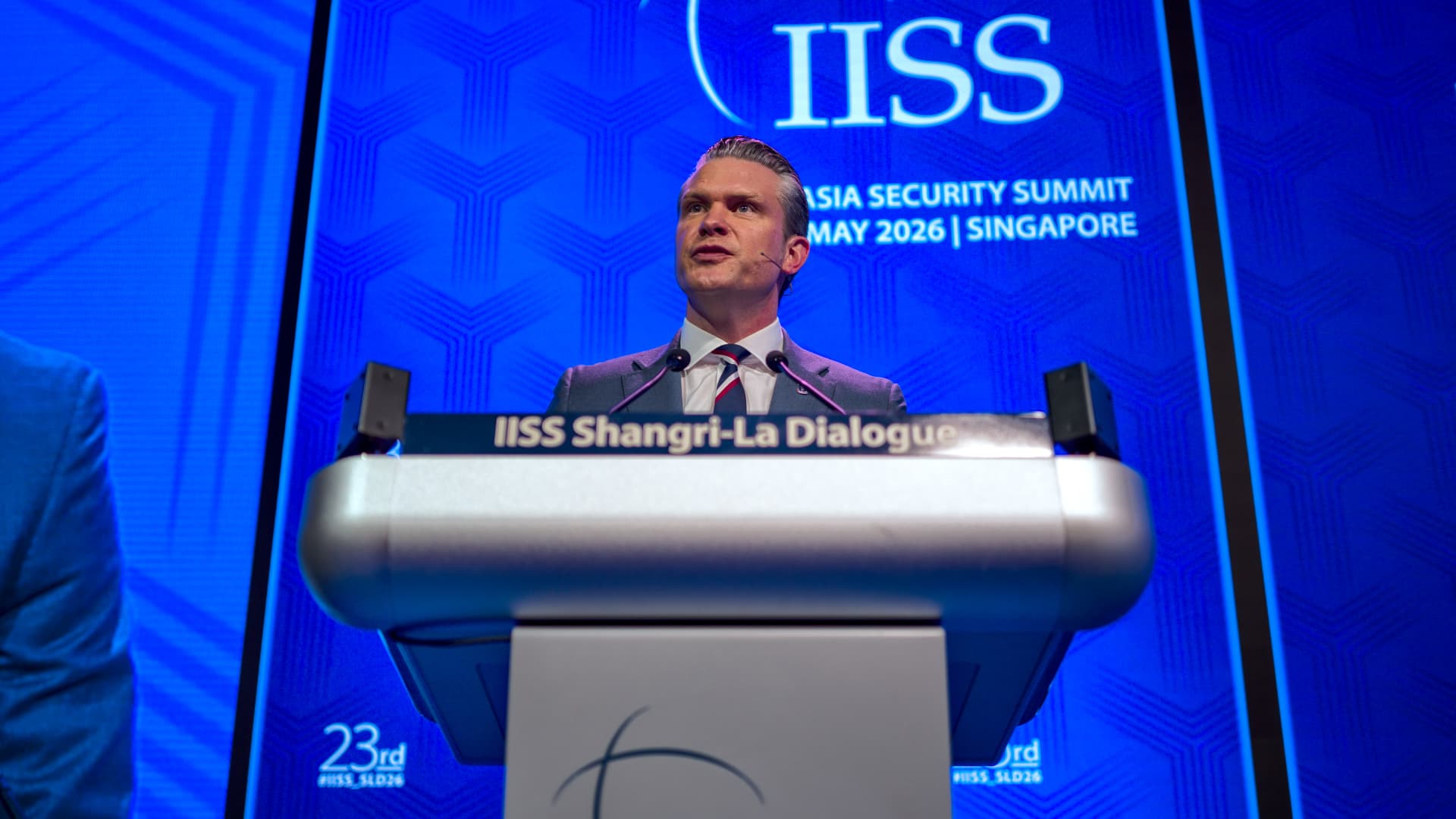
US official Hegseth has reaffirmed Washington’s strategic commitment to the Indo-Pacific, praising Asian allies for their defence burden-sharing while explicitly stating that China cannot impose its hegemony on US partners in the region. The remarks were delivered in response to anxieties raised by Japan’s Defence Minister Shinjiro Koizumi, who warned that some nations might underestimate US resolve or attempt to drive a wedge between Washington and its allies.
Hegseth countered these concerns by asserting that the US national defence strategy prioritises power projection in the Pacific. The official stated that the United States retains the capacity to manage its global obligations to ensure stability in the region, directly addressing fears that US attention might be diverted by other geopolitical pressures.
These diplomatic comments unfold against the backdrop of a high-profile summit in Beijing between US President Donald Trump and Chinese President Xi Jinping. The meeting, which began on 14 May 2026, is the first visit by an American president to China since 2017 and focuses on trade, artificial intelligence, and tensions in the Strait of Hormuz.
A delegation of major technology executives, including Elon Musk, Tim Cook, and Jensen Huang, accompanied President Trump to the summit. The presence of these industry leaders underscores the economic dimensions of the dialogue, which runs concurrently with Hegseth’s security-focused remarks.
Market sentiment reflected the opening of the summit on Thursday, with US stock indices rising. The Dow Jones Industrial Average gained 0.8 per cent, the S&P 500 rose 0.3 per cent, and the Nasdaq Composite climbed 0.2 per cent. Nvidia shares surged more than 2 per cent following US approval of a chip sale, highlighting the intersection of technology policy and market performance.
While Hegseth’s comments emphasise military and alliance commitments, the broader context involves complex economic and strategic negotiations. The source material does not detail specific new policy proposals beyond the general assertion of power projection, nor does it elaborate fully on the precise nature of the global obligations referenced.
The juxtaposition of security rhetoric and high-level trade talks illustrates the multifaceted nature of US-China relations. As negotiations continue in Beijing, the US maintains its stance on regional stability while engaging with key economic partners on critical issues such as AI development and semiconductor supply chains.