US inflation climbs to three-year high amid regional conflict
The latest figures from the United States indicate a surge in consumer costs, with the Financial Times reporting the April increase as a significant milestone for monetary policy makers.
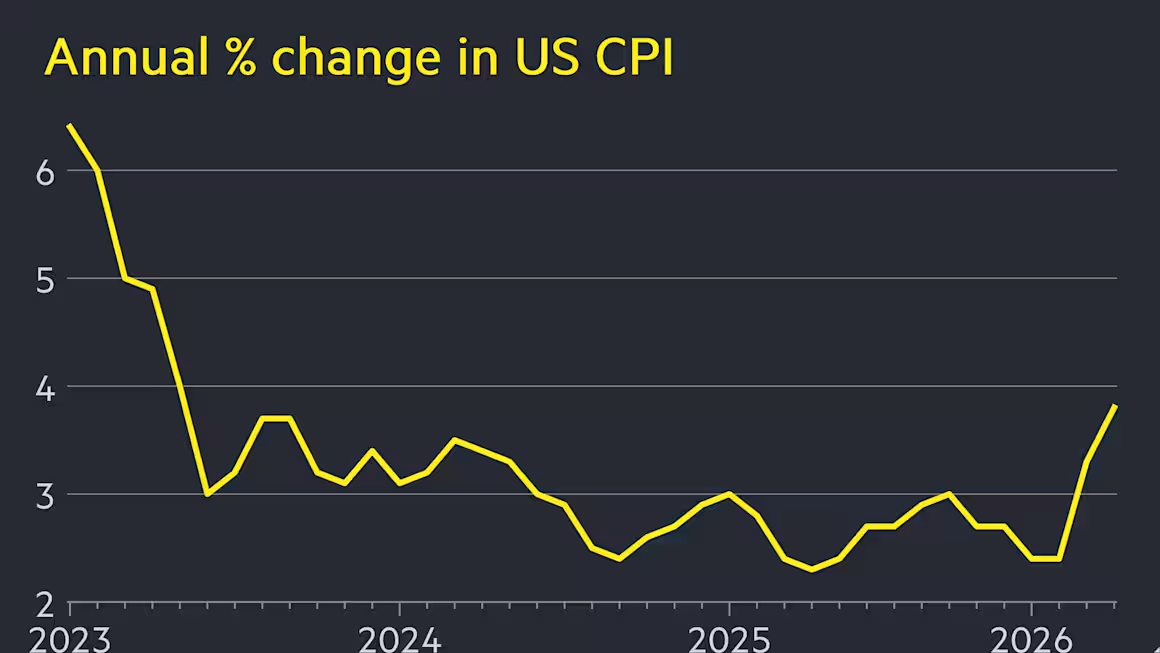
Inflation in the United States has risen to 3.8 per cent in April, marking the highest level recorded in three years. This sharp increase signals renewed pressure on household budgets and serves as a key indicator for financial markets watching the trajectory of global price stability.
The surge in costs is primarily attributed to the ongoing conflict in the Middle East, which has driven up prices across the wider US economy. According to the Financial Times, the war acts as a catalyst for these price rises, causing the inflationary effects to reverberate through various sectors of the American market.
While the specific magnitude of the conflict's contribution relative to other domestic or global variables remains unquantified in the current data, the April figure stands as a clear signal of heightened economic activity. The data point reflects the immediate impact of geopolitical instability on consumer spending and pricing mechanisms within the region.
For investors and institutions tracking the capital markets, this development underscores the volatility inherent in linking regional security issues to domestic economic performance. The rise challenges the recent trend of moderating inflation and suggests that policy responses may need to recalibrate as the situation evolves.
The Financial Times highlights that this is a discrete April measurement rather than a year-to-date average or a long-term forecast. Consequently, the 3.8 per cent rate represents a specific snapshot of economic conditions at that time, influenced heavily by the external shock of the Middle East war.
As markets digest this information, the focus remains on how central banks and regulators will interpret this three-year high. The interplay between geopolitical risk and domestic pricing continues to define the current landscape for financial planning and asset allocation.