US graduates turn commencement ceremonies into protests against AI tech leaders
Viral videos from 2026 graduation events show a sharp rise in student hostility toward tech CEOs and university administrators, reflecting broader anxieties about the impact of generative AI on creative careers and local infrastructure.
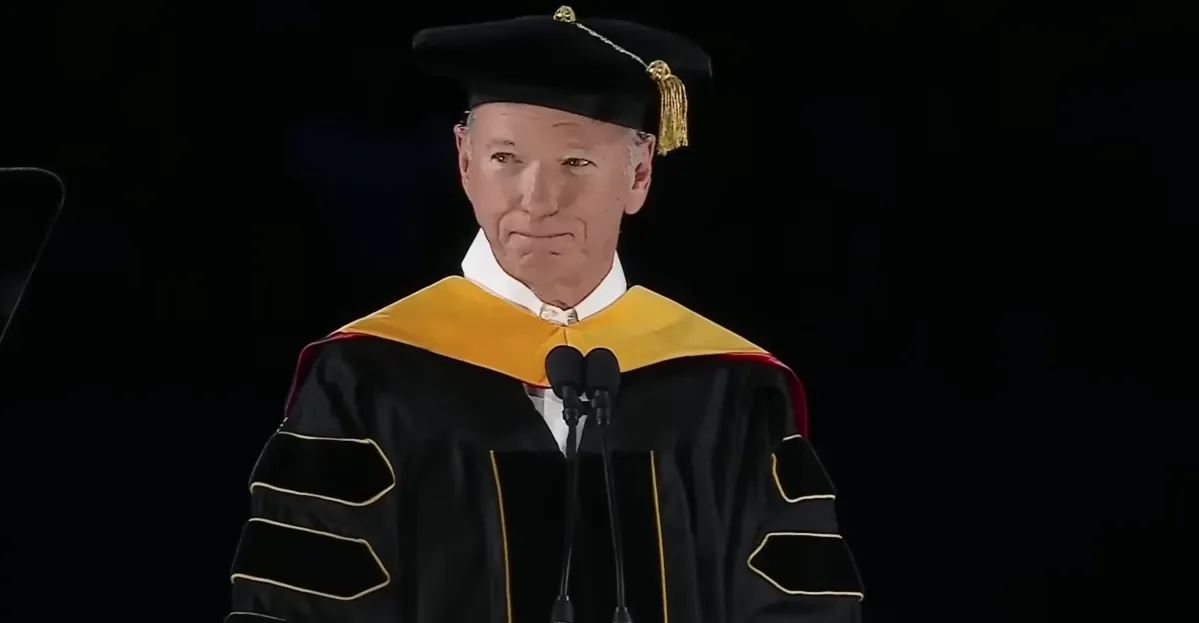
University graduates across the United States have increasingly used commencement ceremonies to voice their opposition to artificial intelligence, booing and heckling corporate executives and university leaders who championed the technology. The unrest, captured in viral videos from 2026 graduation events, highlights a deepening rift between Silicon Valley executives and young people entering a challenging job market. Speakers such as former Google CEO Eric Schmidt, property executive Gloria Caulfield, and music industry CEO Scott Borchetta faced sustained jeers from students who view the aggressive promotion of AI as disconnected from their economic realities.
The backlash was particularly evident at the University of Arizona, where Eric Schmidt was met with loud boos after urging graduates to accept AI as an inevitable part of their futures. Schmidt told the audience that when offered a seat on an AI “rocket ship,” one should not ask which seat they would get, but simply board. This sentiment was echoed by Gloria Caulfield at the University of Central Florida, where she received an icy reception from arts and humanities students after describing AI as the next industrial revolution. At Middle Tennessee State University, Scott Borchetta mocked critics of the technology, telling students to simply deal with the changes.
Anger was also directed at university administrators who have prioritised AI adoption over traditional creative programmes. At the California Institute of the Arts, President Ravi Rajan was booed off stage by graduates of the institution, which is known for training animation talent. Rajan has faced significant criticism for eliminating creative programmes and pursuing corporate partnerships with technology companies. Similarly, at Glendale Community College in Arizona, students booed after the college president revealed that a new AI system had failed to read out more than half of the students’ names during the ceremony.
The protests reflect broader concerns about the reliability of AI and its impact on employment. The New York Times recently reported that a major nonfiction book by author Steven Rosenbaum contained numerous fake or misattributed quotes hallucinated by AI tools. Penny Oliver, a political science graduate from George Mason University, told The Verge that the outrage stems from a perceived arrogance among tech leaders who, despite their wealth, advise students to embrace a technology that threatens their career prospects. Austin Burkett, a game designer from NYU Game Center, noted that while some graduates are finding work, many peers are forced into gig work training AI models that replace them.
This student sentiment is mirrored in wider public opinion, with a recent Gallup poll indicating that seven out of ten Americans oppose building AI data centres in their local area. Nearly half of all proposed data centre projects have been scrapped or delayed this year due to local opposition. While viral videos provide a sense of catharsis, graduates like Oliver and Burkett suggest that this energy could be channelled into tangible action against the environmental and economic impacts of the technology.
