US economy expands 2 per cent in first quarter as technology investment offsets consumer slowdown
Financial Times data reveals an annualised expansion rate of two per cent, highlighting the structural shift in economic drivers towards artificial intelligence infrastructure
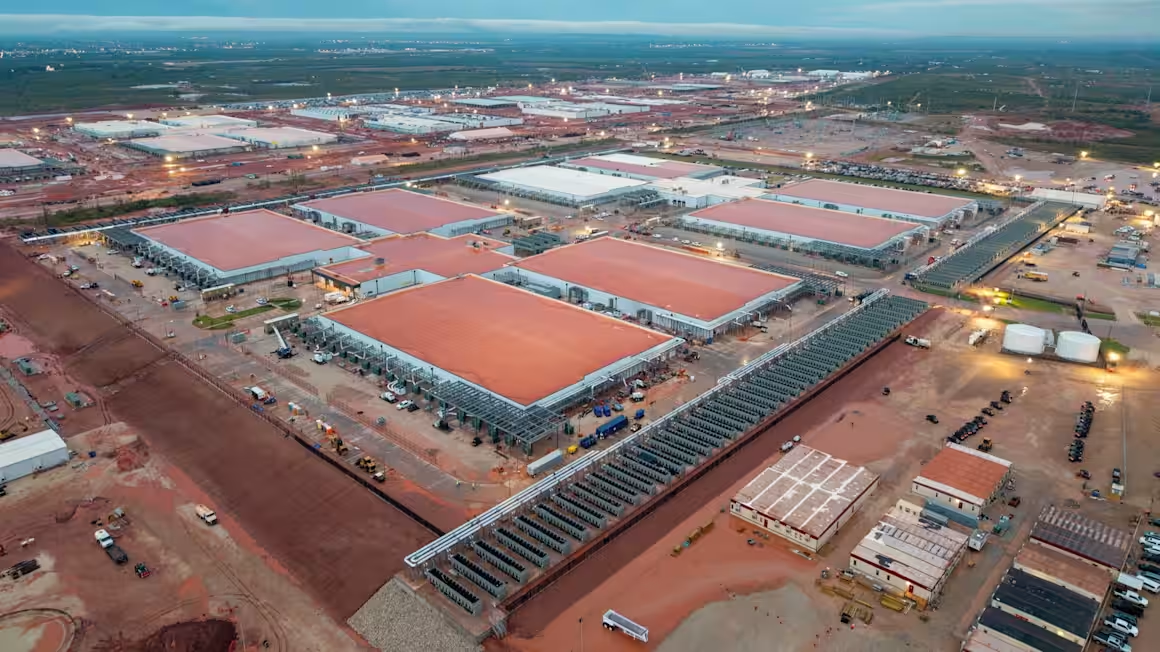
The United States economy expanded at an annualised pace of two per cent during the first quarter, according to figures released by the Financial Times. This growth marks a distinct shift in the composition of economic activity, where a significant surge in business investment in technology equipment has successfully offset a concurrent slowdown in consumer spending.
The data indicates that the rush by businesses to purchase technology assets has been sufficient to sustain overall economic momentum despite a deceleration in household demand. This dynamic suggests that corporate capital expenditure, particularly in the realm of digital infrastructure, has assumed a more dominant role in driving GDP compared to traditional consumption patterns.
While the headline growth rate of two per cent reflects a positive trajectory, the underlying drivers reveal a complex economic landscape. The expansion was not fuelled by broad-based consumer confidence but rather by a specific sectoral boom in technology equipment. This divergence highlights the ongoing impact of the artificial intelligence boom on corporate decision-making and capital allocation strategies across the nation.
The Financial Times report underscores the precision of this offset, noting that the surge in tech investment effectively neutralised the drag from slowing consumer outlays. However, the specific magnitude of the slowdown in consumer spending versus the intensity of the investment surge remains a critical variable in interpreting the sustainability of this growth model.
Uncertainties persist regarding the precise definition of the technology equipment purchases within the reported investment figures. It is unclear whether the data encompasses software, hardware, or specifically data centre infrastructure required for artificial intelligence deployment. Without a granular breakdown, the exact portion of the investment directly attributable to the AI boom versus general digital transformation remains an open question for analysts.
Furthermore, the reported annualised growth figure of two per cent may be subject to revision in subsequent months as more comprehensive data becomes available. The reliance on the term "offset" implies a precise mathematical balance between opposing economic forces, meaning minor variations in the underlying components could significantly alter the net growth trajectory.
Ultimately, the first quarter results point to an economy increasingly reliant on business investment in advanced technology to maintain expansion. As institutions continue to navigate this new normal, the focus remains on whether this investment-led growth can endure beyond the current fiscal quarter.