US economic strain deepens as Iran conflict drives debt to $40 trillion
The Iran war is pushing up consumer prices while American public finances deteriorate, with mortgage rates at 6.7 per cent and diesel hitting $5 per litre.
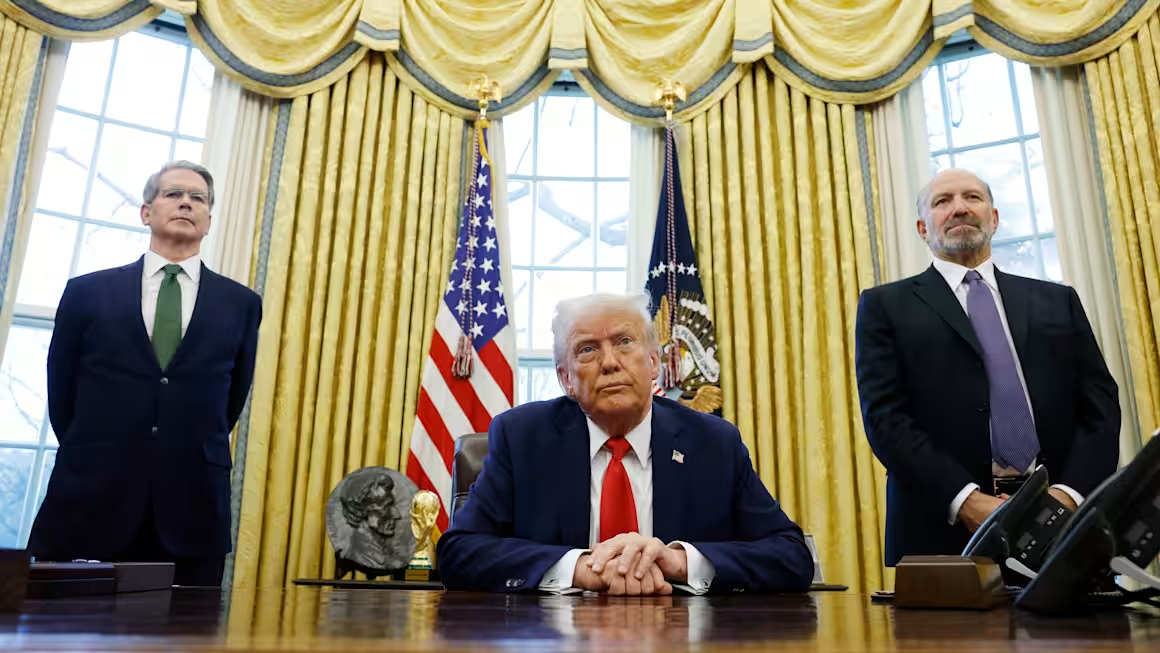
The economic agenda of US President Donald Trump is facing increasing pressure as the ongoing conflict with Iran drives up consumer prices and worsens the nation’s public finances. According to the Financial Times, the strain is evident in key economic indicators, including a national debt that has reached $40 trillion.
The cost of living is rising sharply for American households, with mortgage rates currently sitting at 6.7 per cent. Diesel prices have also spiked, reaching $5 per litre, a direct consequence of the geopolitical tensions and supply disruptions associated with the war.
These financial headwinds follow the collapse of a 60-day ceasefire between the US and Iran in late June 2026. The breakdown in diplomatic relations has led to a more assertive US stance, with President Trump recently describing the Strait of Hormuz as “American territory” amid stalled negotiations with Tehran.
In response to the deteriorating situation, the US government announced intensified economic sanctions against Iran and allied nations. President Trump termed this move “economic D-Day,” signalling a strategy of financial isolation to exert pressure on the Iranian economy.
The market reaction to these developments has been volatile. The Dow Jones Industrial Average recorded its worst losses in three weeks, prompting Treasury Secretary Scott Bessent to announce emergency buybacks of long-dated debt. This intervention was aimed at stabilising markets that had suffered significant losses in the wake of the sanctions announcement.
The $40 trillion debt figure represents the cumulative national debt rather than a single addition caused by the current conflict. However, the convergence of rising energy costs, high borrowing rates, and geopolitical uncertainty is testing the resilience of the US economic agenda.