US diesel prices hit five-week low as inventory draws spark supply fears
Total petroleum stocks have dropped for ten consecutive weeks, reaching their lowest level in over two years, while experts caution that geopolitical risks and backwardation may soon reverse the current price trend.
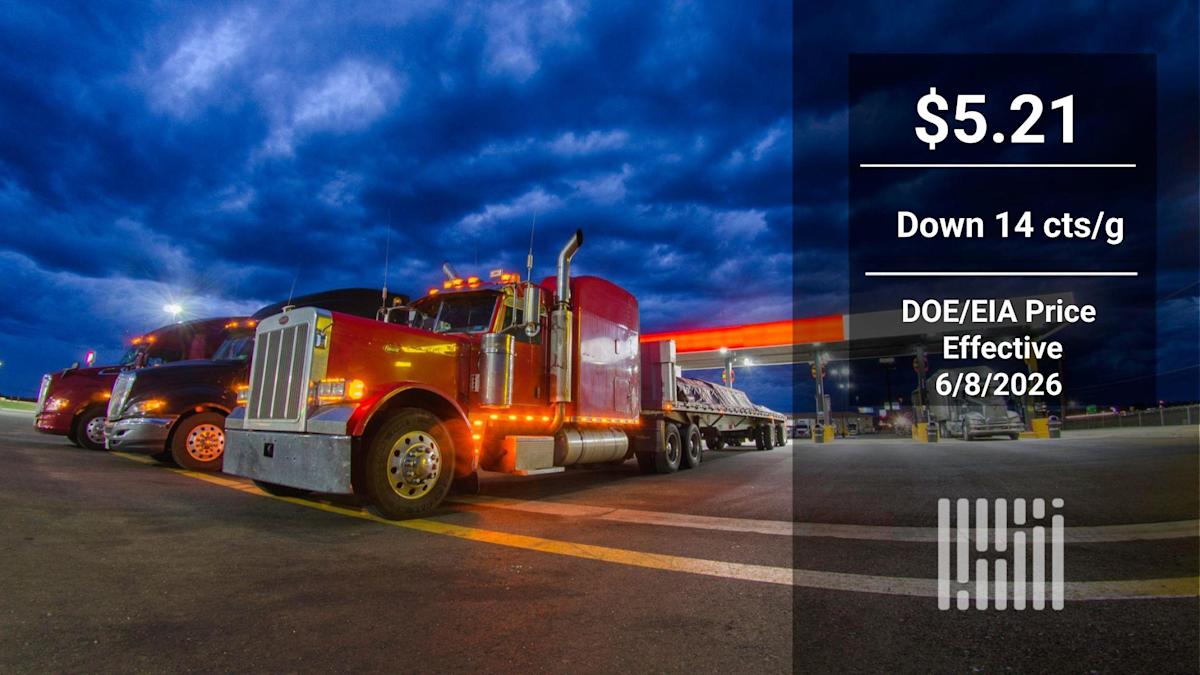
US retail diesel prices have fallen for a fifth consecutive week, averaging $5.21 per gallon according to the Department of Energy’s Energy Information Administration (EIA). This marks the lowest benchmark level since early March, specifically comparing to prices published shortly after military action commenced against Iran. The decline represents a total drop of 43 cents per gallon over the five-week period, though a divergence remains between the EIA benchmark and the daily AAA average retail diesel price, which stood at $5.317 per gallon.
The drop in retail costs coincides with a significant contraction in supply stocks. The EIA reported that US total petroleum inventories have declined for the tenth straight week, reaching 1.573 billion barrels, the lowest level in over two years for the week ending May 29. Given the United States’ position as the world’s largest consumer, this data is closely monitored as an indicator of potential global supply trends, with some market observers warning of a move toward “tank bottoms” where global inventories reach minimum operational levels.
Despite the falling retail benchmarks, futures markets have also trended downward. Ultra-low sulfur diesel on the CME commodity exchange fell from a recent peak of $3.8481 per gallon on June 3 to $3.5999 per gallon on Monday, with further declines noted on Tuesday morning. Brent crude futures are currently trading below $90 per barrel, with July delivery at $94.25 per barrel and January delivery at $83.91 per barrel, indicating a backwardated market structure where near-term prices are higher than those further out in the future.
Experts including Jeffrey Currie and Philip Verleger argue that paper markets are mispricing physical supply risks. Currie, former head of commodity research at Goldman Sachs, stated that global crude delivered in some regions is trading north of $150 per barrel, with product prices such as jet or diesel exceeding $200 per barrel. He described the current supply shock as almost equal to the demand shock during the COVID pandemic, suggesting that futures prices around $100 per barrel are mispricing the imminent physical market tightness.
The backwardated market structure presents a hurdle for hedging strategies. Verleger noted that companies buying spot diesel to sell forward would incur significant losses; for instance, a transaction buying diesel in late May and selling for November would lock in a $9 per barrel loss due to the market structure. Furthermore, Verleger highlighted emerging fears that the US might ban exports of crude and products if oil prices reverse, a risk attributed to political uncertainty under President Trump. This uncertainty has incentivised firms to minimise inventory holdings to protect against potential violent price depressions.