US construction sector defies broader job losses as AI infrastructure spending surges
Data from the US Bureau of Labor Statistics reveals a sharp divergence in employment trends, with the physical build-out of data centres and power grids driving hiring in construction and engineering while residential sectors contract.
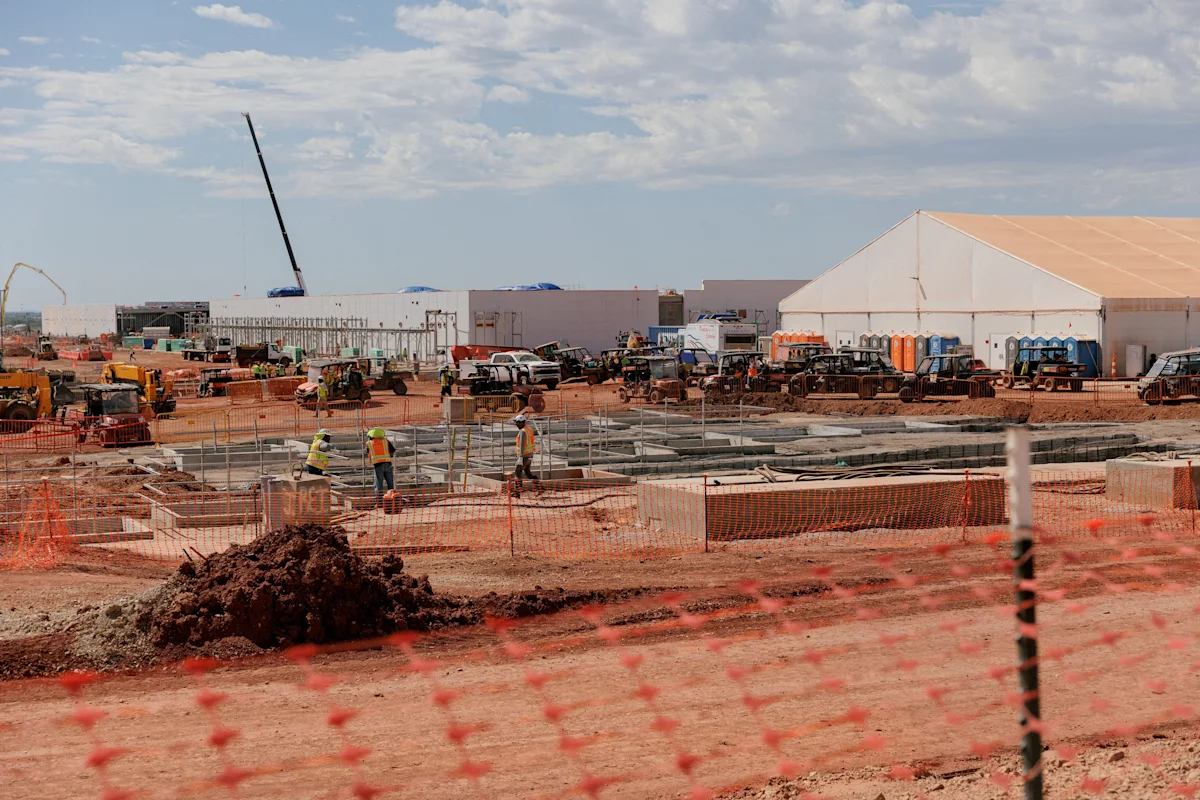
US employers shed 23,000 jobs in July, a decline that contrasts sharply with a gain of 22,000 positions within the construction sector. According to data released by the US Bureau of Labor Statistics, nearly all of this construction hiring occurred in nonresidential and infrastructure categories, driven by the physical expansion of data centres and associated power grid upgrades. This divergence highlights a structural shift in the labour market, where demand for hard infrastructure is outpacing broader economic trends.
Over the past 12 months, nonresidential and infrastructure categories have added 126,000 jobs, with nonresidential specialty trades accounting for nearly 78,000 of those gains. Nonresidential building construction contributed an additional 28,000 roles, while heavy and civil engineering added 21,000. In contrast, the residential construction sector lost 44,000 jobs over the same period, underscoring the specific nature of the current employment boom.
Economists attribute this hiring surge to the ongoing artificial intelligence build-out, which requires significant physical infrastructure including power grids, factories, and specialised engineering. While the Bureau of Labor Statistics does not officially classify these roles as AI jobs, the hiring is concentrated in the same geographic and sectoral areas as the investment boom, including electrical, HVAC, concrete, and site preparation work.
Joe Brusuelas, chief economist at RSM, described the spending environment as a historic capital expenditure super cycle. He noted that the two-year run rate on AI infrastructure investment stands at $1.6 trillion, with projections estimating $4.5 trillion to $5 trillion over the next five years. This capital intensity has translated into tangible labour demand, with architecture and engineering roles adding 4,600 jobs in July and durable-goods manufacturing adding 18,000.
The profitability dynamics of the AI value chain further explain the construction sector's resilience. Torsten Sløk, chief economist at Apollo Global Management, observed that energy and grid companies retain an average of $0.41 of operating profit for every dollar of revenue, compared to a loss of $0.59 per dollar for models and applications. This profit disparity suggests that the physical infrastructure layer is currently the most financially robust segment of the AI ecosystem, though it remains dependent on continued financing from less profitable segments of the value chain.