US and Japanese bond yields rise on energy price surge
Investors react to rising energy costs, driving up government debt borrowing costs in the world’s two largest economies.
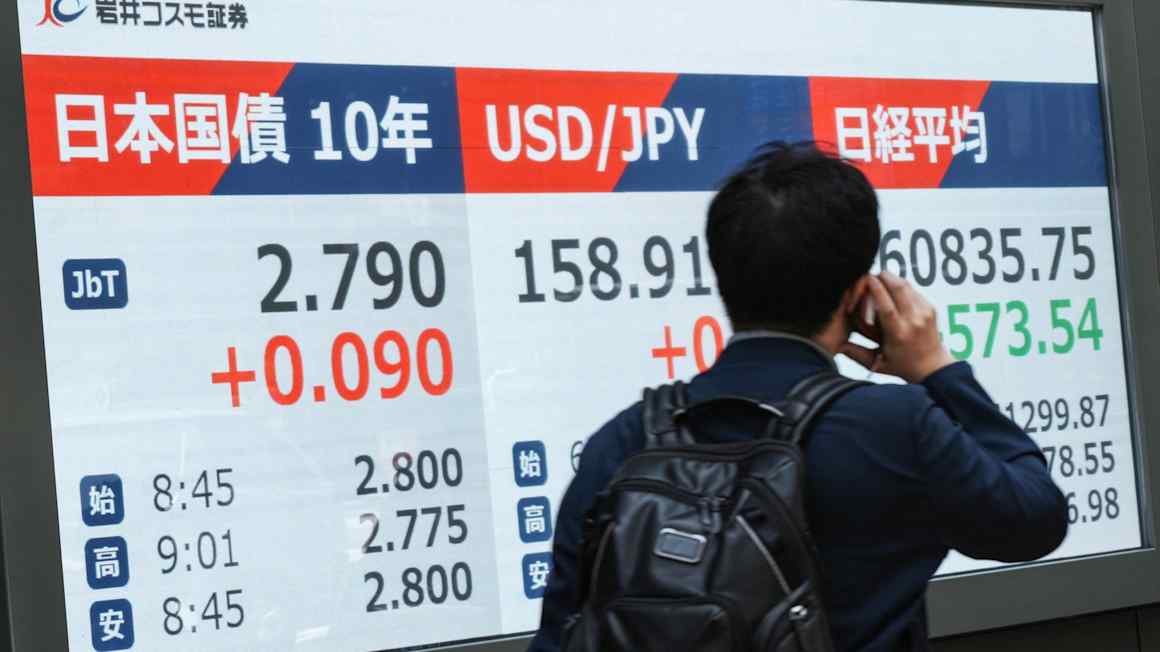
US and Japanese government bond yields rose on 18 May 2026, marking a continuation of a broader sell-off in global fixed-income markets. The movement was driven by investor concern over a surge in energy prices, which has reignited fears of persistent inflation across major economies.
According to the Financial Times, the rise in yields reflects a shift in market sentiment as traders price in the potential for higher borrowing costs. While the source material does not provide specific percentage changes or yield figures, the upward trajectory in both the United States and Japan underscores the widespread nature of the inflationary pressure linked to energy markets.
The bond market turbulence occurs against a backdrop of significant geopolitical activity. US President Donald Trump is currently in Beijing for a summit with Chinese President Xi Jinping, which commenced on 14 May 2026. The two-day meeting, attended by technology executives including Elon Musk, Tim Cook, and Jensen Huang, is focused on trade, artificial intelligence, and tensions in the Strait of Hormuz.
Despite the headwinds in the bond market, US equity markets showed resilience on the day the summit began. The Dow Jones Industrial Average gained 0.8 per cent, the S&P 500 rose 0.3 per cent, and the Nasdaq Composite climbed 0.2 per cent. Nvidia shares also surged more than 2 per cent following US approval of a chip sale, while Cisco announced plans for job cuts as part of a broader restructuring.
Although the bond sell-off and the diplomatic summit are unfolding concurrently, the source material does not explicitly link the rise in yields to the outcomes of the Trump-Xi talks. The primary driver remains the surge in energy prices, which continues to weigh on investor confidence regarding global inflation trajectories.