US and China announce divergent trade pacts after Beijing summit
A White House fact sheet released Sunday outlines $17 billion in annual US agricultural purchases by China, marking the first details of the trade framework following President Donald Trump’s visit to Beijing.
US President Donald Trump and Chinese President Xi Jinping concluded a two-day summit in Beijing in May 2026, marking the first visit by an American president to China since 2017. The talks, attended by a delegation of major technology executives including Elon Musk, Tim Cook, and Jensen Huang, focused on trade, artificial intelligence, and regional security issues such as the Strait of Hormuz. Following the summit, the White House and Chinese officials announced new pacts but emphasised different outcomes.
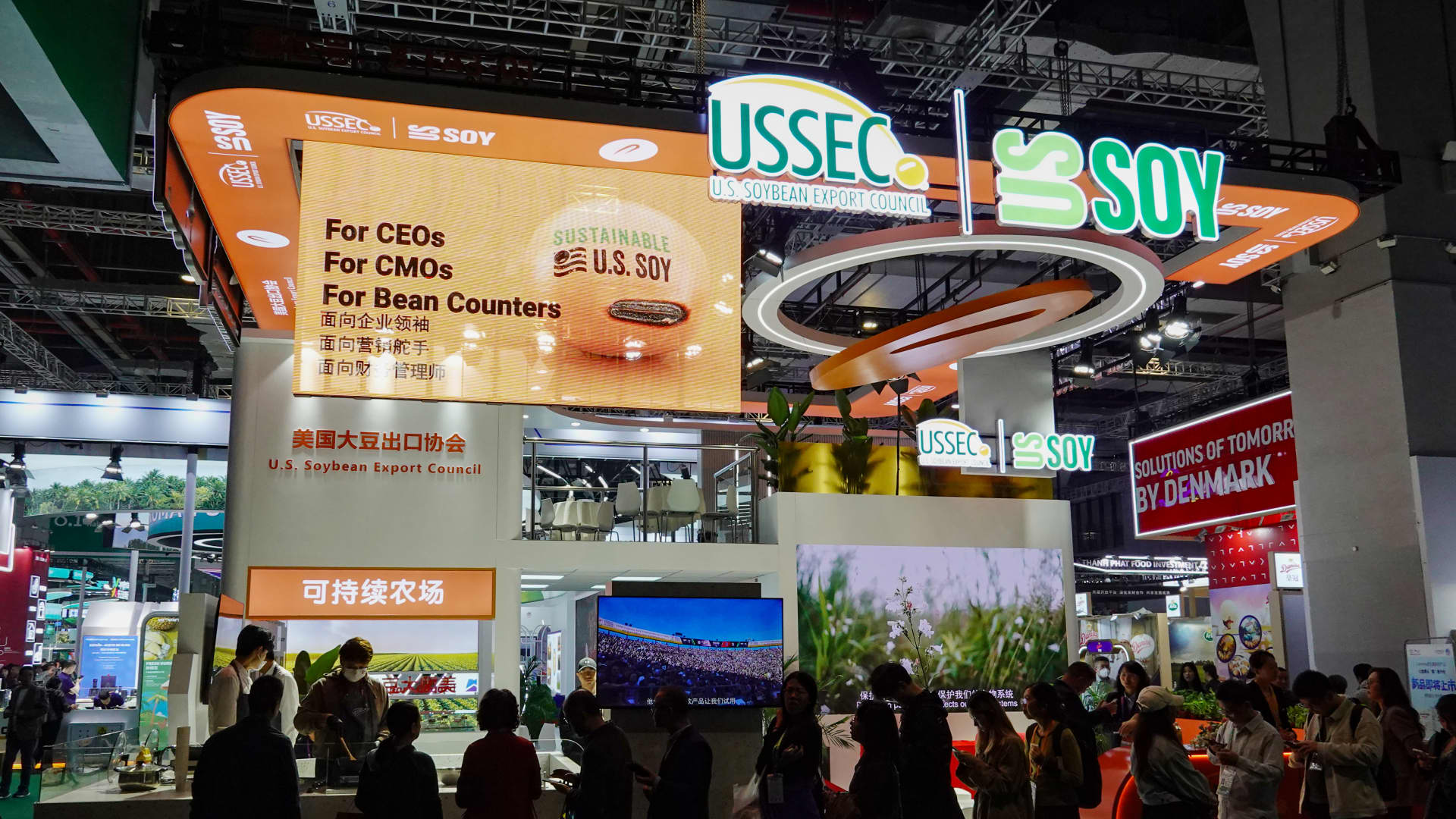
The White House released a fact sheet on Sunday announcing that China has agreed to purchase at least $17 billion worth of US agricultural goods annually through to 2028. These agricultural commitments specifically include soya beans, beef, and poultry. The White House also highlighted agreements on rare earths, framing the deals as significant steps in stabilising bilateral trade relations.
In contrast, Chinese officials have emphasised tariff reductions as the primary outcome of the negotiations. The two sides have provided differing details regarding the specific terms of the deals, leaving the exact scope of the tariff cuts and the nature of the rare earths agreement unclear. This divergence in messaging underscores the complex nature of the agreements reached during the summit.
Market reaction to the summit began on Thursday as US stock markets rose. The Dow Jones Industrial Average gained 0.8%, the S&P 500 rose 0.3%, and the Nasdaq Composite climbed 0.2%. Nvidia shares surged more than 2% following US approval of a chip sale, reflecting investor optimism about the potential for reduced trade tensions.
Despite the positive market sentiment, uncertainties remain regarding the implementation of the deals. The specific terms of the trade agreements have not been fully detailed, and it is not explicitly stated whether the rare earths agreement is a new pact or part of the broader agricultural and trade framework. Investors and institutions will likely monitor subsequent announcements for clarity on the tariff reductions and the long-term impact of the agricultural purchase commitments.