US and Canada to Test Cross-Border 5G Drone Surveillance in Joint Experiment
The ACE-CASPER initiative marks the first joint cross-border technology test between the two nations in nearly a decade, utilising commercial 5G networks to stream surveillance data during simulated emergency scenarios.
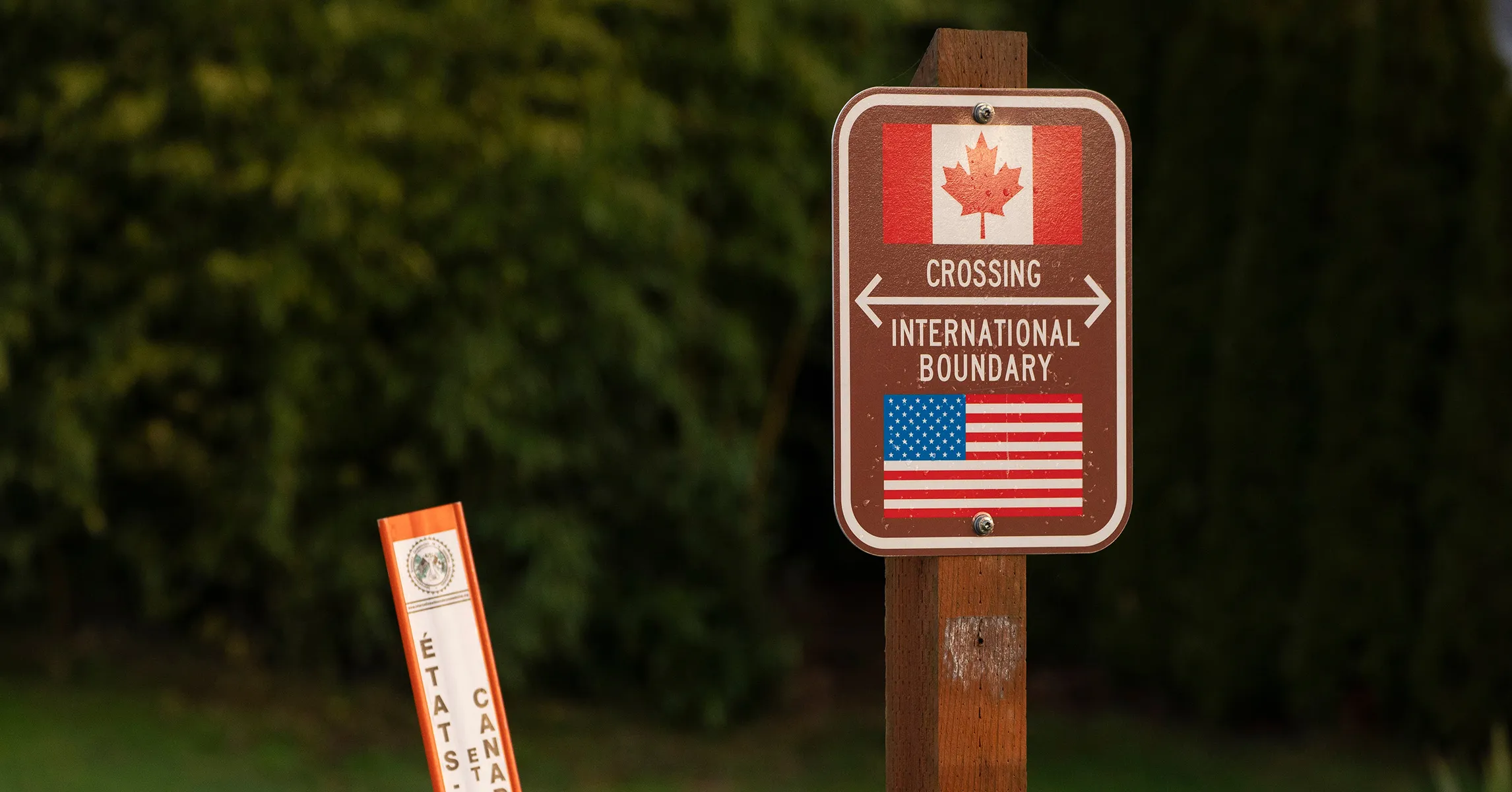
The US Department of Homeland Security (DHS) and Defence Research and Development Canada (DRDC) have announced a joint experiment scheduled for November along the US-Canada border. Designated as ACE-CASPER, the exercise will deploy autonomous drones and ground vehicles to stream surveillance video and sensor data via commercial 5G networks to a bi-national command centre. The primary objective is to demonstrate resilient communications during simulated national emergency scenarios, marking the first such cross-border technology test between the two nations in nearly a decade.
The procurement is led by the DHS Science and Technology Directorate (S&T), which sits at the centre of the US federal government’s domestic counter-drone program following a 2025 executive order. While the exercise is framed as a multiday simulation of emergency response, the DHS call for participants employs martial terminology, requesting vendors to demonstrate the ability of autonomous vehicles to gather “real-time battlefield intelligence.” The aerial systems sought are described as “Command and Control: Intelligence Surveillance Reconnaissance” (C2ISR) platforms, an acronym linked to the improvement of “kill chains.”
This initiative follows a period of significant policy shifts in the US drone sector. The 2025 executive order prioritised the procurement of American-made drones and reserved government contract opportunities for domestic manufacturers. This market opening was further widened by a recent Federal Communications Commission designation that bars new foreign-made drones from US wireless networks. The S&T’s National Urban Security Technology Laboratory recently launched a counter-drone purchasing tool to guide agencies in the Washington, DC, region and states hosting FIFA World Cup matches.
Several potential vendors with ties to President Donald Trump’s family are positioned to respond to the call. Powerus Corporation, which has backing from Eric Trump and Donald Trump Jr., welcomed the effort. Anduril Industries, in which Trump Jr.’s firm invested, holds a $1.1 billion DHS contract for AI-powered surveillance towers on the southern border. Unusual Machines, where Trump Jr. previously served as an adviser, does not sell directly to the government but supplies to vendors who do. Xtend, an Israeli drone maker backed by Eric Trump, recently opened a Florida headquarters and secured a Pentagon contract.
The last major joint cross-border drills occurred between 2011 and 2017 under a program called CAUSE, which tested whether emergency responders could share radios, video, and data across the border. DHS and DRDC did not immediately respond to requests for comment regarding the upcoming November tests.
