US air campaign fails to reassure shipowners on Strait of Hormuz safety
Shipowners remain unconvinced that the renewed US military operation has secured the critical maritime chokepoint against potential Iranian aggression.
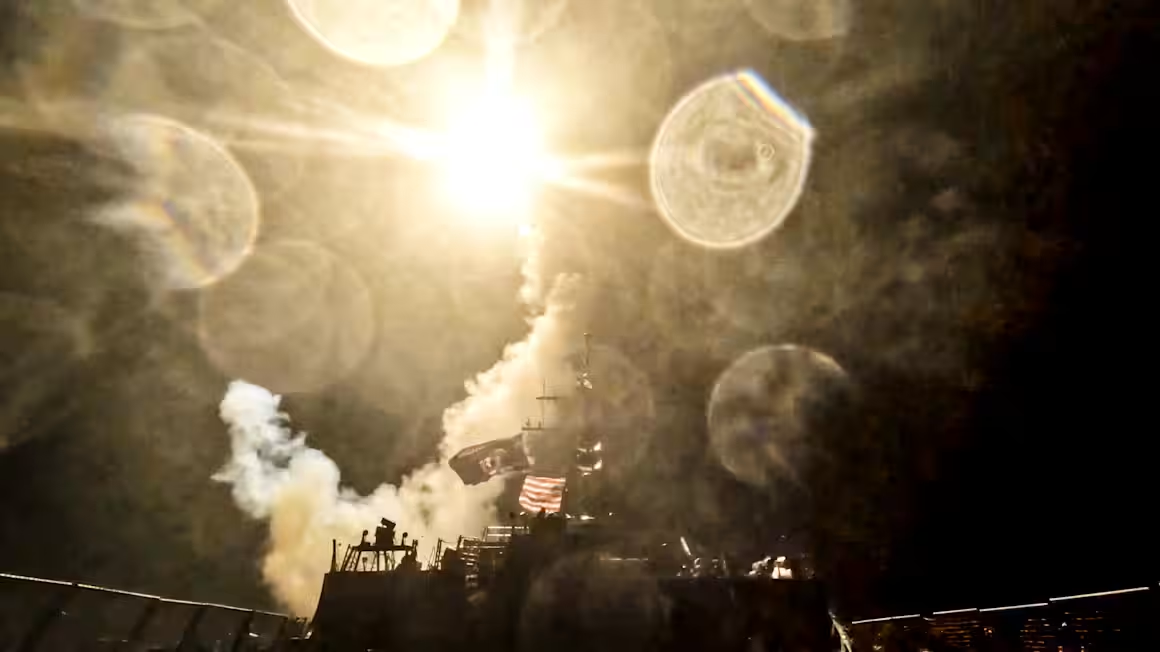
A renewed US air campaign has failed to restore confidence among shipowners regarding the safety of the Strait of Hormuz, according to reporting by the Financial Times. Despite the escalation in military activity, operators of commercial vessels remain unconvinced that the waterway is secure from potential Iranian attacks.
The current tension stems from an incident involving a US Army AH-64 Apache helicopter over the strategic chokepoint. US President Donald Trump has accused Iran of shooting down the aircraft and has vowed retaliation for the event. This accusation has triggered a significant escalation in military posturing in the region.
The helicopter incident occurred shortly after indications emerged that negotiations to end the broader Middle East conflict were underway. The timing of the attack and the subsequent US response has complicated the diplomatic landscape, with military actions now taking precedence over potential talks.
The Strait of Hormuz serves as a critical maritime chokepoint for global shipping, making any disruption to traffic a matter of significant concern for international trade and energy markets. The failure of the air campaign to alleviate fears among shipowners suggests a disconnect between US military deterrence and the perceived risk on the water.
While the specific operational details of the renewed air campaign are not fully detailed in available reports, its primary impact appears to be on market sentiment rather than immediate security outcomes. The persistence of uncertainty highlights the challenges of using military force to guarantee the safety of vital commercial sea lanes.